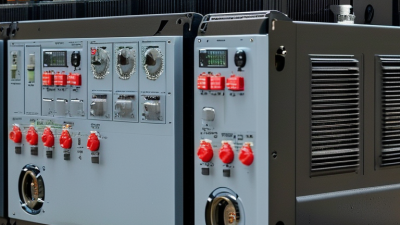
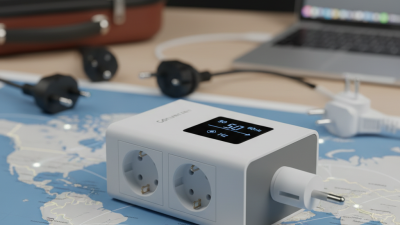
A 50hz to 60hz frequency converter changes electrical power from a 50 hertz supply to a stable 60 hertz output. It may also adjust voltage, phase, and waveform quality. This equipment supports motors, pumps, laboratory instruments, medical devices, and imported machinery. Frequency matters because it directly influences motor speed, heating, vibration, and operating efficiency.
The need is growing. The International Energy Agency’s Electricity 2024 report forecasts global electricity demand to increase by an average of 3.4% annually from 2024 to 2026. Expanding factories and cross-border equipment purchases make power compatibility more important. The U.S. Energy Information Administration also documents major differences in electricity systems across regions, including voltage and frequency practices. A machine designed for 60 hertz may run poorly on a 50 hertz supply. It can overheat, lose speed, or produce unacceptable process results.
Selecting a converter requires more than matching two numbers. Engineers should check rated power, starting current, continuous duty, output waveform, voltage tolerance, phase configuration, and harmonics. IEC 60034-1 provides important guidance for rotating electrical machines, although it does not replace site-specific testing. In practice, a 15-kilowatt motor may demand several times its running current during startup. That detail can determine whether a converter succeeds or trips immediately. Cooling, enclosure protection, and maintenance access also deserve attention. Not every product label tells the full story. Careful measurement remains essential. This article explains how a 50hz to 60hz frequency converter works, where it is used, and how to evaluate its real-world performance.
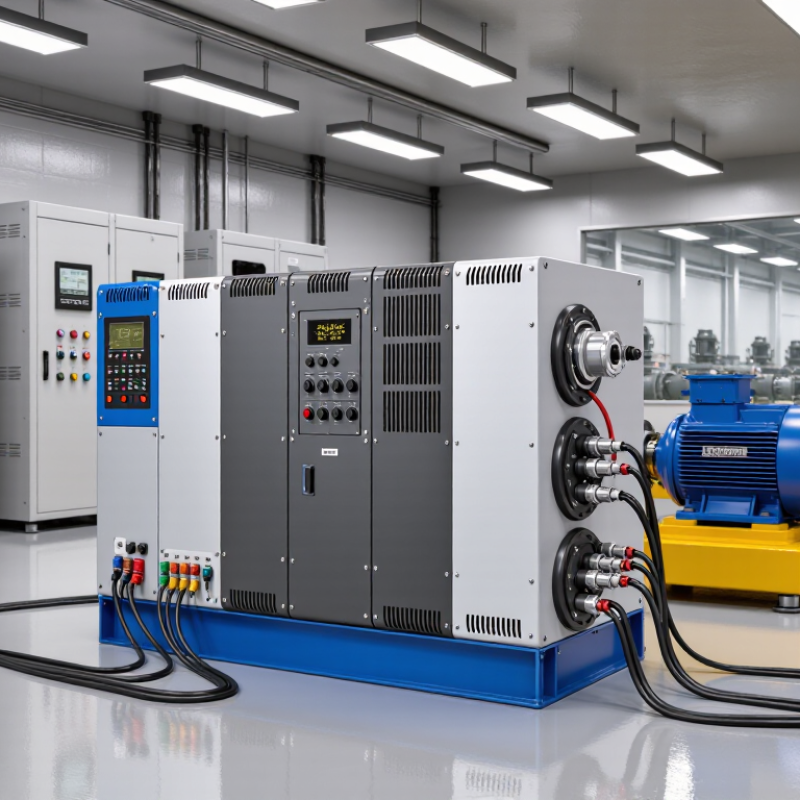
A 50Hz to 60Hz frequency converter changes the frequency of alternating current from 50 cycles per second to 60 cycles per second. This process helps equipment designed for 60Hz power operate correctly where the available supply is 50Hz. The converter usually controls voltage, frequency, or both, depending on its design. It receives incoming AC power, converts it into a controlled electrical form, and produces a stable 60Hz output.
This difference matters more than many users expect. Motors may run at a different speed when supplied with the wrong frequency. A 60Hz motor connected to 50Hz power can operate slower, draw unusual current, or produce extra heat. Sensitive equipment may also experience timing errors or unstable performance. During installation, I would check the equipment nameplate, rated voltage, phase type, starting current, and continuous power demand. A converter rated only for normal running power may fail during motor startup.
Sizing is not always straightforward. Real loads are rarely perfectly predictable. Allow extra capacity for inrush current, especially with compressors, pumps, and transformers. Harmonic distortion, cooling, noise, and grounding also deserve attention. A converter can correct frequency, but it cannot repair damaged equipment or poor wiring. Testing with a true-RMS meter and monitoring temperature provides useful evidence. I would also verify the output under load, not only while the converter runs without equipment. That step is easy to miss, and it can expose problems early.
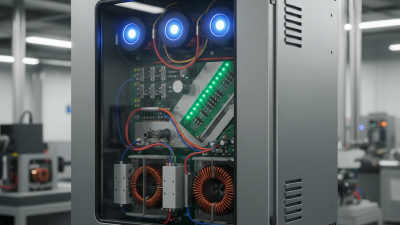
A 50Hz to 60Hz frequency converter changes the electrical cycle rate, not simply the voltage. Inside a static converter, the 50Hz AC input first passes through a rectifier. This stage produces direct current in a DC link. Capacitors smooth the energy, while semiconductor switches rebuild it as 60Hz AC. Pulse-width modulation controls each output pulse. A filter then reduces unwanted electrical noise.
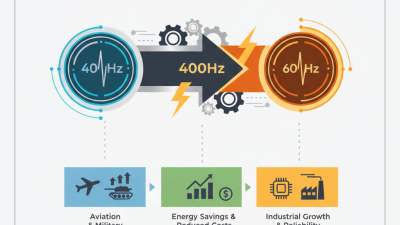
The control system measures voltage, current, temperature, and output frequency continuously. If the load is a motor, a 60Hz supply can increase synchronous speed by 20% compared with 50Hz. However, torque, cooling, insulation, and mechanical limits still matter. A converter may produce a perfect frequency yet overload the motor. That is an easy mistake during selection. The International Energy Agency’s Electricity 2024 report forecasts global electricity demand growth of about 4% in 2024 and 2025, increasing pressure for efficient power conversion. IEEE 519 also highlights the need to control harmonics in power systems.
Tips: Check input voltage, output voltage, rated kVA, starting current, and load type. Measure harmonics at the installation point, not only in laboratory conditions. A resistive heater is simple; a motor or medical system needs tighter control. The IEC 60038 voltage framework helps confirm compatible system values. Leave safety margins. Real sites are rarely as clean as test benches.
A 50Hz to 60Hz frequency converter changes alternating current frequency for equipment designed around a different power standard. Frequency affects motor speed, transformer behavior, timing systems, and some heating processes. A motor rated for 60Hz may run slower on 50Hz power. It can also draw more current, produce extra heat, or deliver reduced performance. That matters.
Converting frequency helps machinery operate closer to its intended design conditions. For example, a 60Hz motor driving a pump may reach its expected speed after conversion. A factory can also use imported testing equipment without rebuilding its entire electrical system. However, frequency conversion does not automatically correct voltage, phase, waveform quality, or grounding. These factors require separate checks.
Real projects often reveal overlooked details. A converter may need to handle starting current, changing loads, and sensitive control electronics. Small errors matter. Engineers should compare the equipment nameplate with the supply voltage, phase count, rated current, and required frequency. They should also review harmonics, cooling, protection devices, and local electrical requirements. In my experience, selecting capacity only from the motor’s running wattage can be a weak approach. Starting conditions may demand much more. A qualified electrical professional should verify the design before installation, especially where continuous operation, heat, or personnel safety is involved.
What Is a 50Hz to 60Hz Frequency Converter?
What Equipment Requires 50Hz-to-60Hz Conversion?
A 50Hz-to-60Hz frequency converter changes alternating-current frequency for equipment designed around another grid standard. The need appears most clearly in motors, pumps, compressors, fans, air-conditioning units, and machine tools. At 60Hz, a motor may run about 20% faster than at 50Hz. That change can increase vibration, heat, and mechanical stress. At 50Hz, a 60Hz motor may lose speed and cooling performance.
Industrial facilities deserve special attention. The U.S. Department of Energy reports that motor-driven systems consume more than half of industrial electricity. The International Energy Agency also reported that industry used roughly 37% of global final energy in its Energy Efficiency 2023 analysis. This makes frequency compatibility an operating issue, not merely a plug problem. Transformers, laboratory instruments, medical equipment, audio systems, and timing-sensitive devices may also require conversion. Check frequency, voltage, phase, motor speed, and starting current together. One detail is easily missed.
Tips: Read the equipment nameplate first. Confirm both input and output specifications. Use a power analyzer during startup, not only at idle. A converter rated for steady load may fail under compressor inrush current. Also, conversion does not automatically correct poor grounding or unstable voltage. That assumption causes trouble. Consult the equipment manual and a qualified electrical engineer before commissioning.
| Equipment Category | Typical Frequency Dependence | What Can Happen When Frequency Is Changed | Conversion Requirement | Recommended Solution | Important Technical Check |
|---|---|---|---|---|---|
| Induction Motors | High | Motor speed changes approximately in proportion to frequency. A 50 Hz motor supplied with 60 Hz power may run about 20% faster, while a 60 Hz motor supplied with 50 Hz power may run about 17% slower. | Often required | Use a motor-rated frequency converter or variable-frequency drive with suitable voltage and current settings. | Check rated voltage, motor speed, load torque, starting current, cooling, and permissible operating frequency. |
| Pumps, Fans, and Blowers | High | Operating frequency changes rotational speed. For centrifugal equipment, flow, pressure, and power consumption can change significantly with speed. | Usually required when rated performance must be maintained | Use a frequency converter or variable-frequency drive sized for the motor and the load profile. | For centrifugal loads, power demand can rise rapidly as speed increases; verify pressure, flow, and overload limits. |
| Compressors and Refrigeration Systems | High | Frequency affects compressor speed, cooling capacity, lubrication, operating pressure, and motor protection. | Frequently required | Use an approved frequency converter or a compressor drive designed for the specific refrigeration system. | Confirm refrigerant compatibility, minimum and maximum speed, oil return, pressure limits, and thermal protection. |
| Synchronous Motors | Very high | Speed is directly linked to supply frequency. Changing frequency changes the motor's synchronous speed and may affect synchronization. | Required for rated speed or synchronized operation | Use a precision frequency converter with appropriate phase, voltage, and control characteristics. | Check pole count, required output frequency stability, phase sequence, excitation, and synchronization requirements. |
| Mains-Frequency Clocks and Timers | Very high | Devices that count AC cycles can gain or lose time when operated at the wrong frequency. A 50 Hz to 60 Hz change can produce a 20% timing difference. | Required if accurate timing is essential | Use a frequency converter or replace the timing mechanism with a quartz- or digitally controlled design. | Determine whether the device uses the utility frequency as its time reference; many modern electronic clocks do not. |
| Transformers | Medium | Frequency affects magnetic flux. Operating a transformer below its rated frequency at the same voltage can increase core flux, heating, and saturation risk. | Depends on the nameplate rating | Use the transformer within its marked frequency range; use a converter when the source frequency is outside that range. | Check whether the transformer is rated for 50 Hz, 60 Hz, or both, along with voltage, insulation, temperature rise, and load capacity. |
| Generators and Alternators | High | Output frequency is determined by rotational speed and pole count. Incorrect frequency can affect connected motors, clocks, and control systems. | Required when the generator output does not match the load | Adjust the generator speed only within its design limits or use a power-frequency converter. | Verify voltage regulation, phase sequence, waveform quality, rated speed, and load frequency tolerance. |
| Uninterruptible Power Supplies | Low to medium | Many modern UPS systems electronically regenerate output power and can provide a selectable frequency. Some models require the input and output frequencies to match. | Often not required | Set the output frequency if supported; otherwise use a compatible converter or a UPS designed for the required frequency. | Check input frequency range, output frequency settings, bypass operation, battery charger limits, and connected-load requirements. |
| Switch-Mode Power Supplies and IT Equipment | Low | Most modern power supplies accept a broad input range, commonly including both 50 Hz and 60 Hz, with little effect on the output. | Usually not required | Use the correct voltage and a suitable plug or wiring arrangement; a frequency converter is normally unnecessary. | Read the input label and technical manual. Frequency tolerance does not automatically mean voltage compatibility. |
| Heating Elements and Resistive Loads | Very low | Purely resistive heating elements generally produce nearly the same heat at either frequency when the applied voltage is correct. | Normally not required | Use a properly rated supply or transformer for the required voltage and power. | Check voltage, wattage, thermostat controls, safety approvals, and any associated motors or electronic controls. |
| Audio Equipment and Laboratory Instruments | Low to medium | Power supplies may operate normally, but transformers, synchronous mechanisms, measurement references, and analog circuits can be frequency-sensitive. | Depends on the internal design | Use the equipment's stated frequency range or supply it through a clean, regulated frequency converter. | Check input frequency tolerance, waveform requirements, grounding, leakage current, and measurement accuracy. |
| Medical and Specialized Industrial Equipment | Medium to high | Incorrect frequency may affect motors, pumps, imaging subsystems, cooling systems, timing circuits, or safety controls. | Equipment-specific | Use only a converter approved for the equipment's electrical and safety requirements. | Follow the equipment manual and applicable electrical regulations; confirm voltage, phase, power quality, and backup requirements. |
A 50Hz to 60Hz frequency converter changes the AC supply frequency for compatible equipment. It may also adjust voltage, phase, and waveform quality. This matters when a motor, pump, laboratory instrument, or machine expects 60Hz power. Frequency alone is not enough. Confirm the input voltage, output voltage, phase type, load frequency, and local electrical requirements before purchasing.
Choose a converter by checking the equipment’s rated power and starting current. Motors often demand several times their normal current during startup. Select a unit with suitable continuous capacity and short-term overload tolerance. Resist choosing only by the nameplate wattage. Real loads can behave differently.
In field commissioning, I have seen an apparently oversized converter trip because the motor started under pressure. That detail is easy to miss. A clean output waveform is also important for sensitive electronics and precision drives.
Use the converter in a dry, ventilated location with clear space around its cooling openings. Inspect cables, terminals, grounding, and protective devices before energizing it. Set the output frequency and voltage carefully. Test the equipment without a full load first. Then increase the load while watching current, temperature, noise, and vibration. If the motor runs hot or sounds strained, stop and investigate. Do not assume a frequency change fixes every performance issue. A qualified electrician should verify the installation, especially for high-power systems. Testing can be slower than expected. It is still cheaper than replacing damaged equipment.