
7 Best Combination Sweeper Scrubber Machines to Buy?
A Combination Sweeper Scrubber handles loose debris and wet floor cleaning in a single pass. That can simplify daily work in warehouses, retail aisles, and other large indoor spaces. Still, the right machine depends on the floor, the mess, and the operator’s routine. A compact unit may turn easily between shelves, while a larger model may cover open concrete more efficiently. Neither choice is automatically better.
This guide looks at seven machines through practical details: cleaning width, debris collection, tank capacity, battery runtime, maneuverability, and routine maintenance. It also considers the surfaces each machine is designed to clean. A showroom specification can look impressive, but it cannot show how a unit handles tight corners or repeated passes through a busy loading area. Those details deserve a closer look. Product features and availability can change, so buyers should confirm current specifications with manufacturers or authorized dealers before purchasing.
The comparisons are intended to help narrow the options, not replace an on-site assessment. Measure doorways and storage space, check the floor’s condition, and estimate how long each cleaning shift lasts. A machine that is too large can be awkward; one that is too small may add extra passes. There is no perfect pick for every facility. A thoughtful shortlist is a better starting point.
What Combination Sweeper-Scrubber Machines Are and How They Work
What Combination Sweeper-Scrubber Machines Are and How They Work
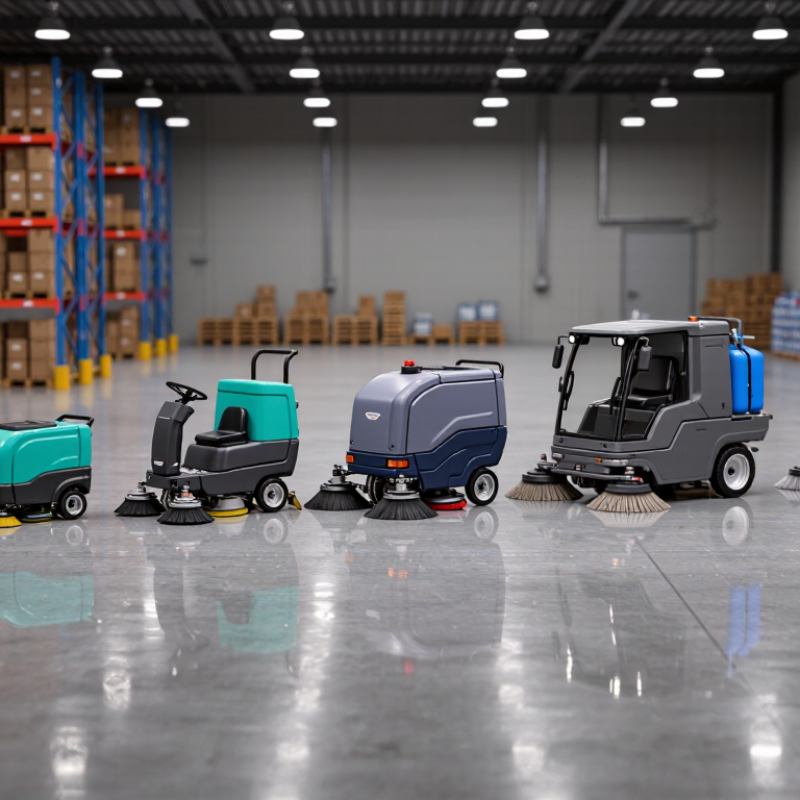
A combination sweeper-scrubber machine removes loose debris and washes hard floors in one cleaning pass. A front sweeping system gathers dust, grit, and small scraps into a hopper. Behind it, brushes or pads agitate the floor with cleaning solution. A squeegee and vacuum system then collect the dirty liquid into a recovery tank. Exact layouts vary, so check the machine’s operating instructions before use.
The sequence sounds simple, but real floors are messier. Damp grit can smear, and oversized debris may block the pickup area. On a warehouse aisle, sweeping first can reduce streaks near loading doors. The scrubber then tackles tracked-in dirt, while the recovery system leaves less water behind. It may not reach tight corners or crowded spaces well. Those areas can still need hand cleaning.
Tips: Empty the hopper before debris piles up. Use the solution concentration recommended for the floor and machine. Check brushes, squeegees, and tanks regularly. A quick inspection takes time, but skipping it can leave missed patches or dirty water on the floor.
7 Best Combination Sweeper Scrubber Machines to Buy? - What Combination Sweeper-Scrubber Machines Are and How They Work
Combination sweeper-scrubber machines collect loose debris with a broom and hopper, then apply cleaning solution, scrub the floor, and recover dirty water with a squeegee and vacuum system. The figures below are indicative ranges for common machine classes, not specifications for individual models; actual capacity and performance vary by design, floor condition, and operating speed.
| Machine Type | Typical Cleaning Path | Indicative Theoretical Productivity | Solution Tank | Debris Hopper | Typical Power and Runtime | Best Suited For | Key Buying Consideration |
|---|---|---|---|---|---|---|---|
| Compact walk-behind combination unit | 20–26 in (51–66 cm) | Approximately 20,000–35,000 sq ft/h (1,860–3,250 m²/h) | 10–20 gal (38–76 L) | 1–2 cu ft (28–57 L) | Battery-powered; commonly about 2–4 hours per charge, depending on battery and workload | Small retail areas, clinics, workshops, and crowded spaces | Check overall machine width, turning radius, and access to the debris hopper for emptying. |
| Mid-size walk-behind combination unit | 26–32 in (66–81 cm) | Approximately 30,000–50,000 sq ft/h (2,790–4,645 m²/h) | 15–30 gal (57–114 L) | 2–4 cu ft (57–113 L) | Battery-powered; commonly about 2–5 hours per charge | Schools, supermarkets, and medium-sized production areas | Balance tank capacity and machine size against doorways, ramps, and storage space. |
| Large walk-behind combination unit | 30–36 in (76–91 cm) | Approximately 40,000–60,000 sq ft/h (3,715–5,575 m²/h) | 25–40 gal (95–151 L) | 3–6 cu ft (85–170 L) | Battery-powered; commonly about 3–5 hours per charge | Large indoor facilities where a ride-on machine cannot fit | Review operator effort, brush access, and whether the unit can handle the site's debris load. |
| Compact ride-on combination unit | 28–36 in (71–91 cm) | Approximately 45,000–75,000 sq ft/h (4,180–6,970 m²/h) | 25–45 gal (95–170 L) | 3–7 cu ft (85–198 L) | Typically battery-powered; commonly about 3–5 hours per charge | Medium-sized warehouses, distribution areas, and large stores | Confirm turning clearance, seat comfort, and visibility around shelving and pedestrian routes. |
| Standard ride-on combination unit | 34–44 in (86–112 cm) | Approximately 60,000–100,000 sq ft/h (5,575–9,290 m²/h) | 35–65 gal (132–246 L) | 5–10 cu ft (142–283 L) | Typically battery-powered; commonly about 3–6 hours per charge | Large warehouses, manufacturing floors, and logistics facilities | Compare usable runtime, charging time, tank-emptying arrangements, and service access. |
| High-capacity ride-on combination unit | 40–50 in (102–127 cm) | Approximately 80,000–125,000 sq ft/h (7,430–11,610 m²/h) | 50–85 gal (189–322 L) | 8–15 cu ft (227–425 L) | Typically battery-powered; commonly about 4–6 hours per charge | Very large distribution centers and expansive industrial floors | Check aisle width, turning space, floor loading limits, and the time needed to empty and refill tanks. |
| Heavy-duty industrial combination unit | 45–60 in (114–152 cm) | Approximately 100,000–150,000 sq ft/h (9,290–13,935 m²/h) | 60–100 gal (227–379 L) | 10–20 cu ft (283–566 L) | Battery or other power configurations may be available; runtime depends on the specific system and duty cycle | Large industrial sites with broad lanes and substantial loose debris | Assess total machine dimensions, debris handling, ventilation requirements where relevant, and local service support. |
Theoretical productivity is generally estimated from cleaning-path width and travel speed; practical output is lower when turns, obstacles, refill stops, debris disposal, and overlapping passes are included. Before buying, verify the exact machine specifications, battery chemistry, floor compatibility, maintenance needs, and parts availability.