AC to AC Inverter Tips for Efficient Power Conversion?
Efficient power conversion is essential in modern energy systems. An AC to AC inverter plays a crucial role in this process. These devices convert alternating current into a different frequency or voltage, optimizing energy usage. Many industries rely on AC to AC inverters for their operations. However, misunderstandings about their efficiency persist.
To enhance performance, one must consider various factors. Ensure the inverter's specifications match your needs. Oversizing or undersizing can lead to inefficiencies and potential damage. Regular maintenance is also vital. Neglecting this can result in reduced efficiency over time. Users sometimes overlook simple cleaning, which can yield significant gains in performance.
Even experts can make mistakes. Relying solely on brand reputation may not guarantee efficiency. Testing and measuring output are crucial steps. Inverters may perform differently than expected in real-world scenarios. This constant evaluation will help you maximize the benefits of an AC to AC inverter, ensuring optimal energy conversion and use.
AC to AC Inverter Overview and Applications in Power Systems
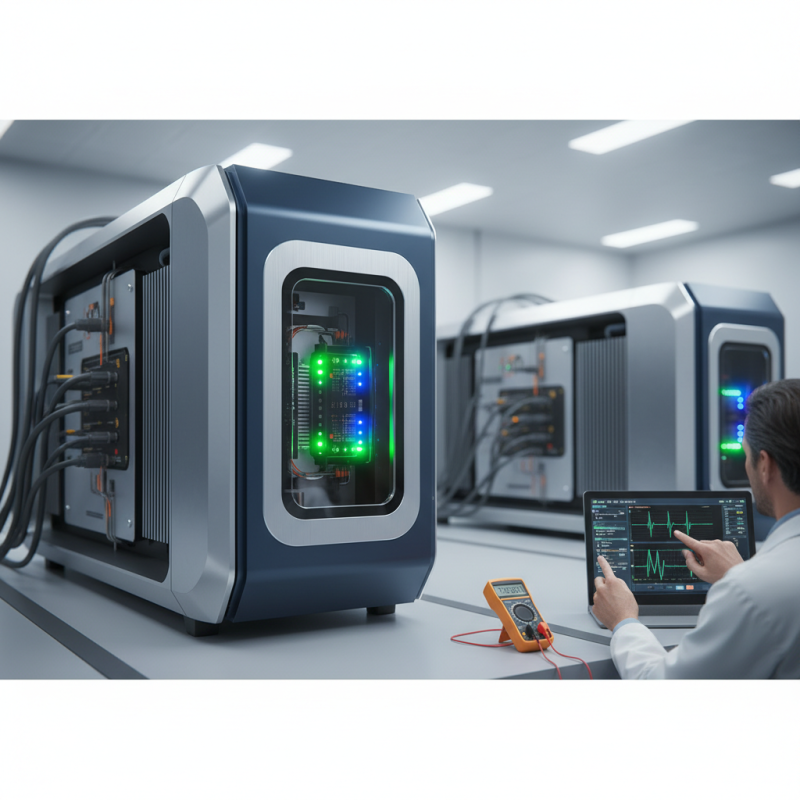
AC to AC inverters play a crucial role in modern power systems. They convert one AC voltage to another. This transformation is vital for optimizing power distribution and improving system performance. Applications of these inverters are vast, ranging from industrial motors to renewable energy systems.
Efficient power conversion is the primary goal. However, many overlook the importance of proper load management. An improperly balanced load can lead to energy losses. It is essential to monitor and adjust loads based on real-time data. Minor adjustments can yield significant efficiency gains.
In addition, the placement of inverters matters. Their physical location can affect performance. Frequent shading or obstacles can disrupt the energy flow. Maintenance schedules are often ignored, leading to unexpected down times. Regular inspections can prevent these issues and extend the inverter's lifespan. Overall, a proactive approach is key in ensuring reliability in AC to AC inverter systems.
Key Components and Their Role in AC to AC Power Conversion
AC to AC inverters play a crucial role in efficient power conversion. These systems convert one form of alternating current (AC) to another, with applications spanning from renewable energy integration to industrial automation. Understanding the key components involved is vital for optimizing performance.
Transformers are essential in AC to AC systems. They adjust voltage levels to meet specific load requirements. According to a report by the International Energy Agency, poor transformer efficiency can lead to energy losses exceeding 15%. Using higher-quality transformers can significantly improve overall efficiency. Additionally, inductors help in regulating current flow and filtering out harmonics. These components can enhance the inverter's power quality, contributing to a smoother operation.
Control strategies are another important aspect. They dictate how components interact during operation. A study by IEEE revealed that improper control algorithms often lead to 30% efficiency losses in AC to AC converters. Implementing adaptive control can mitigate these issues. However, designers must reflect on the balance between complexity and reliability. Overcomplicated systems may introduce more points of failure, undermining efficiency. Hence, simplicity in design is sometimes more effective than advanced features.
AC to AC Inverter Tips for Efficient Power Conversion - Key Components and Their Role in AC to AC Power Conversion
| Component |
Role |
Efficiency Impact |
Common Issues |
| Power Rectifier |
Converts AC to DC for processing |
Determines input power quality |
Overheating or inefficiency |
| Inverter Stage |
Re-converts DC back to AC |
Critical for overall system efficiency |
Harmonics and distortion |
| Filters |
Smoothens output waveform |
Enhances quality of output AC |
Inadequate filtering |
| Control System |
Maintains stability and performance |
Directly affects efficiency |
Lags or imprecisions |
| Cooling System |
Prevents overheating of components |
Crucial for maintaining efficiency |
Failure can lead to shutdown |
Efficiency Metrics for AC to AC Inverters: Standards and Calculations
When considering the efficiency of AC to AC inverters, understanding key metrics is paramount. Efficiency ratings often measure how well an inverter converts input power to output without wasting energy. Common metrics include conversion efficiency, typically expressed as a percentage. High efficiency means less energy loss during conversion. However, standards for measuring efficiency can vary widely.
To calculate efficiency, one must analyze both input and output power. For example, if an inverter takes in 100 watts but only provides 85 watts out, its efficiency is 85%. This straightforward calculation reveals the inverter's performance. Yet, real-world applications often show significant losses due to heat dissipation and imperfect circuitry. These losses may not be directly measurable, leading to discrepancies in expected versus actual performance.
Moreover, the impact of load conditions on efficiency can be complex. Under light loads, some inverters perform poorly, while others maintain efficiency. This inconsistency challenges users seeking optimal performance. Evaluating inverters under varying conditions is crucial. Suboptimal settings can lead to energy wastage. Thus, selecting an inverter requires careful consideration of efficiency metrics beyond the numbers. Understanding these factors is essential in achieving effective power conversion.
Efficiency Metrics for AC to AC Inverters
Recent Advances in AC to AC Inverter Technology for Improved Performance
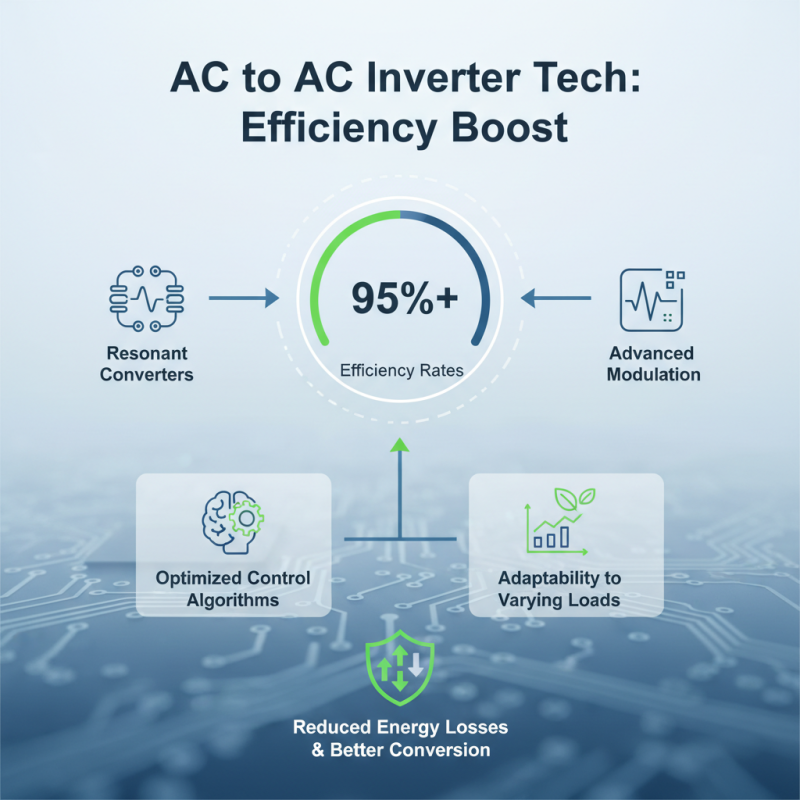
Recent advances in AC to AC inverter technology have focused on enhancing efficiency and overall performance. Recent studies indicate that efficiency rates have reached over 95% in some cases. Innovations like resonant converters and advanced modulation techniques have contributed significantly to this progress. By optimizing control algorithms, manufacturers have improved the adaptability of inverters to varying load conditions. This allows for better energy conversion and reduced losses.
Consider implementing the following tips for efficient power conversion: select high-quality components for durability. Regular maintenance checks can help identify inefficiencies early. Pay attention to the thermal management of inverters, as excess heat can decrease performance. Utilizing advanced cooling technologies can mitigate this issue and prolong equipment life.
While the market is witnessing impressive growth, challenges remain. Some devices lag in integration capabilities with renewable energy sources. Moreover, not all systems can adapt to new technological changes. As the demand for effective power conversion surges, it’s crucial to address these gaps. Continuous research will be necessary to ensure that AC to AC inverters can meet future energy demands.
Best Practices for Installing and Maintaining AC to AC Inverters
When installing AC to AC inverters, proper placement is crucial. Choose a well-ventilated area to prevent overheating. Avoid direct sunlight. The environment should be dry to protect components from moisture. Mount the inverter securely to reduce vibration. This simple step can extend its lifespan.
Regular maintenance is equally important. Check connections periodically to ensure they are tight and free of corrosion. Dust and dirt can accumulate, so clean the inverter regularly. If the inverter shows any wear, replace it promptly. Ignoring small issues can lead to bigger problems later.
Monitoring performance is key. Keep an eye on energy output. If you notice dips, investigate. Sometimes, a simple reset can solve it. Other times, it may indicate a deeper issue. Reflecting on these details can help optimize efficiency and prolong the inverter's life.