
Coaxial Circulators are essential components in many communication systems. They handle microwave signals, ensuring efficient signal routing. Their ability to protect sensitive components makes them invaluable.
Incorporating coaxial circulators can lead to several advantages. They minimize signal reflection, enhancing overall system performance. Their compact design allows for easy integration into various setups. But there are challenges to consider, such as potential losses in high-power applications.
Understanding coaxial circulators will help you realize their full potential. Their unique functionalities provide advantages that can elevate your system's performance. However, careful selection and installation are key. A well-informed choice can lead to significant long-term benefits.
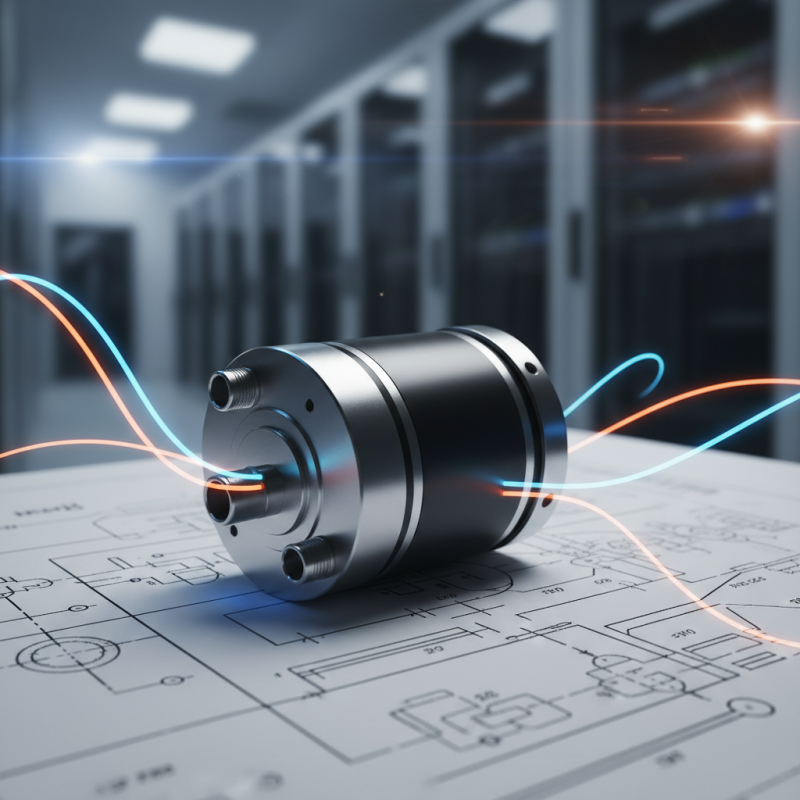
Coaxial circulators play a vital role in RF and microwave systems. They redirect signals while isolating different circuit components. This isolation is crucial for preventing interference between signal paths. Moreover, they enhance the system's efficiency by ensuring that unwanted signals do not affect performance.
The basic operation of a coaxial circulator is based on electromagnetic principles. Inside, there are ferrite materials that interact with magnetic fields. This design enables the circulator to route signals in one direction while blocking reverse flow. The result is a more stable system with improved signal integrity.
Using coaxial circulators can reduce losses and improve reliability. However, they can introduce some complexity into the system design. Engineers must carefully account for insertion loss and isolation specifications. Understanding these factors is essential for optimizing performance. While coaxial circulators are generally reliable, their installation requires precision to avoid issues.
Coaxial circulators play a crucial role in enhancing signal integrity. These devices allow signals to travel in one direction while isolating the unwanted reverse signals. This capability minimizes reflections and interference, leading to clearer communication. A study from the International Journal of Electronics found that systems using circulators exhibited a 30% reduction in signal distortion. Such improvements are vital in applications ranging from telecommunications to radar systems.
Signal integrity directly impacts system performance. According to a report by the Institute of Electrical and Electronics Engineers (IEEE), systems experience up to a 40% gain in efficiency when utilizing coaxial circulators effectively. Reduced interference not only enhances data throughput but also prolongs the lifespan of critical components. However, it’s essential to consider installation and maintenance. Improper setup can lead to limitations. Evaluating the overall design is key for realizing the full benefits. Organizations must prioritize understanding these devices to fully leverage their potential.
Coaxial circulators play a vital role in enhancing system efficiency. They allow for seamless signal flow, reducing interruptions. This capability directly translates to improved performance in communications and radar systems. By minimizing signal reflections, coaxial circulators help maintain signal integrity. This ensures that systems operate at optimal levels.
In systems where reliability is crucial, coaxial circulators can make a significant difference. Their ability to handle high-power applications while maintaining low insertion loss sets them apart. However, selecting the right circulator can be challenging. Factors like frequency range and insertion loss must be carefully considered. A mismatch can lead to suboptimal performance, which users need to be aware of.
Moreover, the installation process requires precision. Any slight misalignment can affect overall system performance. It is essential to conduct regular checks and adjustments. Familiarity with coaxial circulators is important for anyone involved in system design. Proper training and knowledge help in maximizing the benefits these components offer. Understanding both their advantages and limitations is key to achieving efficient performance.
Coaxial circulators are gaining traction for their compact design and space-saving benefits. These devices serve as essential components in various systems, particularly in RF and microwave applications. Their small footprint enables easier integration into space-constrained environments. A report from the Microwave Journal indicates that solutions featuring coaxial circulators have successfully reduced the dimensional requirements by up to 40%. This efficiency not only frees up valuable space but also simplifies the overall design process.
Moreover, the lightweight nature of coaxial circulators enhances their appeal. Regularly used in telecommunications, these circulators weigh significantly less than traditional alternatives. As a result, engineers can optimize the system's overall weight, contributing to mobile solutions. However, while many designs promise compactness, it's critical to ensure they do not compromise performance. Balancing size and functionality remains a challenge that professionals must address. Industry feedback highlights that some compact designs lack the thermal management required for prolonged operation, which could lead to reliability issues.
Consider the installation aspect as well. Compact designs may offer ease of placement. Yet, they sometimes require specialized mounting techniques. Operational versatility is a significant point of consideration when fully integrating these components into existing systems. Ultimately, while coaxial circulators provide numerous advantages, users must remain cautious about performance trade-offs.
Coaxial circulators offer significant cost-effectiveness and long-term reliability for various systems. Their compact design simplifies integration in a range of applications. Users often appreciate the reduced maintenance needs due to fewer mechanical parts. This translates to lower operational costs over time.
In many setups, coaxial circulators efficiently manage signal routing and minimize losses. This efficiency can lead to a noticeable reduction in energy consumption. However, achieving optimal performance might require careful selection and tuning during installation. Some users may overlook this, resulting in potential inefficiencies.
Durability is another key aspect. Coaxial circulators are built to withstand harsh conditions, making them suitable for diverse environments. Nonetheless, potential users should consider environmental factors during design. Regular monitoring and adjustments can help maintain reliability. In essence, while coaxial circulators provide immense benefits, attention to detail in their implementation is crucial for maximizing their advantages.
| Benefit | Description | Impact on System |
|---|---|---|
| Cost-Effectiveness | Reduced overall system costs through efficient signal management. | Lower operational costs and improved budget management. |
| Long-Term Reliability | Durability and consistent performance over extended periods. | Less frequent replacements lead to lower maintenance costs. |
| Improved Signal Integrity | Minimized signal loss ensures higher quality transmissions. | Enhanced performance in communication systems. |
| Compact Design | Space-saving installations due to their small footprint. | Flexibility in system design and layout. |
| Versatility | Applicable in various frequency ranges and system types. | Broader usability across different applications. |
| Low Insertion Loss | Minimal loss when signals pass through the circulator. | Improves overall system efficiency and performance. |
| Ease of Integration | Simple to incorporate into existing systems and designs. | Streamlines upgrades and expansions of current setups. |
| Enhanced Thermal Management | Effective heat dissipation during operation. | Maintains optimal performance and extends component life. |
| Excellent Isolation | Prevents interference between different channels. | Ensures clarity and reliability in signal transmission. |
| Increased System Capacity | Ability to handle more signals without degradation. | Facilitates growth in communication demands while maintaining quality. |