What is the Best 400Hz Power Supply for Your Needs in 2026?
In 2026, choosing the best 400Hz power supply is vital for various applications. The demand for efficient power solutions continues to rise. Many industries rely on 400Hz systems for their electrical equipment. This frequency provides better performance in aerospace, military, and telecommunications.
When selecting a 400Hz power supply, consider your specific requirements. Size, weight, and output stability matter. Some models offer portability for field use, while others are more suited for stationary installations.
However, not every solution fits every need. Evaluating your environment is essential. Will you encounter fluctuations? Is noise an issue? These factors require careful consideration. Even with numerous options, finding the perfect 400Hz power supply can still feel overwhelming. Reviewing various brands and models is crucial. There’s always room for improvement in your selection process, and understanding your unique needs will help streamline it.
Defining 400Hz Power Supply and Its Importance in Modern Applications
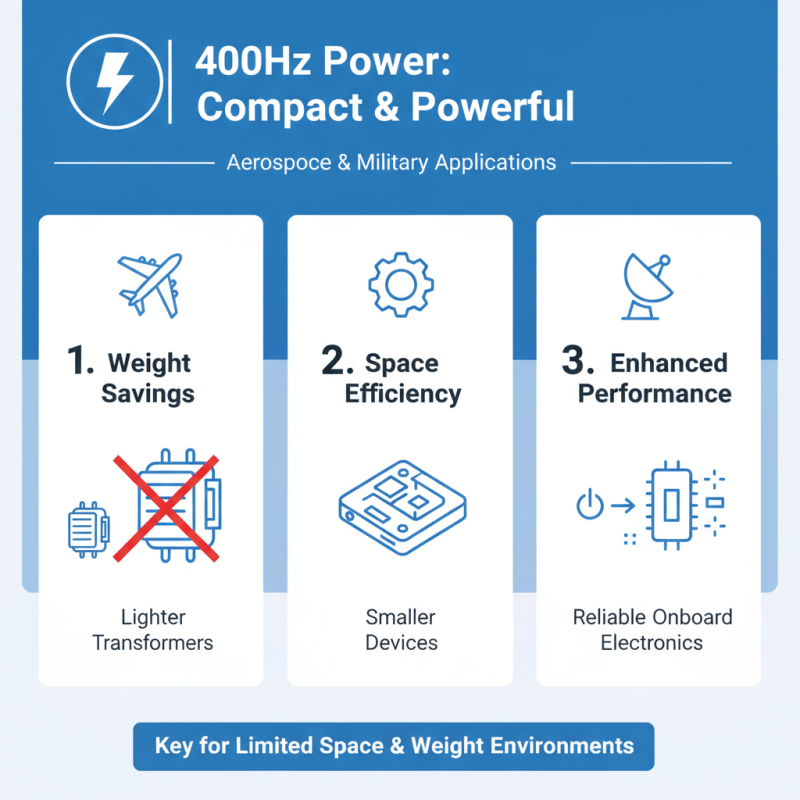
The 400Hz power supply has gained significant traction in modern applications, particularly in aerospace and military. Its higher frequency allows for lighter transformers and smaller devices. This makes it vital in environments where weight and space are limited. For instance, many aircraft use 400Hz systems to power their onboard electronics effectively.
When selecting a 400Hz power supply, consider its efficiency. A good power supply minimizes energy loss. Look for features like overvoltage protection and compact design. These features enhance safety and reliability. Also, verify compatibility with your devices. Not all electronics work seamlessly with high-frequency power.
Tips: Ensure you have adequate cooling solutions. High-frequency operations can generate more heat. Moreover, regular maintenance is crucial. Check connections frequently for wear and tear. This habit can prevent unexpected failures.
Key Factors to Consider When Choosing a 400Hz Power Supply
When selecting a 400Hz power supply, several factors come into play. Understanding these elements will help you make the right choice. One crucial aspect is the load capacity of the power supply. Many industrial applications demand specific output levels. A recent report from the Power Supply Manufacturers Association highlighted that over 75% of users prefer supplies that can handle varying loads effectively.
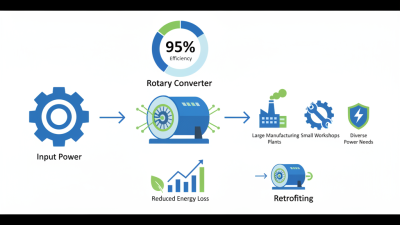
Efficiency is another vital factor. According to the International Energy Agency, power supplies account for about 30% of industrial energy consumption. Therefore, choosing a power supply with high efficiency ratings can lead to significant cost savings. Look for units with over 90% efficiency. This not only saves money but also reduces energy waste.
Additionally, consider the environmental impact. Many manufacturers are developing solutions to meet sustainability targets. A study shows that eco-friendly power supplies can lead to a 20% reduction in carbon emissions. This is increasingly important in a world focused on reducing environmental footprints. Reflecting on these factors can guide your decision-making process. Prioritizing load capacity, efficiency, and environmental impact can shape the future of your operations.
Top Brands and Models of 400Hz Power Supplies in 2026
In 2026, the demand for 400Hz power supplies continues to rise. Recent industry reports indicate a growth rate of 5.5% annually in this sector. This trend is driven by various industries, such as aviation and military applications, which require high-frequency power solutions. The efficiency and reliability of 400Hz power supplies are crucial for sensitive electronic systems.
Top models this year emphasize compact design and improved thermal management. New technology offers better efficiency, reducing energy loss. Users have noted some models, however, still struggle with noise levels and connectivity issues. Choosing the right model can be challenging. It’s important to consider both power output and form factor.
As 400Hz power supplies evolve, some brands have lagged behind in customer service and support. Industry feedback highlights that not all suppliers respond quickly to inquiries. This aspect can complicate maintenance and troubleshooting. Buyers should do thorough research before making a purchase. Clear comparisons of features and user reviews can help in making an informed choice.
400Hz Power Supply Performance Comparison in 2026
Comparative Analysis of Performance and Efficiency in 400Hz Supplies
When evaluating 400Hz power supplies, performance and efficiency are crucial factors. Recent studies indicate that power supplies with higher efficiency rates can reduce operational costs significantly. For example, a 400Hz supply with 95% efficiency can lead to energy savings of approximately 18% compared to those operating at 90% efficiency. These figures highlight the importance of selecting the right model for your needs.
However, efficiency isn't the only consideration. Some units may sacrifice performance for higher efficiency rates. A detailed analysis shows that the load regulation and stability can be affected by efficiency-focused designs. This often results in voltage fluctuations under varying loads, which can compromise sensitive equipment. Consistent performance, especially in critical operations, should never be overlooked.
Choosing a 400Hz power supply also involves practical factors. Installation space, cooling requirements, and maintenance need careful attention. A compact design may save space but could lead to overheating issues. Not every supply excels in all conditions. Hence, evaluating these aspects is vital for achieving an optimal balance between performance and efficiency.
Future Trends and Innovations in 400Hz Power Supply Technology
The landscape of 400Hz power supply technology is evolving rapidly. Reports indicate that by 2026, there will be substantial advancements aimed at efficiency and reliability. Engineers expect reductions in energy losses by up to 30%, enhancing the overall performance of systems reliant on this frequency. The automotive and aviation industries are key beneficiaries of these developments.
One significant trend is the integration of smart technology. Real-time monitoring and data analytics will provide insights into power usage. These innovations promise improvements in maintenance and performance tracking. Some studies predict that smart systems could reduce downtime by nearly 25%. Yet, integrating technology raises concerns about security and complexity.
Moreover, environmentally friendly options are gaining traction. The shift toward renewable energy sources will shape future 400Hz supplies. Emissions are expected to drop dramatically as more facilities adopt this approach. However, transitioning to greener technologies is not without challenges. The initial investment can be substantial and requires careful consideration. Balancing costs and benefits remains a critical discourse in engineering circles.
What is the Best 400Hz Power Supply for Your Needs in 2026? - Future Trends and Innovations in 400Hz Power Supply Technology
| Model |
Output Power (kW) |
Efficiency (%) |
Weight (kg) |
Features |
| Model A |
30 |
95 |
50 |
Compact Design, Remote Monitoring |
| Model B |
20 |
90 |
40 |
Fast Response, Environmentally Friendly |
| Model C |
50 |
93 |
60 |
High Reliability, Modular Design |
| Model D |
15 |
88 |
35 |
User-friendly Interface, Compact |
| Model E |
25 |
92 |
45 |
Built-in Protection, Smart Configuration |