
Top 10 Best Firefighting Drones for Global Buyers

Firefighting Drone technology is moving from experimental equipment to practical emergency infrastructure. NFPA’s Fire Loss in the United States During 2023 report recorded approximately 1.39 million fires nationwide. Every minute matters when heat blocks visibility, roofs weaken, and crews face toxic smoke. Aerial intelligence can reduce those blind spots.

The FAA’s Aerospace Forecast 2024–2044 also reflects continued growth in commercial drone operations. Grand View Research projects strong expansion in the global drone market through the decade. However, market growth does not guarantee operational value. A drone must survive heat, wind, water, and poor signal conditions. It must also deliver clear thermal images beside reliable standard video.

Retired fire chief Charles Werner, a public-safety UAS advocate, puts the principle simply: “Drones are a tool, not a replacement for firefighters.” That distinction matters. A capable Firefighting Drone can scan a burning warehouse, locate hotspots, inspect a damaged roof, or guide crews around dangerous entry points. It cannot replace incident command, trained judgment, or rescue teams.

This guide compares ten leading models for global buyers. The evaluation considers thermal performance, flight endurance, payload design, weather resistance, control range, software, training, maintenance, and regional support. Some specifications look impressive on paper. Real scenes are messier. Battery time drops in cold air, smoke can reduce image clarity, and water payloads may limit flight duration. These weaknesses deserve attention, not marketing language. The best choice depends on the mission, local conditions, budget, and the competence of the team operating it.
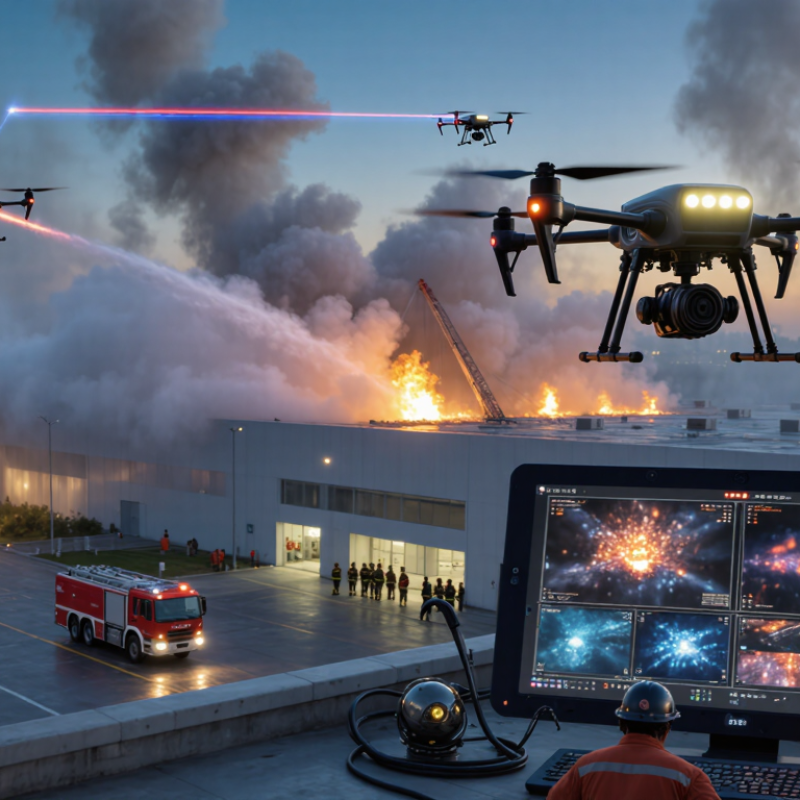
Top 10 Best Firefighting Drones for Global Buyers

What Firefighting Drones Are and How They Support Emergency Response

Top 10 Best Firefighting Drones for Global Buyers

Firefighting drones are unmanned aircraft designed to observe, map, and support fireground decisions. They may carry thermal cameras, zoom sensors, spotlights, or limited suppression payloads. A live thermal image can reveal hidden hotspots behind walls or beneath roofing. It can also show safer access routes when smoke blocks ground visibility. NFPA reported 1.39 million fires in the United States during 2023, with estimated property damage of 23.3 billion dollars. These figures show why faster situational awareness matters.

Drones support emergency response before crews enter unstable structures. Operators can inspect roof damage, track wildfire edges, and locate people using heat signatures. NIST research on public-safety unmanned aircraft emphasizes reliable video, accurate positioning, and repeatable operating procedures. These details matter more than impressive flight distance. A drone with a bright screen but weak thermal performance may waste precious minutes. Battery life also drops in cold, wind, and heavy rain. Small payloads limit water delivery. Reality bites.

Global buyers should assess camera resolution, thermal sensitivity, flight endurance, wind resistance, encrypted communications, and maintenance access. Training is equally important. NFPA 2400 highlights operational and safety considerations for small unmanned aircraft used by emergency services. However, standards do not remove human error. Smoke can confuse sensors, GPS signals may weaken, and one operator may struggle during a fast-moving incident. Buyers should request field-test records, failure data, and clear support terms, not only promotional specifications.

Key Features to Compare When Choosing a Firefighting Drone

Top 10 Best Firefighting Drones for Global Buyers

Choosing a firefighting drone requires more than checking flight time. Start with thermal imaging quality, because smoke can hide hotspots from ground crews. A reliable camera should show temperature differences clearly, even during night operations. Zoom capability also helps operators inspect roofs, storage areas, and narrow access points safely.

Compare battery endurance under real payload conditions, not empty-air demonstrations. Water, sensors, and protective equipment can reduce flight time quickly. Check wind resistance, heat tolerance, obstacle detection, and emergency landing behavior. A strong communication system matters around concrete buildings and industrial structures. Data security and stable video transmission should receive equal attention. Local training requirements and operating rules also deserve careful review. These details are easy to overlook.

Tips: Test the drone with thermal targets, light smoke, and realistic wind. Ask for maintenance records and battery cycle information. Confirm whether one operator can manage the system effectively. A complicated interface may slow decisions when visibility changes within seconds. No drone is perfect. Longer endurance can still disappoint if charging takes too long. Experienced teams should run repeated field exercises before relying on the aircraft during urgent incidents. One overlooked weakness may matter more than ten impressive specifications.

Top 10 Firefighting Drones for Global Buyers

Choosing among the top 10 firefighting drones for global buyers requires more than comparing prices. The best option should support thermal imaging, live video, and accurate night operations. A heat camera can reveal trapped people through smoke. It can also identify roof hotspots before flames spread. Flight stability matters in strong wind, especially near tall buildings and forest edges.

Look for a drone with at least 30 minutes of practical flight time. Advertised figures often use ideal conditions. Payload capacity should support a thermal camera, spotlight, loudspeaker, or gas sensor. A clear control screen helps crews read temperature differences quickly. Reliable obstacle detection reduces collision risks around cables and towers. Weather resistance is equally important. Rain arrives without warning.

Global buyers should check local aviation rules, radio requirements, pilot licensing, and privacy obligations before purchase. Data encryption and controlled access protect emergency footage. Spare batteries, charging equipment, training, and repair support can influence total cost more than the aircraft itself. A field trial is essential. Test it beside smoke, heat, dust, and moving vehicles. No drone is perfect. Some models lose endurance in cold weather, while others struggle with dense smoke or weak signals. That weakness should be recorded honestly, not hidden behind impressive specifications. Teams should also rehearse handovers between pilots, because communication failures can delay critical decisions.

Top 10 Best Firefighting Drones for Global Buyers - Top 10 Firefighting Drones for Global Buyers

Rank Firefighting Drone Type Primary Mission Typical Flight Time Typical Payload Thermal and Imaging Equipment Suppression Capability Best Operating Environment Main Limitation
1 Heavy-Lift Tethered Thermal Drone Continuous aerial observation, hotspot detection, and incident command support 4–8 hours with ground power 5–20 kg Radiometric thermal camera, high-resolution daylight camera, laser rangefinder Usually none; can carry lighting, communications, or gas-detection payloads Urban fires, industrial sites, ports, and large fixed incidents Tether limits mobility and requires a secure ground station
2 Heavy-Lift Water-Delivery Multirotor Delivering water or extinguishing agent to inaccessible hotspots 10–25 minutes per load 10–30 L of liquid Thermal camera plus daylight zoom camera for target confirmation Drop tank, spray bar, or directional nozzle depending on configuration Wildland fires, roof fires, steep terrain, and remote structures Short endurance and frequent refill cycles
3 Hose-Connected Suppression Drone Applying a continuous water stream while keeping crews away from hazardous areas 30–90 minutes typical; limited by pump and hose setup Water supplied through hose; no onboard tank Thermal camera, low-light camera, and nozzle-view camera Continuous water or foam delivery from a ground pump Industrial plants, storage facilities, tunnels, and building exteriors Requires a nearby water source, pump, and hose-management team
4 Long-Endurance VTOL Mapping Drone Large-area fire mapping, perimeter measurement, and evacuation planning 90–180 minutes 1–5 kg Thermal mapping payload, multispectral camera, and high-resolution mapping camera None; designed for detection and mapping Wildland fires, grasslands, forests, and large rural regions Not suitable for close-range suppression or confined spaces
5 Professional Thermal Inspection Multirotor Finding hidden heat, embers, roof hotspots, and electrical risks 30–55 minutes per battery 0.5–2 kg Radiometric thermal camera and optical zoom camera None; may carry compact markers or lighting equipment Urban response, industrial inspections, and post-fire assessment Battery endurance decreases in cold, wind, and heavy rain
6 Indoor Search-and-Rescue Microdrone Searching smoke-filled rooms, corridors, stairwells, and damaged structures 10–25 minutes 0.1–0.5 kg Thermal sensor, low-light camera, obstacle sensors, and two-way audio None; intended for reconnaissance and victim location Buildings, warehouses, tunnels, and confined industrial spaces Very limited range, payload, and wind resistance
7 Night-Operation Search Drone Locating people, vehicles, and fire boundaries after dark 35–55 minutes per battery 0.5–2 kg Thermal camera, starlight camera, spotlight, and loudspeaker None; supports search, communication, and scene lighting Night wildland response, disaster zones, and evacuation routes Requires approved night-flight procedures and trained operators
8 Rapid-Deployment Compact Multirotor Fast first-look assessment before larger emergency resources arrive 25–40 minutes 0.2–1 kg Compact thermal camera and stabilized daylight camera None; provides rapid visual intelligence Municipal fire response, traffic incidents, and small outdoor fires Lower wind tolerance and smaller sensor options than heavy platforms
9 Gas- and Air-Quality Monitoring Drone Measuring smoke hazards and atmospheric conditions around an incident 25–50 minutes 0.5–3 kg Particulate sensor, gas sensors, thermal camera, and weather module None; supports hazard-zone decisions and crew protection Chemical incidents, industrial fires, landfills, and smoke plumes Sensor readings require calibration and careful interpretation
10 Post-Fire Damage-Assessment Drone Documenting structural damage, residual heat, and recovery requirements 30–60 minutes 0.5–4 kg Thermal camera, high-resolution mapping camera, and optional LiDAR None; focused on inspection, mapping, and evidence collection Buildings, forests, infrastructure, and insurance assessment Operations may be restricted around unstable structures and active emergency zones

Data note: Figures are representative operating ranges for professional firefighting drone configurations. Actual performance varies with payload, weather, altitude, battery condition, flight regulations, and mission equipment.

Best Applications for Firefighting Drones in Different Environments

Firefighting drones are most valuable when heat, smoke, or unstable structures make close inspection dangerous. In high-rise fires, thermal cameras can map roof edges, stairwells, and trapped heat before crews enter. Over industrial yards, aerial views reveal burning containers, blocked roads, and changing wind patterns. Water-carrying models may support targeted suppression, but they cannot replace ground hoses or trained incident commanders. In forests, drones scan ridgelines and dry corridors, helping teams find spot fires after sudden wind shifts. Night flights can expose glowing roots that daylight crews may miss. That detail matters.

Different environments require different aircraft and sensors. Tunnel incidents need compact drones with strong lighting and reliable obstacle avoidance. Ports and coastal facilities may require wind-resistant platforms and corrosion-conscious maintenance. In urban districts, quieter drones can reduce disturbance while delivering live images to emergency coordinators. Field practice shows that communication quality often matters more than maximum flight time. A missed radio update can delay a safe decision. No drone solves every problem.

Tips: Match the drone to the hazard, not the brochure. Test thermal accuracy, battery endurance, signal stability, and payload limits in realistic conditions. Train operators with fire crews, and record weaknesses after every exercise. Weather changes quickly, especially near forests and tall buildings. Follow local aviation rules, privacy requirements, and emergency procedures. Even experienced teams can misread thermal images when smoke, glass, or water creates confusing reflections. Careful verification remains essential.

Safety, Regulations, Maintenance, and Operating Costs

Choosing among the top ten firefighting drones starts with crew safety, not camera quality. A thermal payload can reveal a trapped person through smoke, but heat, wind, and falling debris can defeat it. Operators need flight training, emergency procedures, and a clear handoff with ground commanders. Keep people outside the drone’s operating zone. That sounds obvious. It is often missed.

Global buyers must verify aviation approval, radio frequencies, remote identification, and local fire-service rules before purchase. Some regions require licensed pilots, maintenance records, insurance, or permission near airports and protected infrastructure. Cross-border deployment may also involve data storage and privacy restrictions. Regulations change. Check them locally. A written risk assessment should cover night flights, lost links, battery fires, and interference from dense urban equipment.

Maintenance is a recurring cost, not a service-date line. Inspect propellers, motors, landing gear, thermal sensors, seals, and batteries after every demanding mission. Salt air and firefighting foam can corrode connectors quickly. Budget for spare batteries, charging equipment, software support, calibration, training, transport cases, and qualified repairs. Battery replacement is easy to underestimate. In my experience, poor cleaning creates more downtime than dramatic crashes. Still, no fleet plan is perfect; teams should record faults honestly and revise procedures after each deployment.

Top 10 Best Firefighting Drones for Global Buyers

Safety, regulations, maintenance, and operating-cost planning benchmark

The chart compares the standard unmanned-aircraft altitude ceiling commonly applied in each market before a specific authorization, operational risk assessment, or special approval is required. These limits are regulatory planning references rather than product performance claims. Buyers should also budget for pilot training, airspace approval, batteries, thermal-camera calibration, water or suppressant payload handling, preventive maintenance, insurance, and local emergency-service integration.

Reference framework: FAA Part 107 in the United States, EASA rules for the European Union, UK CAA regulations, Transport Canada rules, CASA Australia, India’s Drone Rules, ANAC Brazil, SACAA South Africa, Japan’s Civil Aeronautics Act, and China’s civil unmanned-aircraft operating framework. Local restrictions may be more stringent near airports, populated areas, protected sites, and active emergency operations.