60Hz to 50Hz Frequency Converter Best Options Explained?
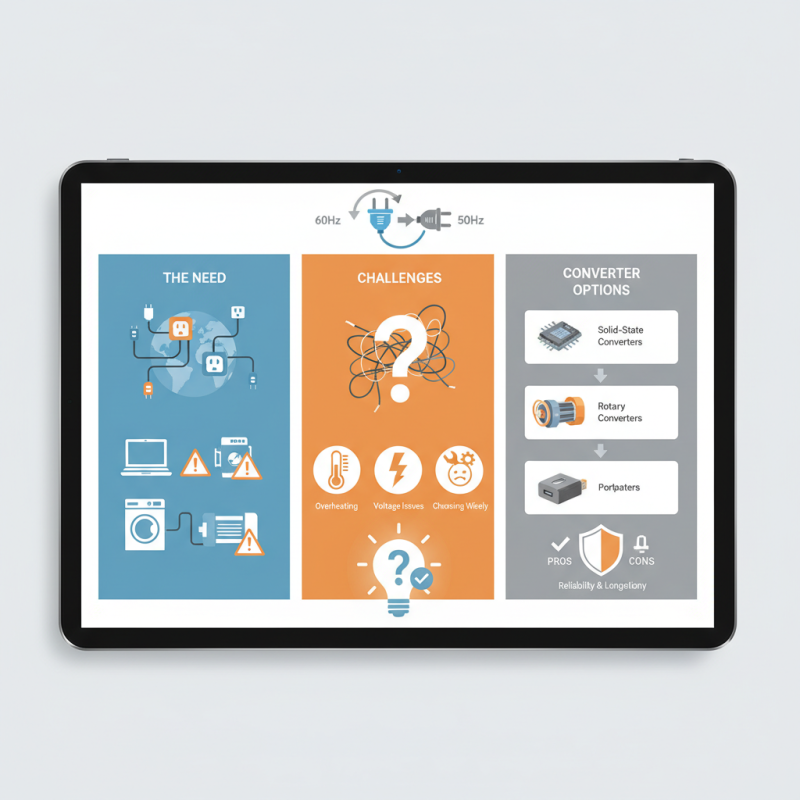
The need for a 60Hz to 50Hz frequency converter arises in many situations. In our globalized world, different regions use distinct power frequencies. This difference can create complications for equipment and appliances.
Choosing the best frequency converter can be daunting. Many options are available on the market. Some converters work efficiently, while others fall short. Users might face challenges, like overheating or voltage issues. It’s vital to understand specific requirements before making a choice. A reliable converter ensures optimal performance and longevity of your devices.
This guide delves into various options for a 60Hz to 50Hz frequency converter. We will explore the advantages and disadvantages of each. With this information, you can make an informed decision. Remember, not all converters are created equal. Choose wisely to avoid future frustrations.
Understanding Frequency Conversion: 60Hz vs 50Hz
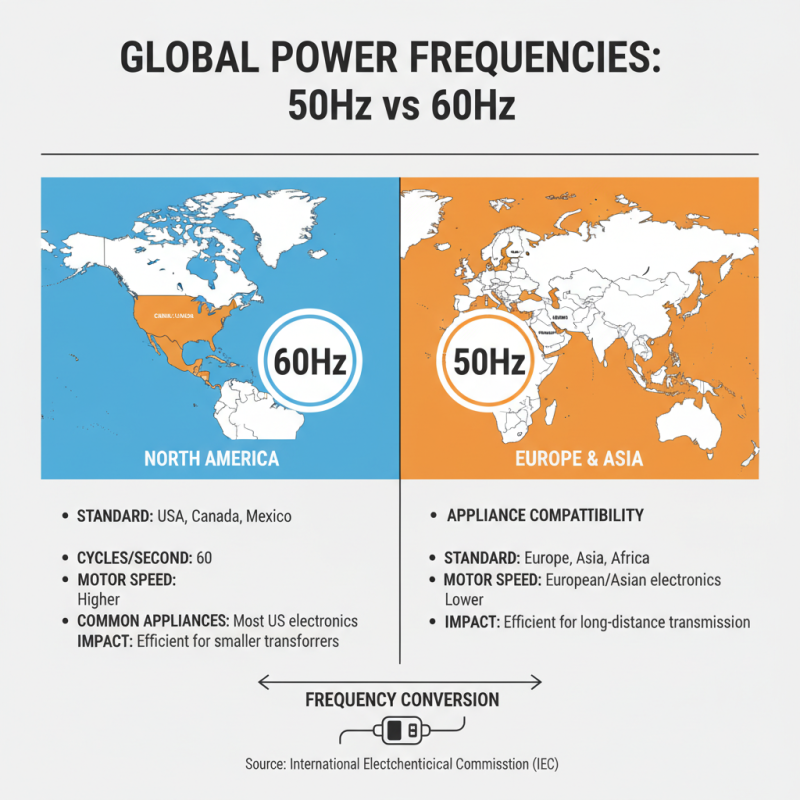
Frequency conversion plays a crucial role in various applications. Understanding the difference between 60Hz and 50Hz is essential for many regions. These frequencies are the standard for power supply systems. In the U.S., 60Hz is predominantly used, while 50Hz is common in Europe and Asia. The frequency impacts the operation of electrical appliances. For instance, motors designed for 60Hz may struggle with 50Hz.
Data from industry reports show significant differences in equipment efficiency. Motors operating at 60Hz can achieve up to 15% more efficiency than those at 50Hz. However, the actual performance can depend on various factors. Some devices may work, but they may not perform optimally. The result? This can lead to overheating or reduced lifespan.
Losses during conversion processes can result in decreased efficiency. High-quality frequency converters can mitigate some issues. Yet, these systems can be expensive. Implementing them requires careful evaluation of specific needs. Users must weigh the benefits against the costs. It’s not just about switching frequencies. It's about ensuring compatibility and sustainability in operations.
Types of Frequency Converters: An Overview
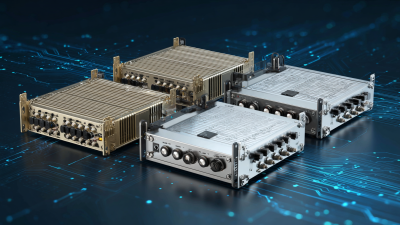
Frequency converters play a vital role in today’s electrical systems. They adapt electrical frequencies to meet specific requirements. Understanding these converters is essential for efficient operations. There are two primary types: static and rotary converters.
Static converters are commonly used for small applications. They offer compact designs and lower costs. Reports indicate that around 70% of small-scale businesses prefer static converters, due to their ease of installation. However, they may not support high power loads effectively. This could be an area where companies need to reassess their choices.
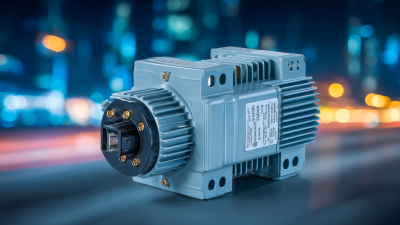
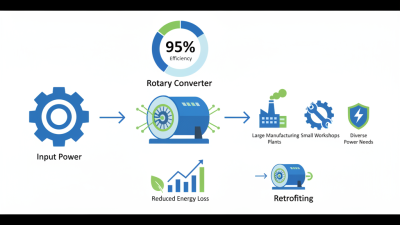
On the other hand, rotary converters excel in handling larger loads. While they are more expensive, their durability is undeniable. Approximately 60% of industrial setups rely on rotary converters for high-performance tasks. But these systems can be noisy and may require more maintenance. Users should weigh these aspects carefully. Evaluating the right type is crucial for achieving a balanced electrical system.
60Hz to 50Hz Frequency Converter Best Options Explained
| Type of Converter |
Input Frequency |
Output Frequency |
Power Rating (kW) |
Efficiency (%) |
| Static Frequency Converter |
60Hz |
50Hz |
10 - 500 |
95 |
| Rotary Frequency Converter |
60Hz |
50Hz |
30 - 2000 |
92 |
| Inverter-Based Frequency Converter |
60Hz |
50Hz |
5 - 1000 |
97 |
| Phase-Locked Loop Converter |
60Hz |
50Hz |
1 - 200 |
90 |
Key Factors to Consider When Choosing a Converter
When selecting a frequency converter from 60Hz to 50Hz, several key factors come into play. Power capacity is crucial. Make sure the converter can handle the total wattage of your devices. Exceeding this rating can lead to failure. Conversely, using a converter that's too powerful could be inefficient.
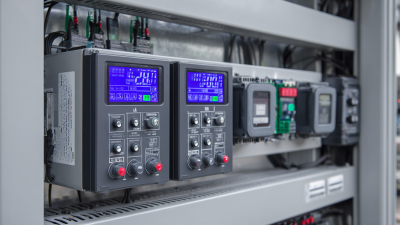
Another important aspect is efficiency. Look for converters that minimize energy loss. An efficient model can save money in the long run. Temperature control is also essential. Overheating can damage the unit. Some converters feature built-in cooling systems. Don’t overlook the size and portability. A compact design is often more convenient for home or travel use.
Lastly, consider compatibility. Not every device works perfectly with all converters. Some products may experience glitches. Read reviews and check user experiences. This can provide insight into potential issues. Researching can be overwhelming. Ultimately, balance your needs with available options. It's not about choosing the fanciest model. It’s about what fits your situation best.
Top Rated Frequency Converter Options Explored
When it comes to frequency converters, several top-rated options stand out in the market. A frequency converter converts electrical energy from one frequency to another, commonly from 60Hz to 50Hz. According to industry reports, the global market for these converters is expected to reach $9.5 billion by 2025, driven by increasing demand across various sectors.
Among the most appreciated features of frequency converters are energy efficiency and compact design. Some models can operate at over 95% efficiency. This is important in minimizing losses during conversion. Additionally, these converters often include integrated protection features, making them safer in demanding environments. However, the complexity of installation can be a barrier. Some users may find the learning curve steep.
User reviews highlight a few areas needing improvement, such as noise levels. Some converters can be quite loud, which is not ideal for residential settings. Maintenance frequency also varies, and some options were reported to require frequent checks. Though innovative, the technology isn't perfect. Users must carefully assess their needs before making a choice. Choosing a converter should align with specific frequency requirements and environmental conditions.
Installation and Maintenance Tips for Frequency Converters
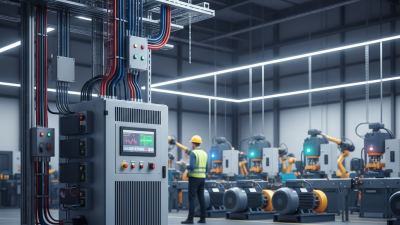
When installing a frequency converter, take care to follow guidelines closely. Ensure that the device is compatible with your existing system. Power ratings should match to avoid overload. Proper ventilation is crucial. An overheating unit can lead to failures.
Maintenance is key for longevity. Regularly check connections for wear. Dust can accumulate, affecting airflow. Clean the components gently. Avoid using harsh chemicals. Monitor performance metrics often. Anomalies can signal larger issues.
Documentation is vital. Keep a detailed log of any changes or repairs. This record is invaluable for troubleshooting. Remember, each installation is unique. Patience in the setup process can save time later. A poorly installed unit might cause stress. It's important to reflect on these aspects.