
10 Best Power Converters for International Buyers
Buying a power converter for international travel, trade, or equipment deployment requires more than matching plug shapes. Voltage, frequency, wattage, insulation, and heat management can determine whether a device works safely. A compact converter may look suitable on a hotel desk, yet overheat beside a high-powered hair dryer or laboratory instrument.
Robert W. Erickson, a respected power electronics researcher, describes the field clearly: “Power electronics is the application of solid-state electronics for the control and conversion of electric power.” That principle guides this comparison. Each recommended power converter should be examined against its real operating conditions, not only its advertised output. Check the source country, destination voltage, appliance rating, waveform requirement, and continuous load. Leave a safety margin.
Small details matter. A 100-watt converter may support a laptop, but not a 1,500-watt heater. Some sensitive equipment needs a pure sine wave output. Others require voltage conversion rather than a simple travel adapter. Certification markings can support confidence, but they do not replace careful specification checks. Standards and product availability also vary by market.
This list focuses on practical choices for international buyers, including portable models and higher-capacity units. It considers performance, build quality, thermal behavior, controls, warranty support, and user feedback. No ranking is perfect. A converter that performs well in Singapore may need different testing in Canada or Morocco. Recheck the label. That small step prevents expensive mistakes.
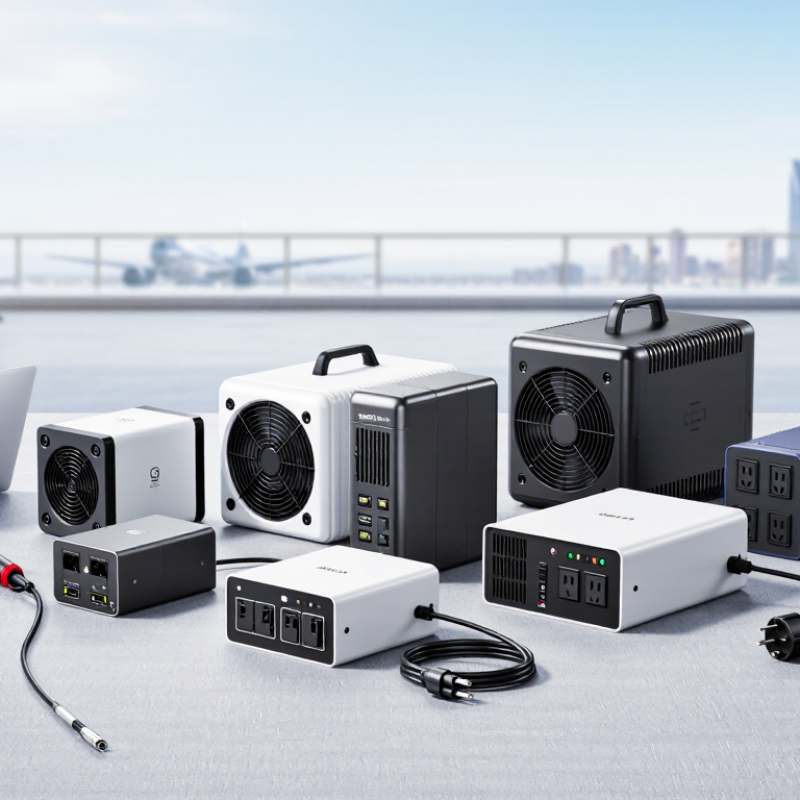
Global Voltage Standards: 100–127 V Versus 220–240 V Compatibility
Choosing among the 10 best power converters starts with voltage, not appearance. IEC 60038 identifies nominal systems from 100 to 240 volts, including 120, 127, 220, 230, and 240 volts. Frequency also matters: many regions use 50 Hz, while others use 60 Hz. A converter must match both the destination supply and the appliance input range.
Travelers from 100–127 V countries often need step-down conversion in 220–240 V destinations. The reverse trip may require step-up conversion. Check the appliance label carefully. “Input: 100–240 V” usually means no voltage conversion is needed. You may only need a plug adapter. That small distinction prevents unnecessary heat and expense.
Power rating deserves practical attention. A converter rated at 300 watts should not continuously drive a 280-watt appliance, especially with motor startup surges. The International Trade Administration’s country guides regularly list local systems near 110/120 V or 220/230/240 V, confirming why one universal assumption fails. The IEA’s Electricity 2024 report projects global electricity demand growth averaging 3.4% annually through 2026, reflecting wider appliance use and more cross-border equipment movement. In field checks, labels are sometimes unclear or poorly translated. That is inconvenient, but real. Recheck the wattage, frequency, grounding, and thermal ventilation before choosing a converter.
| Rank | Converter Profile | Input Voltage | Output Voltage | Recommended Continuous Capacity | Output Type | Frequency Compatibility | Best For | Important Selection Note |
|---|---|---|---|---|---|---|---|---|
| 1 | Universal 220–240 V to 100–120 V Step-Down Transformer | 220–240 V AC | 100–120 V AC | 1,000 W | Transformer-isolated AC; waveform follows the input supply | 50/60 Hz input; does not change frequency | High-power 100–120 V appliances used in Europe, Asia, Africa, or Oceania | Choose a capacity at least 25% above the appliance’s rated wattage; heating appliances may require additional margin. |
| 2 | Compact 220–240 V to 110–120 V Step-Down Converter | 220–240 V AC | 110–120 V AC | 300 W | Transformer-isolated AC | 50/60 Hz input; frequency unchanged | Small kitchen devices, low-power tools, lamps, and personal-care appliances | Not suitable for motors or compressors unless the converter specifically supports their starting surge. |
| 3 | Travel 220–240 V to 100–120 V Step-Down Converter | 220–240 V AC | 100–120 V AC | 100 W | Transformer-isolated AC | 50/60 Hz input; frequency unchanged | Low-wattage shavers, chargers, radios, and compact personal electronics | Confirm the appliance wattage from its rating label; a plug adapter alone does not perform voltage conversion. |
| 4 | Heavy-Duty 100–120 V to 220–240 V Step-Up Transformer | 100–120 V AC | 220–240 V AC | 1,500 W | Transformer-isolated AC | 50/60 Hz input; frequency unchanged | High-power 220–240 V heating appliances used in North America, Japan, Taiwan, or 127 V regions | Use a grounded outlet and verify that the appliance is designed for the available local frequency. |
| 5 | Medium-Duty 100–120 V to 220–240 V Step-Up Converter | 100–120 V AC | 220–240 V AC | 500 W | Transformer-isolated AC | 50/60 Hz input; frequency unchanged | Moderate-power kitchen equipment, lighting, and non-motorized appliances | Check the appliance’s startup current, especially for equipment containing fans, pumps, or compressors. |
| 6 | Compact 100–120 V to 220–240 V Step-Up Converter | 100–120 V AC | 220–240 V AC | 200 W | Transformer-isolated AC | 50/60 Hz input; frequency unchanged | Low-power 220–240 V devices, small lamps, and selected personal-care equipment | Do not use with appliances whose rated wattage or motor starting demand exceeds the converter limit. |
| 7 | Dual-Voltage 100–240 V AC to 12 V DC Power Converter | 100–240 V AC | 12 V DC | 60 W | Regulated low-voltage DC | Typically accepts 50/60 Hz input; output is DC | 12 V networking equipment, LED systems, automotive accessories, and small electronics | Match the output polarity, connector size, voltage, and required current; it is not an AC appliance voltage converter. |
| 8 | Universal-Input USB-C Power Converter | 100–240 V AC | 5–20 V DC, depending on the negotiated USB-C profile | 65 W | Regulated DC output with USB-C Power Delivery support | Typically accepts 50/60 Hz input; output is DC | Laptops, tablets, phones, cameras, and other USB-C rechargeable devices | Power Delivery voltage is negotiated with a compatible device; it cannot directly power a conventional 100–240 V AC appliance. |
| 9 | 100–240 V AC to 24 V DC Industrial Power Converter | 100–240 V AC | 24 V DC | 240 W | Regulated low-voltage DC | Typically accepts 50/60 Hz input; output is DC | Control systems, LED installations, small automation equipment, and network hardware | Use only with equipment rated for 24 V DC and confirm the required current, connector, enclosure, and grounding method. |
| 10 | 50/60 Hz Frequency Converter with Voltage Conversion | 100–120 V AC or 220–240 V AC, depending on configuration | 100–120 V AC or 220–240 V AC, depending on configuration | 300 W | Electronic AC output; waveform and regulation depend on the design | Converts 50 Hz to 60 Hz or 60 Hz to 50 Hz when specified | Frequency-sensitive clocks, certain motors, laboratory equipment, and specialized appliances | More expensive and less common than a transformer; verify waveform compatibility and required surge capacity before purchase. |
Related Posts
-
Understanding the Essential Role of Power Converters in Modern Energy Systems
-
How to Choose the Right Power Converter?
-

2025 Top Power Converter Solutions for Efficient Energy Conversion in Industry
-

10 Reasons Why Solid State Frequency Converters Are Revolutionizing Global Supply Chain Efficiency
-
How to Choose the Right Solid State Phase Converter for Your Business Needs
-
How to Choose the Right Three Phase Converter for Optimal Efficiency and Performance