China Top 10 Rotary Frequency Converter Manufacturers
China’s rotary frequency converter industry is moving from basic speed control toward smarter, cleaner, and more application-specific drive systems. This shift matters in factories, marine equipment, test benches, and aviation ground systems. A rotary frequency converter can change electrical frequency through a rotating machine set, providing stable output for equipment that needs a different power standard.
The market is substantial. The International Energy Agency reports that electric motor systems consume more than 40% of global electricity, while improved controls can reduce industrial energy use significantly. Grand View Research estimates the global variable frequency drive market at over USD 20 billion in recent years, with continued growth through 2030. These figures do not measure rotary frequency converter sales directly. Definitions differ. That limitation deserves attention.
Professor R. Krishnan, a recognized authority in electric drives, states, “The performance of an electric drive depends on the control of its torque and speed.” His point remains practical. A converter may look like a cabinet, but its reliability depends on insulation, bearings, cooling, waveform quality, and maintenance support. Listen carefully. China’s leading manufacturers now compete through customized voltage conversion, compact designs, protection systems, and export experience. However, supplier claims still require verification through test records, efficiency data, factory audits, and after-sales evidence. The following China Top 10 rotary frequency converter manufacturers overview examines those details, rather than relying only on rankings or promotional language. Some companies may appear stronger on paper than in the field. That is precisely where careful comparison becomes necessary.
What Is a Rotary Frequency Converter and How Does It Work?
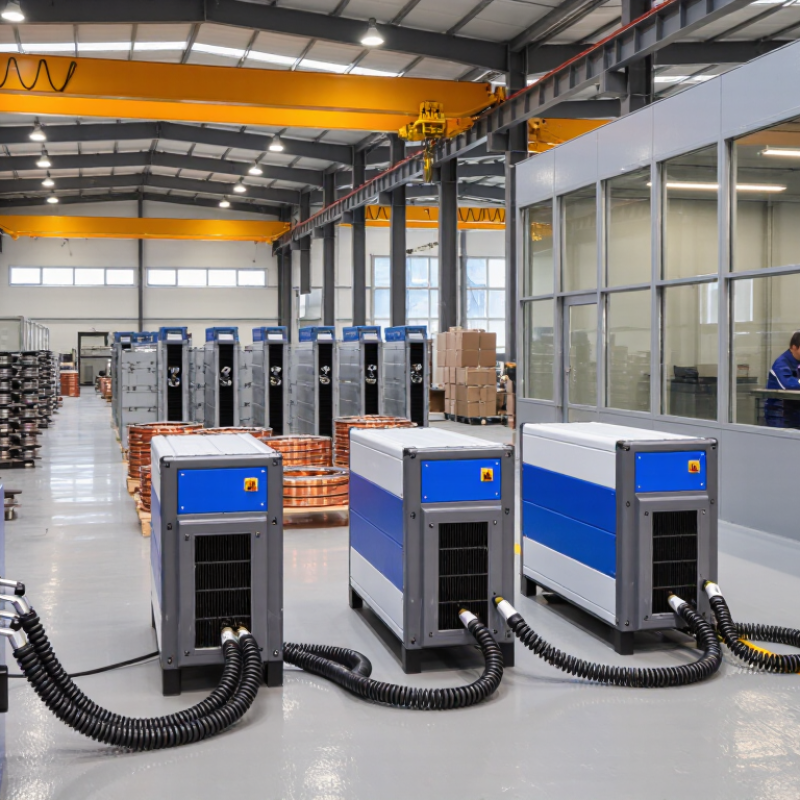
A rotary frequency converter changes electrical frequency through mechanical rotation. It usually contains an input motor, a shared shaft, and an output generator. The motor receives incoming alternating current and spins at a controlled speed. The generator then produces electricity at a different frequency, voltage, or phase arrangement.
Speed matters greatly. A two-pole machine running near 3,000 revolutions per minute can produce 50 hertz power. Near 3,600 revolutions per minute, it can produce 60 hertz power. Actual speed changes slightly under load, so control systems and voltage regulators help maintain stable output. The rotating shaft also provides electrical isolation between input and output. That feature can protect sensitive equipment from some disturbances.
It sounds simple. In practice, sizing requires care. Engineers check motor starting current, generator capacity, load type, harmonics, cooling, and expected operating hours. A converter feeding laboratory instruments may need cleaner power than one serving a basic motor. Regular bearing inspection and insulation testing remain important. Noise and vibration can reveal alignment problems before a failure occurs. The explanation is not perfect without the load details, because converter behavior changes with each application. Even a well-designed unit may waste more energy than a modern static converter, although it can offer strong isolation and rugged performance in demanding environments.
Key Evaluation Criteria for China’s Rotary Frequency Converter Manufacturers
Evaluating China’s rotary frequency converter manufacturers requires more than comparing catalog prices. Technical experience appears in application records, test procedures, and failure analysis. A capable supplier should explain how its converter handles voltage imbalance, motor starting current, heat, and continuous duty. Ask for measured efficiency at several loads, not one ideal reading. Installation photos, wiring diagrams, and maintenance logs provide useful evidence. Claims without test conditions are weak.
Engineering depth matters when the converter must match a specific motor, pump, compressor, or machine tool. Review input and output ratings, frequency range, overload capacity, cooling method, insulation class, and protection functions. Confirm whether components are traceable and firmware changes are documented. Independent laboratory reports can strengthen confidence, but factory tests still need clear instruments and acceptance limits. A neat test sheet is not proof by itself.
Reliability also depends on service after delivery. Check response times, spare-part availability, training, and remote troubleshooting arrangements. Ask how faults are recorded and how corrective actions reach later production batches. Visits to working installations may reveal noise, vibration, cabinet temperature, or awkward cable routing. Some evaluations overvalue low cost; field experience shows that mistake can become expensive downtime. Warranty length helps, yet warranty language may hide exclusions. A smaller supplier may communicate better, but its production capacity should be tested before a large order.
Profiles of China’s Top 10 Rotary Frequency Converter Manufacturers
China’s top ten rotary frequency converter manufacturers reflect a broad industrial ecosystem. Their profiles range from export-focused factories to engineering-led suppliers serving ports, mining, HVAC, and process automation. Several maintain in-house motor testing, while others rely on certified component partners. This difference matters during high-load operation.
Market reports suggest strong demand. Grand View Research values the global variable-frequency drive market at over USD 20 billion in 2023, with continued growth expected through 2030. The International Energy Agency reported that industry used about 37% of global final energy in 2022. Efficient frequency conversion can therefore reduce motor losses, especially in pumps, fans, and conveyors. However, reported savings vary sharply. Poor commissioning can erase much of the benefit.
Tips: Check input stability, overload capacity, cooling design, and local service coverage. Ask for test records. Do not trust only brochure efficiency.
Among the ten profiles, some manufacturers emphasize compact converters for machinery builders. Others specialize in high-power systems, regenerative control, or harsh environments with dust and heat. A smaller group develops customized control cabinets and supports remote diagnostics. Their export experience also differs; documentation quality can reveal practical maturity. My assessment remains cautious: “top” rankings often combine revenue, certifications, production scale, and visibility, but these measures are not identical. Buyers should compare verified field references, harmonic performance, warranty terms, and spare-part access before selecting a supplier.
Product Types, Technical Features, and Industry Applications
When evaluating China’s top 10 rotary frequency converter manufacturers, buyers should compare product types before prices. Motor-generator converters suit sensitive equipment requiring electrical isolation and low waveform distortion. Compact rotary units support single-phase to three-phase conversion in workshops. Larger systems handle adjustable input and output frequencies for testing, manufacturing, and grid simulation.
Technical differences matter during commissioning. Key specifications include rated power, voltage range, frequency accuracy, phase balance, overload capacity, and cooling method. A heavy flywheel can stabilize short disturbances, while an enclosed cabinet reduces dust exposure. Some designs offer bypass circuits, remote monitoring, and automatic protection against overcurrent or overheating. Engineers should check efficiency at partial load, not only the published peak value. Noise can also matter. A machine running beside a test bench may become a practical problem.
In aircraft component testing, converters reproduce 400 Hz power with controlled voltage and clean output. Shipyards use them for onboard equipment checks and shore-based commissioning. Factories apply variable-frequency systems to motors, pumps, and production lines. Laboratories often prefer isolated output for repeatable measurements. Site surveys should confirm cable length, ventilation, grounding, and starting current. In real projects, installation conditions are sometimes underestimated. That weakens otherwise strong equipment. Certification records, factory testing, service response, and spare-part availability provide stronger evidence than marketing claims. A perfect comparison is difficult, but measured performance remains useful.
How to Select the Right Chinese Manufacturer for Your Project
China Top 10 Rotary Frequency Converter Manufacturers: How to Select the Right Chinese Manufacturer for Your Project
Choosing among China’s top ten rotary frequency converter manufacturers requires more than comparing prices. According to MarketsandMarkets, the global variable-frequency drive market was valued at about USD 20 billion in 2023. This growth increases supplier choice, but also increases verification risk. Ask each manufacturer for load-test records, factory audit access, and component traceability. Confirm experience with your motor type, voltage, frequency, starting torque, and duty cycle. A converter for a laboratory pump may fail in a steel plant.
Check compliance with relevant IEC 61800 requirements, electromagnetic compatibility testing, insulation ratings, and enclosure protection. Request a witnessed factory acceptance test before shipment. Review cooling design, harmonic performance, overload capacity, and emergency support. The International Energy Agency reports that electric motor systems consume nearly half of global electricity. Small efficiency differences can therefore affect operating costs for years. Still, efficiency claims need measured data, not attractive brochures.
Tips: Compare identical test conditions. Require English manuals and wiring diagrams. Ask for spare-part availability and response times. Test a sample under your real load when possible. A low quotation can hide expensive commissioning work. No checklist is perfect. I would also inspect the production line, not only the showroom. Some suppliers communicate well but lack stable process control. That weakness may appear only after installation. Record every technical promise in the contract, including tolerances, warranty coverage, acceptance criteria, and training.
How to read this chart: The percentages represent a practical procurement weighting model for comparing Chinese rotary frequency converter suppliers. Electrical compatibility and system reliability should be verified first, followed by compliance, customization capability, service support, delivery performance, and total cost. These are evaluation weights rather than rankings or company-specific results.