How to Choose the Best 400hz to 60hz Converter for Your Needs?
Choosing the right 400hz to 60hz converter can significantly impact your operations. As the industry expert Mark Thompson states, "A well-chosen converter is essential for optimal performance." The need for efficient power conversion increases with technological advancements. You'll find various options, but not every converter meets specific requirements.
Understanding your needs is critical. Will you use the converter in aerospace, military, or commercial applications? Each scenario demands unique features. Focus on specifications like power ratings, efficiency, and size. It's easy to overlook details in the selection process. Many don’t consider the long-term costs associated with maintenance and reliability.
Remember, investing in a high-quality 400hz to 60hz converter ensures better reliability and performance. However, sometimes the best choice is not immediately obvious. Take time to evaluate options. Not every product on the market is trustworthy. Engaging with experts can provide valuable insights.
Understanding the Basics of 400Hz and 60Hz Power Systems
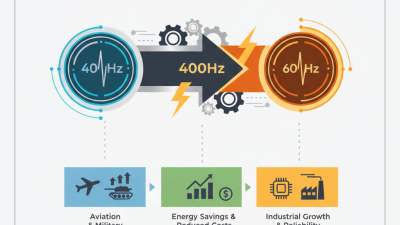
Understanding the differences between 400Hz and 60Hz power systems is essential for choosing the right converter. The 400Hz frequency is primarily used in aviation and military applications. It allows for smaller transformers and lighter equipment. In contrast, 60Hz is the standard frequency for most commercial and residential power systems in North America. The efficiency of 400Hz systems is notably higher, often resulting in less energy loss during transmission.
Research indicates that 400Hz systems can reduce size and weight requirements by nearly 50% compared to 60Hz systems. This is crucial for aircraft, where every pound matters. However, the higher frequency can complicate conversions. Devices designed for 60Hz may not operate efficiently, leading to potential performance issues. Industry standards recommend thorough assessment to avoid problems with voltage regulation and frequency compatibility.
Choosing the right converter isn't just about specifications. Consider the application requirements and potential future needs. A converter may meet current demands but struggle as technology evolves. Consulting expert reports can provide insights into system compatibility. Balancing technical specifications with practical applications is key.
Comparison of Power Converter Efficiency: 400Hz vs 60Hz
This chart illustrates the efficiency of power converters operating at 400Hz and 60Hz. The efficiency rates are critical for selecting the best converter based on your specific requirements.
Key Factors to Consider When Choosing a Converter
When selecting the best 400hz to 60hz converter, several key factors demand attention. Understanding your power requirements is crucial. Different devices have varying voltage and wattage needs. A suitable converter must meet these specifications to function correctly. Ignoring this may lead to inefficient operation or equipment damage.
Consider the type of loads you will connect. Resistive loads require different handling compared to inductive ones. Ensure your converter can manage both, if necessary. This adds versatility to your system. Think about the environment too. Is it indoor or outdoor? Extreme temperatures and humidity can affect converter performance.
Tips for selection include assessing the weight and portability of the converter. A lightweight design facilitates ease of transport. Visualize your installation area. Will space be an issue? Choose a compact model if space is limited. Check for safety certifications. This adds a layer of trust in the product’s reliability and performance. Ultimately, investing time in research pays off in the long run.
Types of 400Hz to 60Hz Converters Available in the Market
When searching for a 400Hz to 60Hz converter, consider the types available. Each option serves unique needs. There are rotary converters that provide physical rotary motion. These converters are great for heavy industrial use. They offer stability and durability. However, they tend to be bulkier and more expensive.
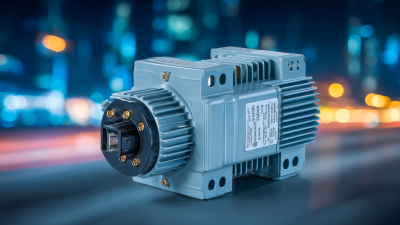
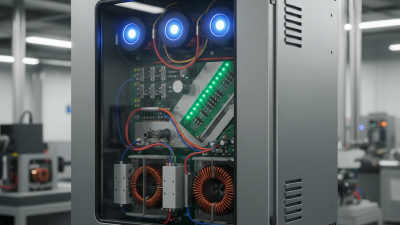
Another type is the static converter. These converters are compact and efficient. They utilize electronic circuits to convert frequencies. They are generally less costly and suitable for lighter applications. But they might not handle large fluctuations in power as reliably as rotary models.
There are also digital converters. These are the most advanced and can automatically adjust settings. They are ideal for sensitive equipment. Some users find them complicated to set up. Reflection on operational needs can ensure the right choice is made. Each converter type has its pros and cons, so careful consideration is necessary.
Evaluating Efficiency and Performance Metrics of Converters
When evaluating efficiency and performance metrics of 400Hz to 60Hz converters, certain factors deserve attention. Look at the power rating and load capacity. A converter's ability to handle both steady-state and peak loads is crucial. Check the efficiency percentage; higher numbers typically signify less energy loss. Consider the thermal performance as well. Effective heat dissipation prolongs the lifespan of the converter.
It's also necessary to assess harmonic distortion levels. Lower distortion results in cleaner power. This is vital for sensitive electronics. Be aware that converters can introduce inefficiencies. Even small fluctuations can affect your operations. Monitoring these aspects ensures optimal functionality.
Analyzing user reviews can provide insights into real-world performance. Seek feedback on reliability and after-sales support. Some converters might perform well initially but struggle over time. Do not rely solely on specifications. Comprehensive evaluations lead to smarter purchasing decisions. Understanding your specific needs will guide your choice.
Installation and Maintenance Tips for Optimal Converter Use
When installing a 400Hz to 60Hz converter, proper setup is crucial for efficiency and longevity. The positioning is key; ensure the device is placed in a well-ventilated area. Excess heat can lead to failure, with studies indicating that heat-related issues account for approximately 30% of converter malfunctions. Regularly maintaining clean filters and checking for dust buildup can enhance performance.
Routine inspections play a vital role in the upkeep of your converter. Data reveals that nearly 25% of converters fail due to overlooked maintenance. Look for signs of wear and tear, such as unusual noises or vibrations. These can often indicate underlying issues. Addressing problems early can prevent costly repairs and downtime.
User feedback highlights the importance of adhering to recommended protocols. Many users report a lack of understanding regarding the importance of load management. Operating outside specified limits can strain the converter. Familiarize yourself with load characteristics to avoid potential failures. Remember, even with advanced technology, vigilance is essential for optimal operation.