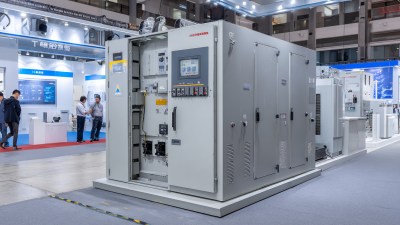
The transition from 50HZ to 60HZ frequency presents unique challenges. Industries such as manufacturing and telecommunications often require this shift for compatibility with various equipment. According to a report by the International Electrotechnical Commission (IEC), approximately 70% of industrial machinery relies on specific frequency standards. This highlights the importance of selecting an appropriate 50HZ to 60HZ frequency converter.
Moreover, the efficiency of these converters affects overall operational costs. An outdated or incompatible converter can lead to equipment malfunctions, costly downtime, and decreased productivity. Estimates suggest that improper frequency conversion can increase energy consumption by up to 30%. This is critical to consider as businesses look to optimize their energy usage while ensuring seamless operations across different systems.
Choosing the right 50HZ to 60HZ frequency converter goes beyond simple functionality. It involves evaluating various factors, including load requirements and environmental conditions. Many converters may not perform efficiently in specific settings. This careful consideration is essential for achieving the desired performance and reliability in operations. Thus, making an informed choice is paramount for electrical and mechanical integrity.
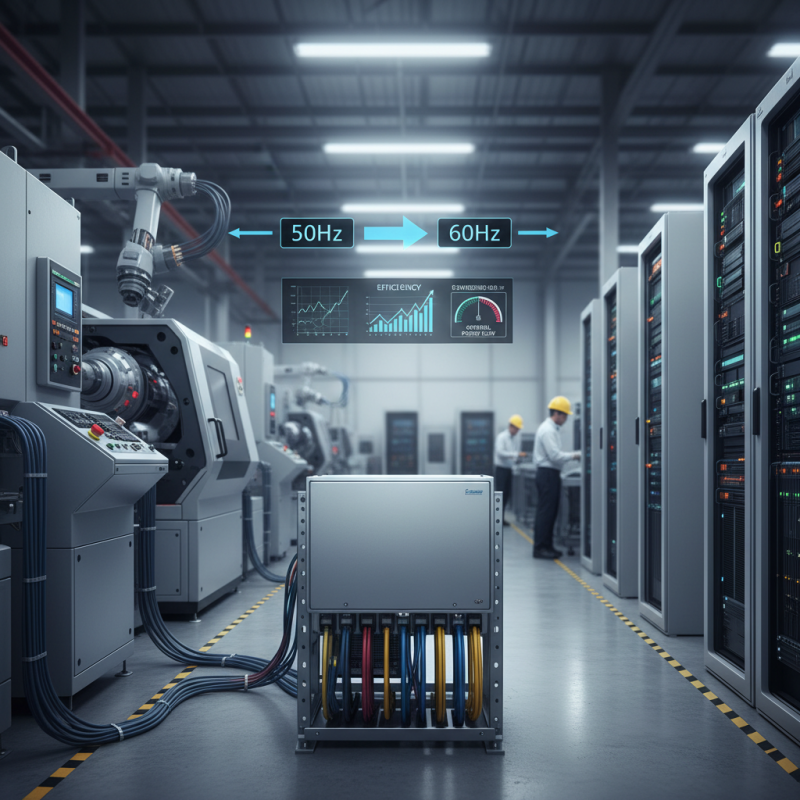
When dealing with power systems, understanding the difference between 50Hz and 60Hz is crucial. Most Asian and European countries use 50Hz systems. However, North America predominantly relies on 60Hz. This difference affects the performance of electrical equipment. A report from the International Electrotechnical Commission (IEC) indicates that many industrial machines are optimized for a specific frequency. Using equipment designed for 60Hz on a 50Hz supply can lead to inefficiencies and potential overheating.
Key features of frequency conversion must be considered. For instance, motors running on incorrect frequencies may not perform reliably. Motor speed depends on frequency; a 50Hz motor runs slower than a 60Hz motor. Shifting frequencies can also impact the torque and efficiency of machinery. According to a study by the National Renewable Energy Laboratory (NREL), improper frequency adjustments can incur energy losses of up to 20% in some applications. This emphasizes the importance of careful selection when converting frequencies.
Moreover, not all converters are created equal. Some converters may not support specific loads, leading to inadequate performance. Deciding on the right converter involves an evaluation of voltage requirements, load characteristics, and application types. Understanding these fundamentals is vital for choosing the right frequency converter, avoiding costly mistakes.
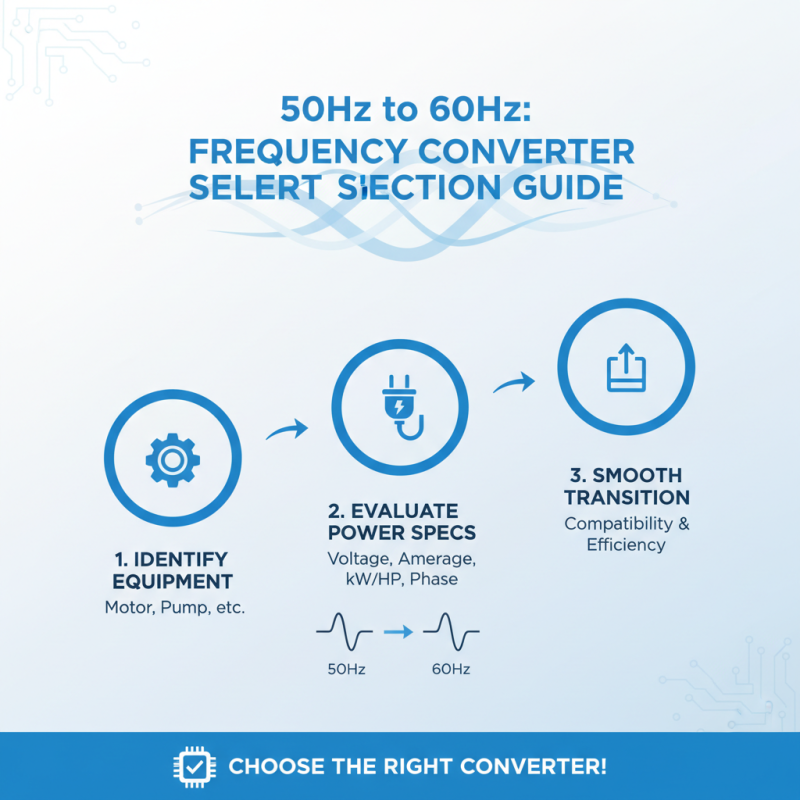
Choosing the right frequency converter involves understanding your power requirements. Identify the equipment you will operate. Evaluate its input power specs, voltage level, and frequency. This is crucial for a smooth transition from 50Hz to 60Hz.
According to research by the International Power Quality Council, improper frequency conversion can lead to a 10-30% decrease in efficiency for sensitive equipment. Additionally, certain motors may overheat if not matched correctly. This could result in costly long-term damage or failure.
Consider the total load your system will carry. Ensure that the frequency converter can handle the required wattage. A general thumb rule indicates that adding a safety margin of 20% is beneficial. This extra capacity accommodates unexpected surges or continuous duty cycles. It is vital not to overlook these details. Overlooking minor specifications can drastically impact performance. Always remember that every piece of equipment has its quirks and limitations.
When selecting a 50Hz to 60Hz frequency converter, understanding the types available is crucial. There are mainly two types: rotary converters and static converters. Rotary converters are often more robust. They can handle fluctuating loads. However, their size can be an issue. They are usually heavier and require more maintenance. You need to evaluate if you have sufficient space and resources for upkeep.
Static converters, on the other hand, are more compact. They offer efficient performance but may not suit all applications. These converters often provide cleaner output. However, you might face limitations with high inrush currents. Also, they sometimes struggle with complicated electrical systems. Reflect on your specific needs and the equipment you plan to power. Assessing load capacity is vital to avoid unexpected downtimes.
Consider additional features too. Some converters come with built-in protections against overloads or surges. This can save you from expensive repairs. Shorter conversion times could be beneficial for critical equipment. Yet, ponder whether these features justify the cost. Always weigh the trade-offs between price and performance as you make your decision.
When choosing a frequency converter, understanding key features is vital. One of the most important aspects is the power rating. Ensure the converter can handle the load of your equipment. An underpowered unit may fail and lead to equipment damage. Also, think about your application. Is it for sensitive electronics or heavy machinery? The type of load will impact your choice.
Operating efficiency is another critical feature. Look for converters with high efficiency ratings. This can save energy and reduce operating costs. Don't overlook the size and weight of the unit. A compact design may be necessary in limited spaces. Pay attention to the type of input and output connections. Compatibility with your existing setup is essential for seamless operation.
Tip: Always check the noise level of the converter. Some units can be quite loud, affecting workplace comfort. You might also want to consider a model with in-built protection features. This can prevent damage from voltage spikes or overloads. Last, read user reviews to gauge real-life performance. This may reveal insights not covered in product specifications.
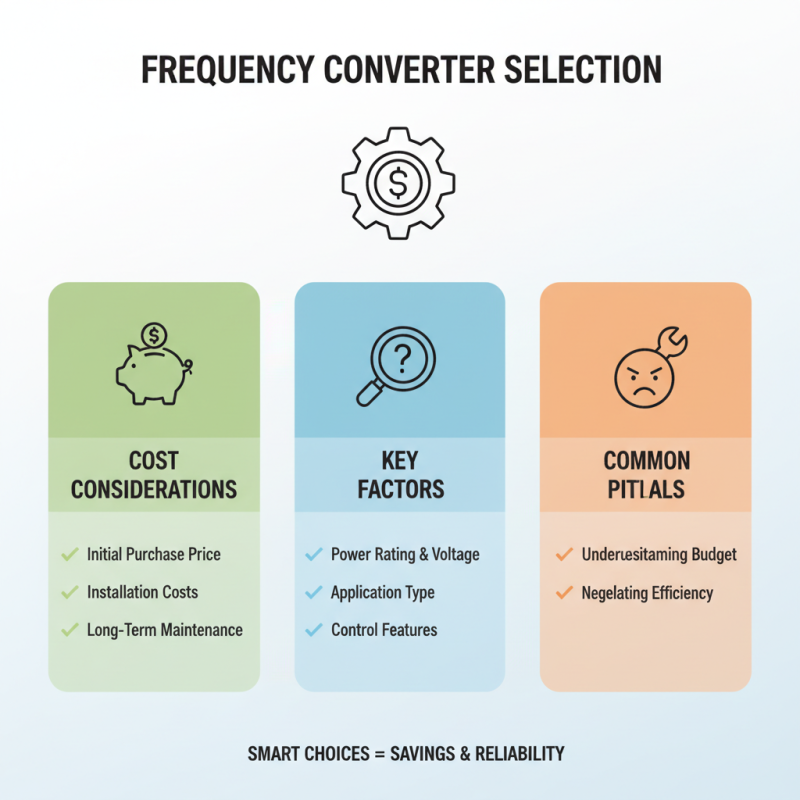
Choosing the right frequency converter involves considering various factors. Cost is often a primary concern for many users. Budget constraints can narrow down options significantly. It's essential to evaluate the initial purchase price and installation costs. Sometimes, cheaper models lead to higher maintenance expenses down the road. This can be frustrating and counterproductive.
Maintenance is another critical aspect. Frequency converters require regular check-ups to function optimally. The complexity of these devices can complicate repairs. A less expensive model might tempt users, but hidden maintenance costs can accumulate. Users should investigate the reliability of components. Frequent breakdowns can be a major headache.
Additionally, the learning curve for operation should not be overlooked. Some units come with intricate features that might confuse new users. An intuitive interface can save time and effort. In contrast, complicated settings may lead to errors. Ultimately, understanding both costs and maintenance will guide a better decision. It’s worth investing time in thorough research.