How to Choose the Best Smart Potentiometer for Your Needs?
In today's rapidly evolving technology landscape, selecting the right Smart Potentiometer is crucial for optimizing performance and functionality. Industry expert Dr. Lisa Chen, a leading engineer at SmartTech Innovations, emphasizes, "The right potentiometer can significantly enhance the accuracy of your electronic designs." This highlights the importance of making informed choices when choosing a Smart Potentiometer.
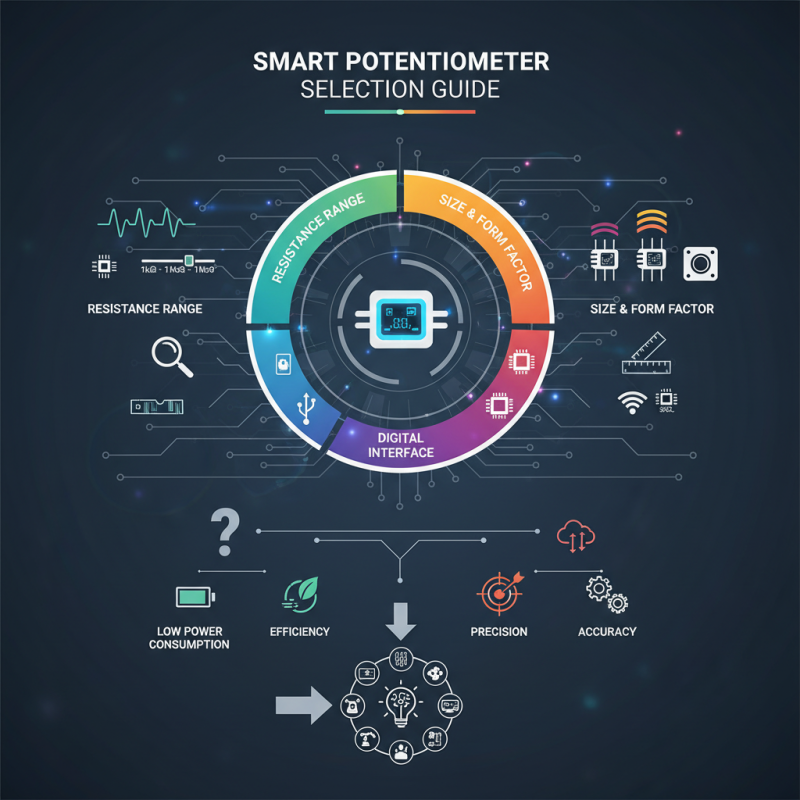
With numerous options available, one might feel overwhelmed. Not every potentiometer will suit your specific needs. Consider factors like resistance range, size, and digital interface capabilities. A poor choice can lead to inaccuracies and inefficiencies in your projects. Therefore, understanding your requirements is vital.
Additionally, it’s essential to reflect on how different applications might demand specific features. For instance, some applications may prioritize lower power consumption over precision. As you explore your options, remember that the best Smart Potentiometer for you must align with your unique project demands.
Understanding Smart Potentiometers: A Brief Overview
Smart potentiometers play a crucial role in various electronic applications. Unlike traditional ones, these devices are more versatile and often feature digital control. They adjust resistance dynamically, making them suitable for precise tasks. Understanding their functionality is essential for making informed choices.
The components usually consist of a resistive element and a wiper. A smart potentiometer allows for programmable control, offering more flexibility. They can interact with microcontrollers, which can enhance functionalities in audio equipment, robotics, and automation systems. The ability to control voltage levels can significantly impact performance in these devices.
However, selecting the right smart potentiometer is not straightforward. Users should consider factors like resolution, speed, and power consumption. Many options exist, which can complicate decision-making. It is important to reflect on specific needs before choosing. Ultimately, the better the fit, the more effective the application. Understanding the nuances can lead to better implementations and performance improvements.
Key Features to Consider When Selecting a Smart Potentiometer
When selecting a smart potentiometer, several key features deserve attention. Accuracy is paramount. A high-resolution potentiometer ensures minimal error in output. According to industry reports, systems with less than 1% error rate perform significantly better in applications like audio engineering and robotics.
Another critical feature is the range of resistance values. A versatile smart potentiometer should ideally cover a wide spectrum of resistance. This allows adaptability for various projects. The integration of digital interfaces like I2C or SPI can enhance compatibility with microcontrollers, improving overall functionality. Recent data suggests that devices supporting these interfaces are preferred in 75% of modern applications.
Tips: Always confirm the operating temperature range. Too much heat can reduce lifespan. Also, consider the potentiometer's physical size for your project layout.
Review the power handling capability. An inadequate power rating can lead to failures. Manufacturers report that 20% of potentiometers fail due to exceeding their power limits. This can be avoided with thorough checking.
Types of Smart Potentiometers and Their Applications
When selecting a smart potentiometer, understanding its types is vital. There are several types available, each with unique features. Analog smart potentiometers are common in audio equipment. They offer smooth adjustment and are reliable for volume control.
Digital smart potentiometers are suitable for precise applications like robotics. They enable fine-tuned adjustments and can be controlled via microcontrollers.
Another type is the programmable smart potentiometer. This variant offers flexibility, allowing users to set specific resistance values. These are often utilized in settings where memory settings are beneficial. For instance, in custom audio configurations, users can save their preferred levels.
However, each type may have limitations. Analog models can suffer from wear over time. Digital options might be more complex to set up. Programmable potentiometers require programming knowledge, which can be a barrier for some users. Always assess individual needs against the strengths and weaknesses of each type. This ensures that the best choice aligns with application requirements.
Compatibility and Integration: Ensuring Seamless Operation
When selecting a smart potentiometer, compatibility and integration are crucial. Seamless operation lies in ensuring that the potentiometer works well with existing systems. According to industry research, around 73% of product failures relate to integration issues. This statistic underscores the importance of verifying compatibility with controllers and software used in your projects.
It's essential to consider communication protocols. Many smart potentiometers support I2C, SPI, and UART protocols. These protocols allow for efficient data transfer. However, not all systems may support these options. A mismatch can lead to performance issues or complete failure to integrate. Moreover, 65% of engineers reported challenges in adapting new components due to compatibility woes.
Testing the potentiometer within the intended environment is vital. Anecdotal evidence suggests that even minor discrepancies in voltage ratings can cause significant problems. For instance, improper voltage levels may distort signal quality or lead to erratic performance. Take the time to simulate real-world conditions with prototypes. Understanding how a new component interacts with the legacy system can save time and resources. Integrating technology is inherently complex, yet essential for achieving optimal performance.
Budget and Brand Considerations for Smart Potentiometer Selection
When choosing a smart potentiometer, budget is a critical factor. Prices can vary widely, making it essential to define your spending limit. High-end models may feature advanced functionalities but can strain your resources. Consider your application needs. Sometimes, an entry-level option suffices for basic tasks. Establishing a clear budget helps narrow your choices.
Brand reputation plays a vital role in your decision. Established brands often promise reliability and support, but they may come at a premium. Newer companies may offer competitive pricing with unique features. However, they might lack a solid track record. Assess user reviews and expert opinions. Researching these can highlight the performance of brands over time. Pay attention to both positive and negative feedback; it provides a broader perspective.
Always evaluate your unique requirements alongside budget and brand. Not every device fits all situations. Reflect on the settings where you will use the potentiometer. You might find that a less expensive option meets your needs effectively. Embrace the process of trial and error. Identify your priorities, and document your findings. This helps in making informed choices for future projects.
How to Choose the Best Smart Potentiometer for Your Needs?
| Parameter | Description | Budget Range | Use Case |
| Type | Analog vs. Digital | $10 - $100 | General Applications |
| Resolution | Bits (e.g., 8-bit, 10-bit) | $15 - $150 | Precision Control |
| Interface | I2C, SPI, or Analog | $20 - $200 | Embedded Systems |
| Supply Voltage | Operating voltage range | $10 - $80 | Battery Operated Devices |
| Temperature Range | Operating conditions | $12 - $100 | Industrial Applications |
