Digital Solar Bus Stops Tips for Global Buyers at Canton Fair?
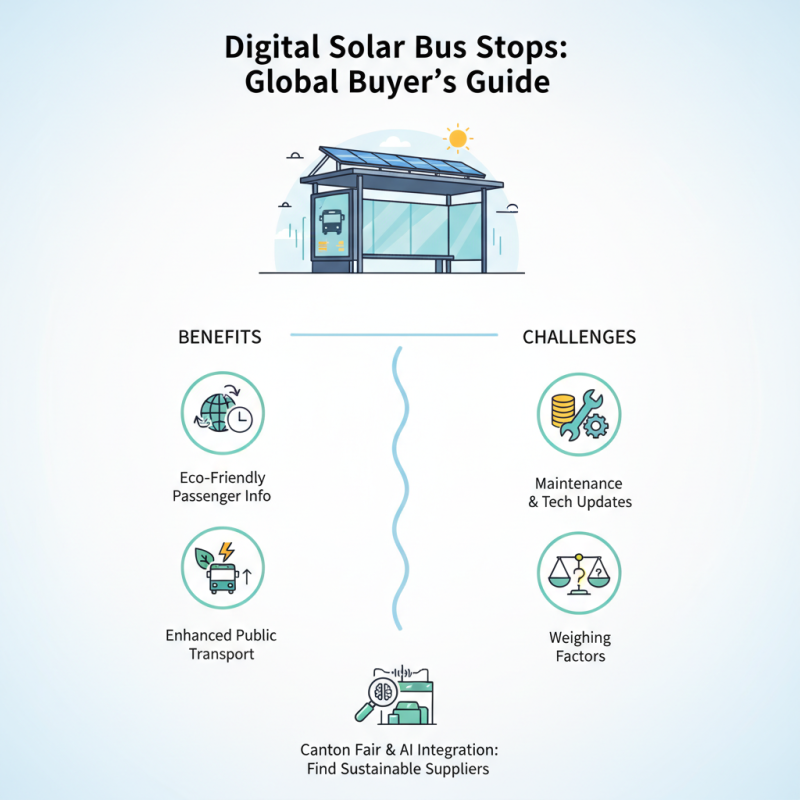
The digital revolution is reshaping urban infrastructure. One exciting innovation is the emergence of Digital solar bus stops. These eco-friendly structures provide real-time information to passengers. They harness solar energy, blending sustainability with technology.
At the upcoming Canton Fair, global buyers will see these solar bus stops as a key attraction. Buyers can explore how these structures enhance public transport efficiency. The integration of AI in the Fair will help attendees identify suppliers focused on sustainability.
However, the adoption of digital solar bus stops is not without challenges. Installation costs can be high. Maintenance and technology updates are ongoing concerns. Buyers need to weigh these factors carefully before making a decision.
Understanding the Concept of Digital Solar Bus Stops
Digital solar bus stops are an innovative solution to modern public transport challenges. These bus stops integrate solar panels to harness renewable energy. According to a report by the International Renewable Energy Agency, solar energy usage has grown by 20% globally over the past decade. This growth reflects a shift towards sustainable practices in urban infrastructure.
The concept extends beyond energy generation. Digital solar bus stops often feature smart technologies, like real-time arrival information and Wi-Fi connectivity. A study by the Smart Cities Council found that 70% of urban dwellers value smart tech in public transportation. This indicates a growing demand for convenience and connectivity in public spaces. However, the implementation of such technologies can face obstacles. High initial costs and varying local regulations complicate installations.
Furthermore, some solar bus stops lack adequate integration with existing transportation systems. This can lead to confusion among commuters. A user-friendly design is crucial for these installations to succeed. Proper maintenance is also essential, as neglect can lead to system failures and dissatisfaction. Enhancing the functionality of digital solar bus stops requires ongoing evaluation and adaptation.
Key Features to Consider in Digital Solar Bus Stop Designs
When exploring digital solar bus stops, buyers should prioritize key design features. Solar panels should be efficient and properly positioned. Reports indicate that high-efficiency solar panels can convert up to 22% of sunlight into energy. This is crucial for areas with limited sunlight. The energy must power digital displays and lighting effectively.
Another important aspect is durability. Bus stops face varying weather conditions. A study highlighted that materials like aluminum and tempered glass can withstand severe weather, including heavy rain and winds. Buyers should ensure that these stops are vandal-resistant as well.
Digital integration is essential too. Smart technology enables real-time updates. A survey showed that 75% of passengers prefer live updates on bus arrivals. Keeping users informed improves their experience. Nevertheless, the integration process can be complex and requires careful planning. Proper implementation can lead to significant enhancements in public transportation efficiency.
Key Features to Consider in Digital Solar Bus Stop Designs
Sourcing Digital Solar Bus Stops at the Canton Fair
As global buyers and stakeholders converge at the Canton Fair, sourcing digital solar bus stops becomes a pivotal focus. These stops not only enhance public transport infrastructure but also promote sustainability. Reports indicate that the solar energy market is expected to reach $223.3 billion by 2026, driven by advancements in solar technology. Investing in solar bus stops can contribute significantly to energy efficiency and reduce carbon footprints.
When evaluating suppliers, consider their technology and service offerings. Look for manufacturers that use high-efficiency solar panels. Pay attention to the integration of smart features, like real-time passenger information. These elements can improve the user experience and operational efficiency.
Tip 1: Assess the durability of materials used. Bus stops need to withstand harsh weather. Tip 2: Verify compliance with local regulations. Not every product will meet the guidelines you need. Random checks can help ensure quality.
The challenge lies in balancing cost and performance. Buyers often encounter trade-offs between quality and budget constraints. It’s essential to reflect on long-term value rather than just initial spending. Making informed decisions at the Canton Fair can yield better outcomes for sustainable urban mobility.
Evaluating Sustainability and Efficiency of Digital Solar Bus Stops
Digital solar bus stops are revolutionizing urban transit. These installations harness solar energy to power displays and technology. According to a recent report, implementing solar bus stops can reduce energy costs by over 30%. This is an appealing proposition for cities aiming to enhance sustainability.
When considering these systems, efficiency is crucial. Ensure that the solar panels can capture maximum sunlight. Poor positioning can lead to inadequate energy supply. A study found that 25% of installations underperform due to suboptimal angles. Aim for locations that receive abundant sunlight throughout the day.
Tips for buyers at fairs: prioritize quality over price. Investigate manufacturers’ reputations and sustainability practices. Certifications like ISO can indicate reliability. Keep an open mind, as not all high-priced options guarantee quality. Engage with multiple suppliers to compare solutions that fit your city's specific needs. Emphasizing smart design and eco-friendliness will benefit urban environments and enhance user experience.
Navigating Supplier Relationships During the Canton Fair
Building a strong supplier relationship during the Canton Fair is crucial. Many buyers rush through the event, missing opportunities to connect. It's essential to take time. Approach potential suppliers with clear questions and goals. This helps in gauging their reliability and product quality. A focused conversation can reveal insights that brochures often miss.
Observing a supplier's booth is equally important. Notice how they present their products. Are they attentive to visitors? A well-organized booth often indicates professionalism. Make notes on what attracts you. Follow up with suppliers after the fair. A quick email can reinforce your interest. This is a chance for both parties to reflect and clarify expectations.
Building trust takes time. Not all suppliers will meet your needs right away. It is vital to weigh their responses carefully. Share your concerns if something seems off. Honest communication helps to navigate misunderstandings. Establishing a good rapport can lead to fruitful collaborations in the future.