How to Use a 400Hz to 60Hz Converter Effectively?

In today’s fast-paced technological landscape, the importance of effective power conversion cannot be overstated. A 400Hz to 60Hz converter plays a vital role in ensuring compatibility between various electronic systems. According to a report from the International Electrotechnical Commission (IEC), the demand for efficient frequency converters is expected to grow by 12% annually through 2025. This highlights the industry's shift toward enhanced power solutions.

Renowned industry expert Dr. Emily Thompson states, "Selecting the right 400Hz to 60Hz converter can significantly improve operational efficiency and extend equipment life." Her insights emphasize the need for users to understand their power requirements. Many professionals overlook crucial factors like load capacity and heat dissipation during the selection process.

Establishing a deep understanding of the specific needs of your equipment is essential. Rushing into purchasing a converter can lead to inadequate performance and costly mistakes. The goal should be to bridge the gap between high-frequency systems and standard power sources seamlessly. Focusing on these aspects can lead to greater efficiency and reliability in operations.
How to Use a 400Hz to 60Hz Converter Effectively?

Understanding the Basics of 400Hz to 60Hz Conversion
How to Use a 400Hz to 60Hz Converter Effectively?

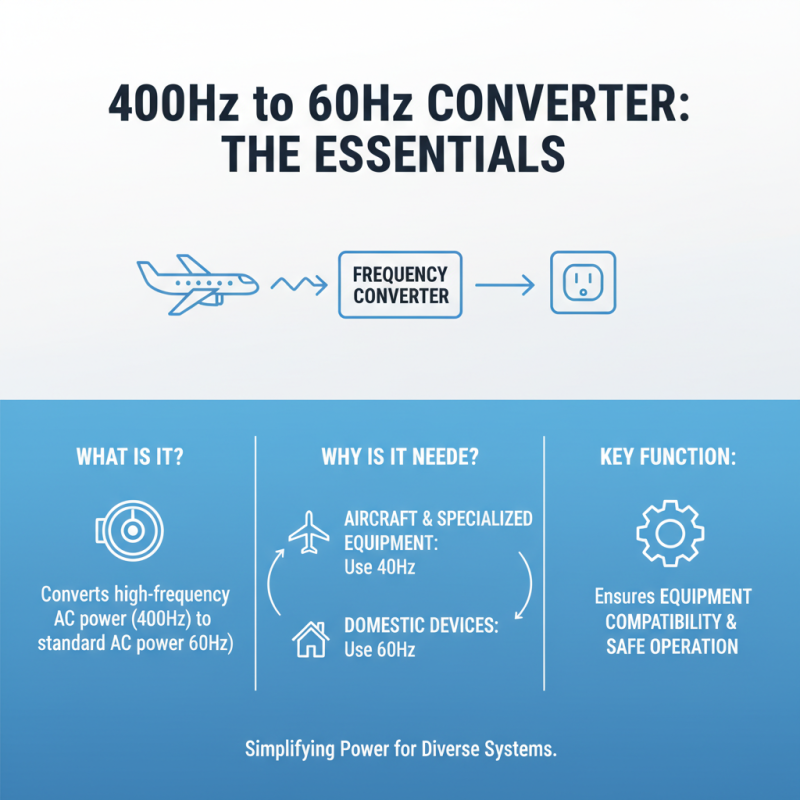
When dealing with a 400Hz to 60Hz converter, understanding the fundamentals is crucial. The frequency of electrical systems determines equipment compatibility. Many aircraft and specialized equipment operate at 400Hz. However, most domestic devices run at 60Hz. Thus, effective conversion is key.

The conversion process involves several components. A reliable converter should handle voltage fluctuations. This ensures smooth operations for sensitive electronics. Moreover, users often overlook the power rating. Using a converter with insufficient capacity can lead to failures. Testing the converter under load is essential. Observing how it performs with different devices can provide insights.

Considerations include the output waveform quality. A modified sine wave might not suit all devices. Certain equipment needs pure sine waves for proper function. Users should evaluate their needs before jumping in. Mistakes in selection can lead to lost time and resources. Reflecting on these choices can avoid future problems.
Identifying Applications for 400Hz and 60Hz Power Sources

When dealing with power sources, understanding the applications for 400Hz and 60Hz can be crucial. The two frequencies serve different needs. Aircraft systems typically employ 400Hz to minimize weight and size. This frequency allows for smaller transformers and lighter components. It’s beneficial for efficient power distribution in aviation.

On the contrary, 60Hz is the standard for commercial and residential use. Most electrical devices and appliances rely on this frequency. It's vital for everyday conveniences like refrigerators and lights. Sometimes, transitioning between these two frequencies can be tricky. Equipment designed for one may not function properly on the other.

Choosing the right converter is essential. Ensure it matches the required specifications for your setup. Ignoring compatibility can lead to equipment failure. For instance, a power tool may burn out if used with the wrong frequency. Users should always analyze their specific needs before making decisions. Balancing efficiency and safety is critical in any project.

Choosing the Right Converter for Your Needs

How to Use a 400Hz to 60Hz Converter Effectively?

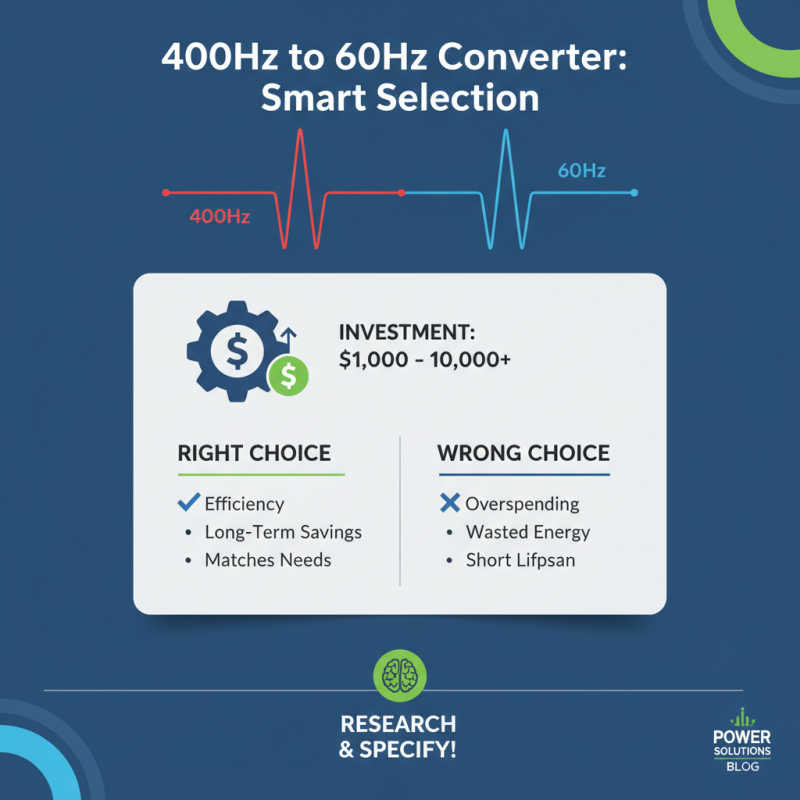
Choosing the right converter is crucial. A 400Hz to 60Hz converter can be a significant investment. Proper selection ensures efficiency and long-term savings. According to industry data, converters can range from $1,000 to $10,000, depending on capacity. Understanding your specific needs is vital to avoid overspending.

Consider the applications you will use the converter for. Military equipment often runs on 400Hz. Meanwhile, commercial systems typically require 60Hz. Misalignment can lead to equipment failure or reduced performance. For instance, using the wrong converter could incur up to 30% more energy costs. That’s a substantial loss.

Size also matters. Think about the space where the converter will be installed. Some converters are bulky. This can affect airflow and heat dissipation. Not every model fits easily. Reflections on previous models highlight the importance of evaluating dimensions alongside power ratings. Ensure your choice is versatile enough for future expansions, but avoid overthinking the decision. Expert opinions suggest that regular assessments can prevent unforeseen issues later on.

Installation Steps for a 400Hz to 60Hz Converter

Installing a 400Hz to 60Hz converter can be straightforward, yet it requires careful planning. Start by selecting the appropriate location for installation. The area should be dry and well-ventilated. Ensure that there is adequate space for heat dissipation. You may want to measure the dimensions of the converter beforehand. Proper spacing helps prevent overheating and potential damage.

Before proceeding, gather all necessary tools and materials. Check the electrical requirements of the converter. Confirm the input and output specifications. It’s crucial to follow the manufacturer’s guidelines closely. Sometimes, people overlook this step and face compatibility issues later.

Securely mount the converter in place, making sure it is level. Connecting the wires can be tricky. Inspect the terminals before attaching the wires. Improper connections can lead to malfunctions. After wiring, double-check your work. Once satisfied, power it on and monitor the initial output. It's essential to remain vigilant for unusual sounds or smells. This process might seem simple, but attention to detail is key.

Maintenance Tips for Optimal Converter Performance

Maintaining a 400Hz to 60Hz converter is crucial for ensuring efficient power conversion. Regular maintenance can significantly extend the life of your equipment. It’s estimated that proper upkeep can increase efficiency by up to 15%. This improvement could save thousands in operational costs.

Monitor the ambient temperature regularly. Excess heat can damage electronic components. Keep ventilation systems clean and unobstructed. Regularly check for dust buildup. Dust can lead to overheating and reduced performance. It’s wise to clean filters monthly.

Conduct routine inspections for wear and tear. Look for any signs of corrosion or loose connections. Address small issues before they escalate. Perform diagnostic tests to ensure components function properly. This can prevent unexpected downtime, which affects productivity. Regular maintenance can lead to a noticeable increase in energy efficiency and reliability.

How to Use a 400Hz to 60Hz Converter Effectively? - Maintenance Tips for Optimal Converter Performance

Maintenance Task Frequency (Hz) Recommended Interval Notes
Visual Inspection 400Hz & 60Hz Monthly Check for physical damage and signs of wear.
Electrical Connections Check 400Hz & 60Hz Quarterly Ensure all terminals are tight and corrosion-free.
Cooling System Maintenance 400Hz Bi-Annually Clean dust and debris from vents.
Software Updates 60Hz Annually Check for firmware updates and install as needed.
Load Testing 60Hz Annually Verify the converter operates under load as expected.