10 Essential Tips for Choosing a Rotary Frequency Converter
Choosing the right rotary frequency converter can be a daunting task. Experts like Dr. Alex Johnson, a renowned engineer in power electronics, emphasize the importance of informed decisions. He states, "Selecting a rotary frequency converter is about understanding your specific needs."
When considering a rotary frequency converter, the application is crucial. Different industries have unique requirements. For example, a converter suitable for industrial machinery may not work well for an HVAC system. Understanding these nuances is key.
Also, consider the specifications like efficiency and reliability. Not every rotary frequency converter offers the same performance. Some might perform poorly under load, leading to system failures. Reflecting on past experiences can help narrow down your options. The right choice makes all the difference in performance and longevity.
Understanding the Basics of Rotary Frequency Converters
Rotary frequency converters play a vital role in various industries. They convert electrical power to different frequencies, allowing machines to operate with efficiency. Understanding how these converters function is crucial for choosing the right one. The basic principle involves transforming three-phase power to another frequency while maintaining voltage levels.
Many users overlook the importance of load capacity. It’s essential to match the converter’s rating with your machinery. Operating at maximum capacity can lead to overheating or failure. Additionally, consider the environment where the converter will be installed. Dust, moisture, and temperature fluctuations can affect performance.
Installation and maintenance are often underestimated. Poor installation can lead to inefficiencies. Regular checks on the converter's health ensure longevity and reliable operation. Be aware that not all converters suit every application. Do thorough research before making a decision. It’s easy to assume that one size fits all, but this is not the case. Each application has its unique requirements.
Identifying Your Power Requirements and Application Needs
When selecting a rotary frequency converter, understanding your power requirements is crucial. Analyze the voltage and current ratings of your equipment. This will help you determine the converter's capacity.
Know your application needs as well. For example, different machines operate at varying speeds. Ensure the converter matches the specific frequency your equipment requires.
Consider the environment where the converter will be used. Is it a harsh or clean setting? Dust and moisture can impact performance. Compact models may save space but might not handle all applications. Look for flexibility in your choice.
Sometimes, ideal specifications might not align with budgets. This leads to difficult decisions. Balancing cost and functionality can be challenging but necessary for long-term success. Think about potential future changes in your equipment as well.
Will your power needs evolve? Keeping versatility in mind during selection will pay off later.
Evaluating Efficiency and Performance Factors
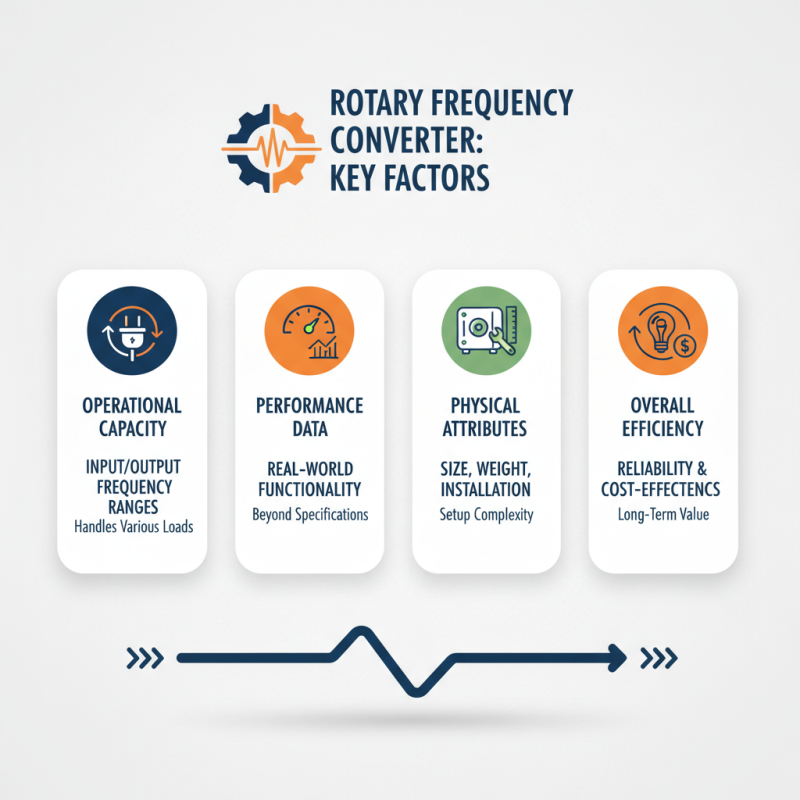
When evaluating efficiency and performance factors of a rotary frequency converter, focus on its operational capacity. Consider the input and output frequency ranges. These ranges greatly influence the converter's ability to handle various loads. A converter may look robust, but check its actual performance data. Performance not only relates to specifications but also real-world functionality. Size, weight, and installation ease matter too; a bulky unit may complicate setup.
Energy consumption is essential. Some converters boast high efficiency ratings, yet fail in practice. Look for units with minimal losses during operation. Efficiency ratios can be misleading. An ideal converter balances efficiency with longevity. Every installation should be reviewed under real operating conditions. Seek feedback from previous users; their experiences reveal valuable insights.
Thermal management is another critical factor. A converter running hot can lead to failure. Pay attention to cooling mechanisms. Units with inadequate cooling may decrease efficiency over time. Noise levels can also impact performance in sensitive environments. Take these aspects seriously, as they often get overlooked. Balancing all these factors requires time and careful assessment.
Considering Size, Weight, and Design Specifications
When selecting a rotary frequency converter, paying close attention to size, weight, and design is crucial. Consider how these factors align with your specific application needs. For instance, a bulky converter may be challenging to install in tight spaces. Portable options increase flexibility for various settings.
Tip: Always measure the available installation area. Accuracy ensures that you'll be able to integrate the unit without hassle. Additionally, evaluate weight; a lighter converter may ease installation but could compromise stability.
Design specifications should not be overlooked. Look for features that enhance usability and efficiency. Think about the layout of controls and indicators. User-friendly designs make operation smoother. However, sometimes the best design isn't the most attractive. Aesthetic choices can distract from functionality.
Tip: Prioritize performance over style. Consider how often you might need to service the unit. Accessibility can be a deciding factor in overall efficiency. Take the time to weigh these aspects thoroughly.
Assessing Reliability and Maintenance Considerations
When evaluating rotary frequency converters, reliability is a key factor. Consider the materials used in construction. High-quality materials can withstand harsh conditions. Corrosion resistance is essential. Look for converters with robust enclosures. They protect the internal components from environmental damage. This enhances durability over time.
Maintenance considerations should also be front and center. Regular inspection is crucial to ensure optimal performance. Dust and debris can accumulate, affecting efficiency. Create a maintenance schedule tailored to your operational needs. User manuals often offer guidelines. Following these can prevent costly breakdowns. However, be prepared for the unexpected. Even reliable converters can fail. Understanding common failure points aids in timely repairs.
Investing time in reliability assessments can pay off. Ask for feedback from other users. This firsthand experience provides valuable insights. A strong maintenance plan can mitigate risks. It’s essential to be proactive rather than reactive. Regular monitoring helps identify potential issues early. This approach fosters smoother operations and reduces downtime.
Reliability and Maintenance Considerations of Rotary Frequency Converters