How to Choose a Step Up Transformer?
Choosing a Step Up Transformer begins with a clear picture of the power system it must serve. The name describes its purpose: it raises voltage from the input side to a higher output level. Yet a higher voltage alone does not make a transformer suitable. Check the source and required output voltages, single- or three-phase supply, operating frequency, and expected load. A mismatch can cause overheating, poor performance, or equipment damage.
Start with the load. Add the ratings of connected equipment, then consider whether motors, pumps, or other devices draw extra current at startup. That brief surge matters. Select a transformer with adequate kVA capacity, while avoiding unnecessary oversizing that increases cost and may affect efficiency. Review the nameplate and manufacturer’s specifications rather than relying on a product title or a rough online estimate.
The installation also shapes the choice. Indoor and outdoor locations have different exposure to moisture, dust, heat, and limited airflow. Check the enclosure, cooling method, insulation rating, connection arrangement, and applicable safety certifications. Confirm that wiring, protection devices, grounding, and clearances suit the installation; consult a qualified electrical professional when ratings or connections are uncertain. Small details count. Even a correct voltage ratio cannot compensate for poor installation conditions. One point is easy to overlook: real loads change, and estimates are not always accurate. Before purchasing, verify actual equipment data and allow for reasonable future demand. The right choice balances electrical requirements, operating conditions, safety, and cost—and it deserves a careful second look.
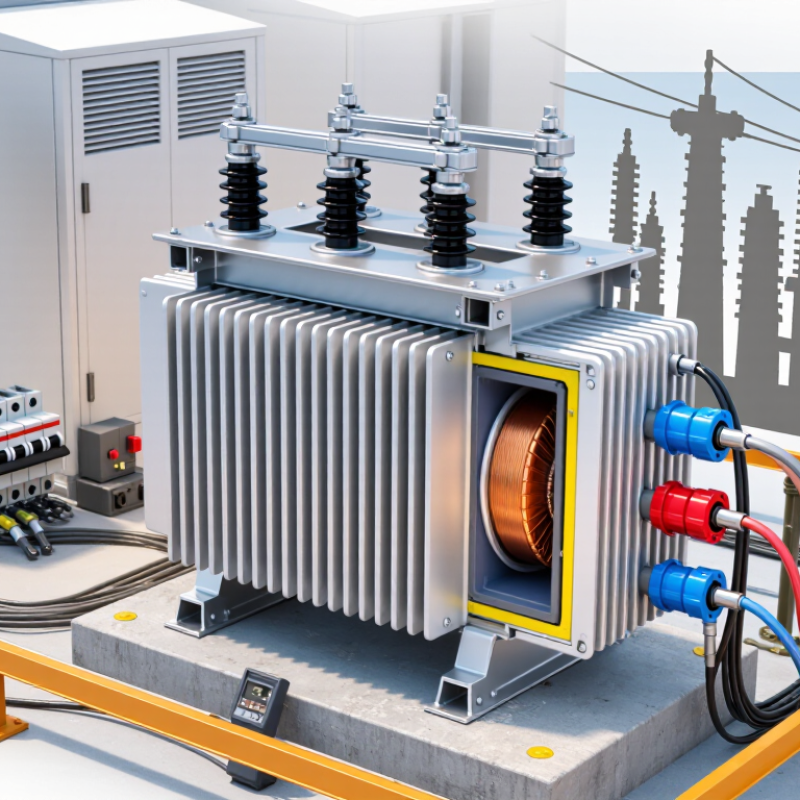
Identify the Input and Required Output Voltages
Before choosing a step-up transformer, record the source voltage and the voltage your equipment requires. Read the source value from its supply label or measure it with a properly rated meter. Check the plate. Confirm whether the figures describe AC or DC; ordinary transformers are designed for AC. For AC systems, note the frequency and whether the supply is single-phase or three-phase. A 120 V input and a 240 V target, for example, call for a nominal two-to-one voltage ratio. Do not assume a wall outlet always provides its stated voltage. It can vary with the supply and connected load.
Then check the equipment label for its required input voltage, not just its operating voltage mentioned in a manual. Small errors matter. If the device specifies a range, such as 220–240 V, make sure the transformer’s output stays within that range under normal load. The output can dip when a transformer is undersized or the wiring is long. Also compare the equipment’s power demand with the transformer’s VA rating; voltage alone is not enough. A careful check of both voltage labels can prevent damage, though worn or unclear labels may leave room for doubt. In that case, verify the specifications with a qualified electrician before connecting anything.
Calculate the Load Power and Select a Suitable Transformer Rating
A step-up transformer raises voltage, but its rating must match the load’s actual demand. List every device that may run at the same time, then add its rated power. For AC equipment, check the nameplate for watts, volt-amperes, and power factor; watts alone may understate the transformer capacity needed. Measure, don’t guess.
For a mostly resistive load, watts and volt-amperes are close. Motors, pumps, and compressors are different: their starting current can briefly exceed running current by several times. Check the manufacturer’s starting-current data and the transformer’s overload capability. For mixed loads, add the apparent-power requirements, then allow a practical margin for continuous operation and future changes. A 20 percent margin can be a useful starting point, not a universal rule. Too much oversizing can also be inefficient.
In real installations, a neat calculation can miss voltage drop along a long cable or heat inside a tight enclosure. That matters. Confirm the source voltage, required output voltage, frequency, phase, and duty cycle before choosing a rating. If the load is 1,200 watts at a 0.8 power factor, its apparent demand is about 1,500 VA before startup allowance. A transformer rated just above that figure may still struggle with a motor. Check the equipment data and have a qualified electrician verify the final selection.
How to Choose a Step-Up Transformer
Calculate the load power, allow for spare capacity, then select a suitable transformer rating.
Example: The estimated loads total about 3.01 kVA. Adding a 25% reserve gives 3.76 kVA, so the next suitable standard size shown is 5 kVA. Confirm actual voltage, load power factors, motor starting current, duty cycle, and applicable electrical requirements before selection.
Check Frequency, Phase, and Electrical Compatibility
A step-up transformer raises voltage; it does not change frequency. Check the source and transformer nameplates before comparing voltage ratios. A 50 Hz transformer used on a 60 Hz supply may overheat, especially if its design is not rated for both. The reverse mismatch can also affect performance. Do not guess.
Phase must match the supply and the load. A single-phase transformer cannot directly serve a three-phase load. For three-phase equipment, check the winding connection, such as delta or wye, and confirm whether a neutral is required. The transformer’s secondary voltage should suit the equipment’s rated input. A step-up unit does not correct an incompatible phase arrangement.
Then check capacity and wiring details. Compare the transformer’s VA rating with the load, allowing for motor startup current or other brief surges. Confirm that terminals, insulation ratings, grounding, and protective devices suit the installation. A label can be easy to misread, and voltage alone is not the whole story. Verify specifications against the actual supply and load; have a qualified electrician review the setup when phase or grounding requirements are unclear.
Compare Efficiency, Safety Features, and Installation Conditions
A step-up transformer raises voltage, but the right choice depends on the load and the installation. Check the input and output ratings against the equipment’s nameplate. Then estimate the actual running load, including motors or devices with brief startup surges. A unit that is too small may overheat; a much larger one can cost more and operate less efficiently at light loads. Look for published efficiency figures at realistic operating loads, not just peak efficiency. Small losses add up when the transformer runs all day.
Safety details matter. Confirm the required frequency, insulation rating, and terminal arrangement. Check for thermal protection and suitable overcurrent protection, and provide grounding as specified by the manufacturer. Keep exposed terminals inaccessible, especially in shared or work areas. A tidy spec sheet can still mislead. Wiring errors are easy to make, so have a qualified electrician verify connections and protective devices.
Installation conditions affect reliability. Choose a dry, stable location with clear airflow around the enclosure. Dust, moisture, high ambient temperatures, and blocked ventilation can shorten service life. Allow space for inspection and maintenance, and check mounting requirements before installation. Measure the available clearance; a transformer that fits on paper may not leave room for safe cable bends. If the site conditions are uncertain, pause and reassess rather than guessing.
Verify Standards, Protection, and Long-Term Operating Needs
A step-up transformer should match the installation’s real operating conditions, not just its nominal voltage and rated power. Confirm the applicable edition of IEC 60076 or IEEE C57.12.00, then check whether its test and insulation requirements fit the project and local grid rules. Standards are a baseline. They do not replace a review of load cycles, ambient temperature, altitude, harmonics, or expected overloads. A unit beside a hot, dusty process line may need different cooling and maintenance provisions than one in a ventilated indoor room.
Small details matter.
Protection needs to be coordinated with the transformer and the equipment on both sides. Review fault levels, grounding, relay settings, and suitable temperature or pressure protection for the selected design. Also confirm that alarms and trip signals can reach the site control system.
Easy to miss.
For long-term planning, the International Energy Agency’s 2023 report, Electricity Grids and Secure Energy Transitions, says annual grid investment must rise to more than USD 600 billion by 2030, from roughly USD 300 billion today. That is grid-wide context, not a transformer-specific forecast, but it highlights the value of planning for capacity changes and service access.
Document the assumptions. Revisit them when the load forecast changes; that step is sometimes skipped.
