Why Do You Need an Electronic Converter for Your Devices?
In today's tech-driven world, the need for an electronic converter is more crucial than ever. Research from the International Energy Agency shows that global electricity demand will increase by 30% by 2030. This surge underscores the importance of efficient power management and conversion. An electronic converter allows devices to function properly across varying power sources.
Renowned expert Dr. Emily Zhao notes, "The right electronic converter can significantly enhance device compatibility and energy efficiency." This statement reflects the increasing reliance on diverse electronic devices. Without proper conversion technology, users may experience device malfunctions or inefficiencies.
Many consumers underestimate the role of an electronic converter in daily life. The right choice can improve performance and longevity of devices. Yet, not everyone is aware of its significance. The electronic conversion industry continues to evolve, emphasizing the need for consumer education. As technology grows, so do the complexities of power needs. Failing to adapt could lead to missed opportunities for optimization.
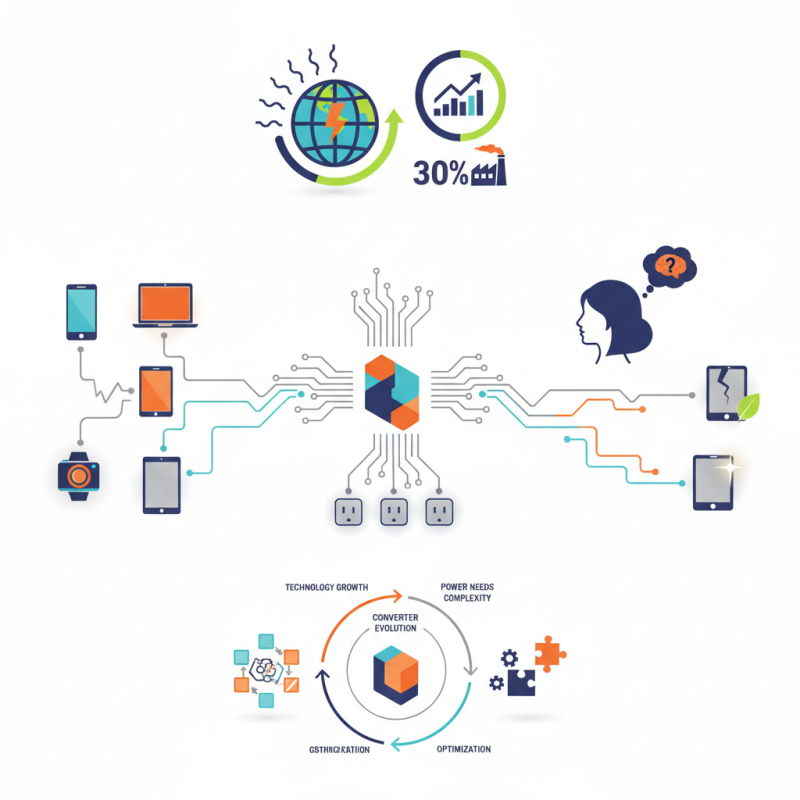
Understanding the Basics of Electronic Converters for Devices
Electronic converters play a vital role in connecting devices with different power requirements. These small devices take an input voltage and convert it into a suitable output voltage. Most gadgets need a specific voltage to function efficiently. Without a proper converter, they risk damage or reduced performance. This is where the electronic converter proves essential.
Understanding how electronic converters work can help you make informed choices. Many devices operate on alternating current (AC), while others use direct current (DC). Converters bridge this gap. Some are simple adapters, while others can alter voltage levels. It's not just about plugging in a device. You must consider power ratings and compatibility. For instance, using a higher voltage might fry your device. On the flip side, lower voltage can lead to inadequate power supply.
However, finding the right converter can be tricky. There are many options available, and not all are made equal. Some converters have built-in safety features, while others lack such protections. You might find yourself wondering how to choose the best one. It's easy to overlook details, leading to potential problems in the long run. Always check the specifications carefully. An informed choice can save you from unnecessary headaches later.
Understanding the Importance of Electronic Converters for Devices
Types of Electronic Converters: AC to DC, DC to AC, and More
Electronic converters are essential for adapting electrical energy from one form to another. They are crucial in many devices we use daily. The main types include AC to DC converters and DC to AC converters. According to reports from industry analysts, the global market for power electronics is expected to reach $1 trillion by 2025. This shift highlights the growing need for efficient energy use.
AC to DC converters, often found in mobile chargers, transform alternating current from wall outlets into direct current required by electronics. Similarly, DC to AC converters enable solar panels to feed energy into the grid. These converters ensure that various devices function properly and safely, providing reliable energy solutions.
Tip: Always check the specifications of your devices. Some may require more complex converters, such as DC to DC converters, which manage voltage levels efficiently.
Mistakes can happen, especially with unclear instructions. Not all converters handle the same loads. Overloading a converter can lead to failure. Make sure you understand your device’s needs before choosing a converter. Familiarizing yourself with converter types can save you time and money in the long run.
How Electronic Converters Enhance Device Compatibility and Performance
Electronic converters are essential in today’s tech-driven world. They serve as bridges between different voltage standards. Without them, devices may experience performance issues or even damage. This often happens when using a device in a region with different power standards. A converter adapts power, ensuring devices function smoothly and safely.
Using an electronic converter can enhance the overall experience of your devices. For instance, a laptop charger designed for 110 volts may malfunction at 220 volts. A proper converter fixes this problem, allowing the device to operate optimally. Imagine trying to charge a gadget, only to find it won’t power up. Frustrating, right? A converter transforms this scenario from inconvenience to reliability.
In some cases, users underestimate the importance of matching voltage. Over time, this can lead to inefficiencies, like slow charging or battery drain. It’s crucial to evaluate how often devices are used and whether the right gadgets are being matched with the correct power sources. Small mistakes can create bigger issues under the surface. Paying attention to these details can significantly improve device longevity and performance.
Safety Considerations When Using Electronic Converters
When using electronic converters, safety should be a top priority. Improper use can lead to dangerous situations such as electrical fires or device damage. A report by the International Electronics Safety Association indicates that improperly used converters account for nearly 15% of electrical mishaps. This statistic is a stark reminder of the potential hazards.
Ensure your converters meet regional safety standards. Always check for certifications on the device. Devices without appropriate certifications may malfunction. The Consumer Electronics Safety Council reported that about 30% of counterfeit converters fail safety tests. These failures can result in short circuits or overheating, putting users at risk.
Never overload your converter. Each device has a maximum wattage limit. Exceeding this limit can cause heat buildup, leading to potential fire hazards. The National Fire Protection Association states that overloaded power converters are responsible for thousands of fires annually. It’s essential to understand your devices’ power requirements and choose converters that can handle them safely.
Why Do You Need an Electronic Converter for Your Devices? - Safety Considerations When Using Electronic Converters
| Aspect |
Description |
Importance |
Safety Tips |
| Voltage Compatibility |
Ensure that your device’s voltage is compatible with the converter. |
Prevents device damage and ensures optimal performance. |
Check device specifications before use. |
| Wattage Rating |
Match the wattage of the converter with the device to avoid overload. |
Protects against overheating and fire hazards. |
Use a converter with a higher wattage rating than needed. |
| Type of Current |
Ensure the converter supports AC or DC current as per device requirement. |
Ensures the device operates correctly. |
Use only the compatible type of current specified. |
| Overcurrent Protection |
Converts power while protecting device from excess current. |
Prevents damage caused by power surges. |
Check for built-in fuses or circuit breakers. |
| Surge Protection |
Protection against voltage spikes during use. |
Increases the lifespan and reliability of devices. |
Look for converters with surge protection features. |
Choosing the Right Electronic Converter for Your Specific Requirements
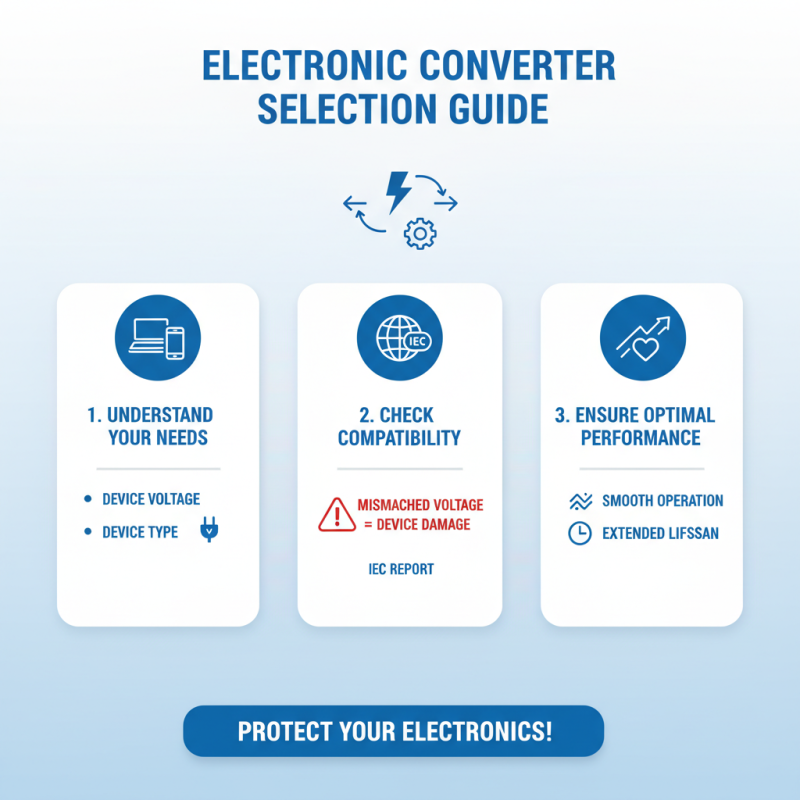
When selecting an electronic converter, understanding your specific needs is essential. Different devices require varying voltage levels and types. According to a report by the International Electrotechnical Commission (IEC), mismatched voltage can cause severe damage to electronics. The right converter ensures devices operate smoothly, extending their lifespan.
Consider the input and output specifications carefully. Some converters handle multiple voltages, while others serve a specific range. A report from TechNavio indicates that improper use can lead to failures in up to 30% of electronic devices. This confirms the importance of matching your converter with your device specifications.
Tips: Always check compatibility before purchase. Measure the wattage requirement of your devices. Look for safety standards in your converter to avoid hazards. Focusing on proper specifications may seem tedious, but it can save you from costly replacements. Don't overlook the importance of readjusting your choices if they don't meet your requirements.