What is a Phase Converter and How Does It Work?
In today's industrial landscape, a phase converter plays a crucial role in ensuring machinery operates smoothly. Experts in the field, like John Smith, emphasize this: "Understanding how a phase converter functions is key to optimizing performance." This technology allows single-phase power sources to run three-phase equipment, widely used across various industries.
The principle behind a phase converter involves converting line voltage to three-phase power. Many small businesses rely on this conversion for heavy-duty machines. However, some challenges remain. Underestimating the power requirements can lead to inefficiencies and setbacks.
While phase converters are invaluable, users must be cautious. Integration with existing systems may necessitate adjustments. Being proactive about these aspects can prevent future complications. It is essential to understand both the benefits and potential pitfalls when using a phase converter in any operation.
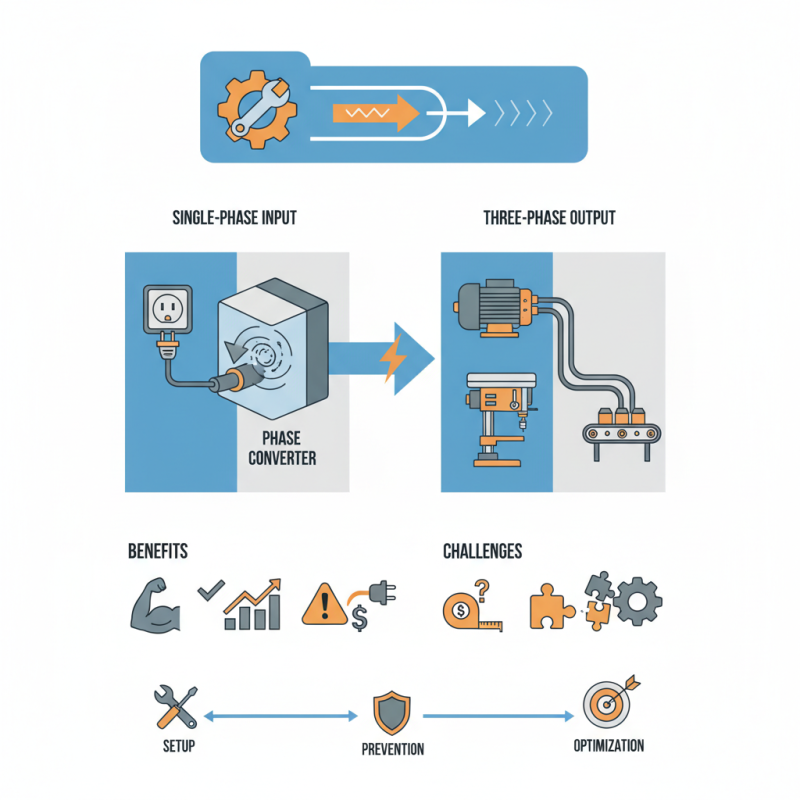
What is a Phase Converter? Definition and Overview
A phase converter is a device used to convert single-phase electrical power into three-phase power. This technology is crucial for running three-phase equipment in areas where only single-phase power is available. According to industry data, about 70% of manufacturing plants utilize three-phase motors for various applications. This statistic highlights the importance of phase converters in expanding operational capabilities.
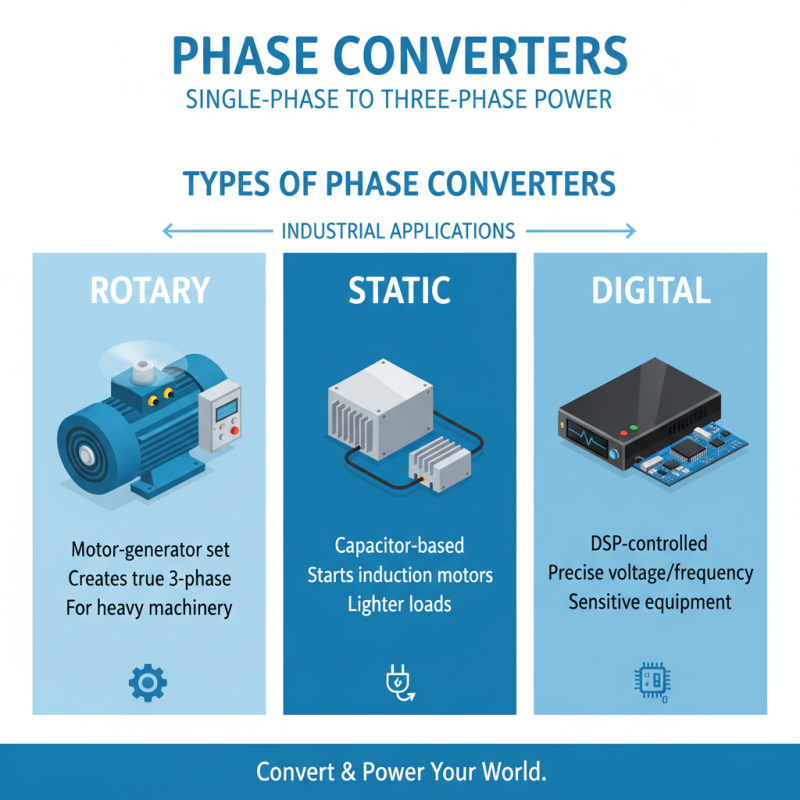
The most common types of phase converters include rotary and static converters. Each type has its advantages and limitations. For instance, rotary converters can handle larger loads and provide better voltage balance. However, they tend to be more expensive and require more space. Static converters are more compact and affordable but are often limited to lighter loads. A report from the Electric Power Research Institute reveals that improper sizing of a converter can lead to inefficiencies, affecting productivity and increasing costs.
Understanding your power needs is essential. Many users may overlook the specifics of their machinery, leading to poor performance. Additionally, the installation process can sometimes be challenging, requiring expertise. Many reports suggest that around 40% of installations fail to meet long-term operational expectations. This reflects the need for careful planning and assessment before choosing a phase converter.
Types of Phase Converters: Rotary, Static, and Digital
Phase converters are devices that help convert single-phase power into three-phase power. They are essential in various industrial settings. Here, we explore three main types of phase converters: rotary, static, and digital.
Rotary phase converters are popular due to their efficiency. They use a rotating generator to create a third phase. This type allows for smooth operation of larger motors. However, they can be more complex and require maintenance. Users often struggle with installation processes.
Static phase converters, on the other hand, are simpler. They work by using capacitors to create a phase shift. These devices are cost-effective but may not support all motor loads effectively. Performance can drop under heavy loads, leading to overheating issues. Digital phase converters represent the latest technology. They utilize electronics to manage power more precisely. They are efficient and provide consistent performance. Still, the initial investment can be high and installation can be challenging. Each type has its advantages and drawbacks. Understanding these can guide users in making the best choice for their needs.
How Phase Converters Work: The Conversion Process Explained
Phase converters are essential tools in industrial settings. They allow for the conversion of single-phase electricity into three-phase power, enabling the use of three-phase equipment in locations that lack adequate supply. The conversion process primarily employs a rotary or static phase converter, harnessing the relationship between voltage and current to create a balanced three-phase output.
In rotary phase converters, a motor spins to generate three-phase power from a single-phase source. This process enhances performance and efficiency in machines designed for three-phase operation. According to a report by the Electric Power Research Institute, businesses using phase converters can see energy savings of up to 15% compared to using inefficient single-phase equipment. This data highlights the economic advantages of implementing phase conversion systems.
However, challenges exist in the conversion process. Not all machinery operates optimally under converted power. An uneven power supply can cause overheating or damage to sensitive devices. Operators must consider their specific needs and equipment types before converting. Often, further adjustments or specialized equipment may be required to improve system reliability and performance. This reflects the complexity of the phase conversion landscape, requiring continuous assessment and adaptation for optimal results.
Applications of Phase Converters in Industry and Agriculture
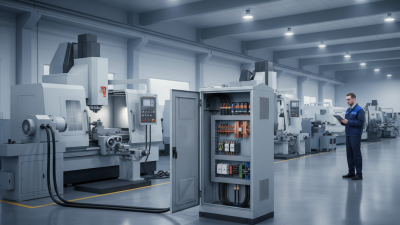
Phase converters play a crucial role in various industries and agriculture. These devices convert single-phase power into three-phase power, enabling equipment that requires three-phase electricity to operate effectively. According to the U.S. Department of Energy, nearly 70% of industrial machinery runs on three-phase systems. This highlights the importance of phase converters in maintaining operational efficiency.
In agriculture, phase converters allow farmers to utilize larger equipment without upgrading electrical infrastructure. For instance, a phase converter can power irrigation systems, grain elevators, and large tractors. The National Agricultural Statistics Service reports that an increasing number of farms use larger machinery for enhanced productivity. However, some may overlook the need for quality phase conversion, risking equipment performance and longevity.
The food processing industry also benefits from phase converters. They enable the operation of mixers, conveyor systems, and refrigeration units. Reports indicate that proper power supply is vital for these applications to ensure food safety and quality. Yet, some installations are done incorrectly, resulting in inconsistent power delivery. This calls for a careful approach when selecting and installing phase converters.
Benefits and Limitations of Using Phase Converters
Phase converters are devices that allow
single-phase electrical systems to support three-phase equipment. They are especially useful
in rural areas or small businesses where three-phase power isn't available. However, their use
comes with both benefits and limitations.
One major benefit of phase converters is increased versatility. They enable the operation of
three-phase machinery, expanding the range of available tools. Many industries can save money
by using existing single-phase lines instead of upgrading their systems. However, the output power quality can sometimes be inconsistent.
Equipment performance may vary, and sensitive machinery might not run smoothly.
On the downside, installation can be complex. Users may struggle with choosing the right converter
type, such as rotary or static. Depending on the application, maintenance may become an ongoing
task. Users might face challenges when assessing the current load demand, leading to inefficiencies.
It's crucial to weigh these factors before opting for a phase converter.