Top 5 Tips for Choosing a Phase Converter 1 to 3
Choosing the right phase converter 1 to 3 for your equipment can be overwhelming. Many people underestimate the importance of this decision. A phase converter is essential for running three-phase equipment on a single-phase power supply. The wrong choice can lead to inefficiency, increased wear and tear on machines, and even hazardous conditions.
Understanding your specific needs is crucial. Each application is different, and not all phase converters are built the same. Take the time to assess your power requirements and the type of machinery you are using. This not only ensures optimal performance but also prolongs the lifespan of your equipment. Data and specifications matter, but so does real user experience.
Consider what others have encountered. User feedback provides invaluable insights into the reliability of different models. You might find that a converter that seems ideal on paper does not perform well in practical use. Research and reflection are critical when choosing your phase converter 1 to 3. Making an informed decision will ultimately enhance functionality and safety in your operations.
Understanding the Basics of Phase Converters: Types and Functions
When selecting a phase converter to transform single-phase power into three-phase power, it's essential to understand the basics. Phase converters come in various types, including rotary, static, and digital converters. Each type serves a unique purpose and operates differently. For example, rotary converters provide a stable power output, making them ideal for larger machinery. In contrast, static converters are suited for smaller equipment and offer a cost-effective solution.
Understanding the nuances of each type can significantly impact your operational efficiency. According to industry reports, about 30% of users experience performance issues due to poor phase converter selection. This emphasizes the need for research and better knowledge of your requirements.
When choosing a phase converter, consider these tips: first, assess your machinery's power requirements. This will guide you toward the correct capacity. Second, examine the installation environment. The physical space and electrical settings affect performance. Lastly, factor in maintenance needs. Some converters require more upkeep than others. Ensuring you select a phase converter that aligns with your operational needs can prevent unnecessary complications down the line.
Top 5 Tips for Choosing a Phase Converter
| Tip Number |
Tip |
Description |
Type of Phase Converter |
| 1 |
Identify Your Power Needs |
Calculate the total horsepower needed for your equipment to ensure proper conversion. |
Rotary Phase Converter |
| 2 |
Evaluate Load Types |
Understand whether your equipment has balanced or unbalanced loads for better performance. |
Digital Phase Converter |
| 3 |
Consider Voltage Compatibility |
Ensure the phase converter supports the voltage requirements of your equipment. |
Static Phase Converter |
| 4 |
Assess Startup Requirements |
Check how your motors start; some may require additional torque at startup. |
Rotary Phase Converter |
| 5 |
Look for Quality and Reliability |
Choose a converter that is built with high-quality components to ensure longevity. |
Digital Phase Converter |
Assessing Your Power Needs: Determining Size and Capacity Requirements
When choosing a phase converter, understanding your power needs is crucial. Accurate assessment of size and capacity requirements can significantly influence equipment performance. Industry reports indicate that improper sizing can lead to power quality issues and equipment failure.
Tip 1: Calculate your total wattage requirements. Add the wattage of all connected tools and machines. This ensures your phase converter can handle peak loads without straining.
Capacity plays a significant role in selection. A phase converter should match your machinery’s demand. Data shows that a unit operating below its capacity can overheat. Conversely, oversizing may lead to inefficient operation.
Tip 2: Consider starting and running loads. Motors often require several times more power to start than to run. This spike in demand must be factored into your decision-making.
Analyzing these aspects empowers you to make informed decisions. An undersized converter can lead to production downtime. It’s vital to have a comprehensive understanding of your needs. Regular assessments will improve long-term efficiency and reliability.
Tip 3: Consult with experts in the field. They can provide insights based on industry standards and your specific application. This expert advice may reveal nuances that standard resources miss.
Evaluating Efficiency: How to Measure Phase Converter Performance
When evaluating the efficiency of a phase converter, several factors come into play. You need to know how well it converts single-phase to three-phase power. This is essential for powering industrial equipment. Efficiency typically relates to output power and input power. The goal is to minimize energy loss during conversion.
Measuring phase converter performance requires precision. Instruments like a wattmeter can help assess real power consumption. Monitoring voltage levels is also crucial. It can reveal inconsistencies in output that might affect equipment. During testing, you may notice fluctuating performance. This variability may stem from load variations or even the converter’s design flaws.
A well-chosen phase converter can lead to significant savings. Poor selections, however, can result in equipment malfunctions. Users often overlook the importance of proper sizing. Undersized converters can overheat and wear out quickly. This poses risks not only to machinery but also to overall operations. The balance between efficiency and reliability is delicate and requires careful attention.
Considering Installation and Maintenance: Tips for Long-Term Use
Choosing the right phase converter requires careful consideration of installation and maintenance. A phase converter can significantly enhance motor performance in industrial settings. According to a recent industry report, nearly 30% of equipment failures stem from improper setup or inadequate maintenance.
When installing a phase converter, ensure you have the correct electrical specifications. This is crucial. Calculate the required phase converter size based on your load needs. An undersized unit may struggle, while an oversized one could lead to inefficiencies. Regular maintenance checks can identify potential issues early. Industry experts suggest inspecting connections and components every six months to prevent unexpected downtime.
Proper installation also impacts the longevity of the system. Avoid overloading your converter, as this can cause overheating and lead to premature wear. Monitor the temperature during operation. A 20-degree rise above ambient temperature can indicate a problem. Reflecting on these details can help you maintain a more efficient operation, but it’s essential to remain vigilant and proactive.
Budgeting for Your Phase Converter: Costs and Return on Investment
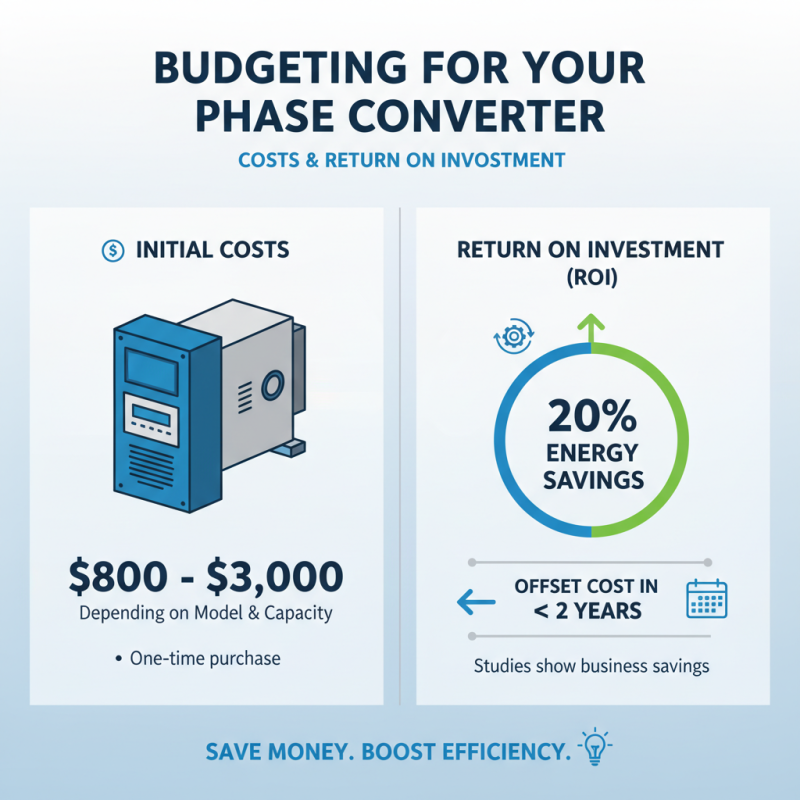
When budgeting for a phase converter, understanding costs is crucial. Generally, prices range from $800 to $3,000 depending on the model and capacity. A well-chosen converter can offer a significant return on investment (ROI). For instance, studies show that businesses can save up to 20% on energy costs. This savings can offset the initial purchase within two years or less.
Installation costs can also vary. Professional electricians may charge between $100 to $500 for labor. Some DIY enthusiasts attempt installations, but mistakes can lead to costly fixes. Comprehensive market studies indicate that nearly 30% of DIY installations introduce inefficiencies. These may counteract any initial savings.
Consider maintenance as part of your budget. Proper care can extend the lifespan of your converter. However, neglect may lead to additional costs. Reports indicate that routine maintenance can boost efficiency by 15%, further enhancing ROI. It's essential to weigh these factors to make informed choices when selecting a phase converter.