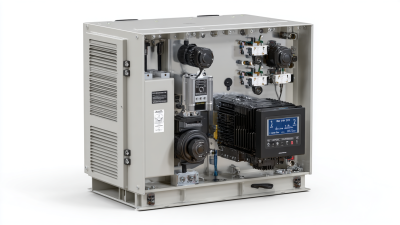
2025 Top Power Converter Solutions for Efficient Energy Conversion in Industry
As industries continuously evolve, the demand for efficient energy conversion solutions becomes increasingly critical. The significance of power converters in this context cannot be overstated. According to Dr. Emily Richards, a leading expert in the power converter industry, "The innovation in power converter technology is at the forefront of achieving sustainability and maximizing energy efficiency." Her insights highlight the pivotal role that advanced power converter solutions play in transforming energy management in various sectors.
In 2025, the market is expected to witness groundbreaking developments in power converter technologies that will drive industrial efficiency to new heights. These advancements will not only cater to the rising energy demands but will also address environmental concerns by promoting cleaner energy utilization. The exploration of top power converter solutions this year will reveal how industries can harness these technologies to optimize their operational processes.
As we delve deeper into the landscape of power converters, we will uncover the various innovations and strategies that are redefining energy conversion. This overview will serve as a guide for industry stakeholders looking to implement state-of-the-art power converter solutions that align with modern efficiency and sustainability goals.
Innovative Power Converter Technologies Revolutionizing Industrial Energy Efficiency
The industrial landscape is experiencing a transformative shift with innovative power converter technologies that are redefining energy efficiency. These advancements are crucial as industries seek to optimize their energy consumption amidst rising operational costs and environmental concerns. One such innovation is the development of wide-bandgap semiconductors, such as silicon carbide (SiC) and gallium nitride (GaN), which allow for higher switching frequencies and improved thermal management. This not only enhances the performance of power converters but also reduces energy losses significantly, enabling industries to achieve higher efficiency rates.
Moreover, the integration of digital control systems in power converters paves the way for real-time monitoring and adaptive modulation strategies. These systems leverage data analytics and machine learning, allowing converters to adjust their operations based on fluctuating energy demands and supply conditions. By implementing these smart technologies, industries can achieve a more responsive and efficient energy conversion process, ultimately leading to reduced carbon footprints and lower energy costs. With the continual evolution of these innovative solutions, the future of industrial energy efficiency looks promising, poised to meet both economic and environmental objectives.
2025 Top Power Converter Solutions for Efficient Energy Conversion in Industry
This chart demonstrates the projected energy efficiency improvements of various power converter technologies in industrial applications by 2025.
Key Features of Next-Generation Power Converters for Optimal Performance
The next generation of power converters is set to revolutionize energy conversion in industrial applications, focusing on enhanced efficiency, reliability, and integration capabilities.
One of the key features of these advanced converters is their ability to handle a wider range of input voltages and current levels, making them suitable for diverse industrial environments. This adaptability not only optimizes energy usage but also minimizes energy losses, leading to significant cost savings and reduced carbon footprints.
Another notable aspect is the integration of smart technologies, such as IoT connectivity and real-time monitoring. These capabilities allow for proactive maintenance and optimization of energy consumption patterns, which enhances operational efficiency.
Additionally, features like adaptive load management and improved thermal performance contribute to the longevity and resilience of power systems in industrial settings. As industries increasingly prioritize sustainability and energy management, next-generation power converters will play a critical role in achieving these goals while maintaining optimal performance.
Comparative Analysis of Leading Power Converter Brands in 2025
In 2025, the power converter industry is witnessing rapid advancements, primarily driven by the escalating demand for energy efficiency across various sectors. According to a report by MarketsandMarkets, the global power converter market is projected to reach USD 40 billion by 2025, growing at a CAGR of 6.5%. This growth is fueled by the rising emphasis on renewable energy sources and the increasing need for efficient energy conversion systems in industrial applications. Leading brands are leveraging cutting-edge technologies, including wide bandgap semiconductors and innovative converter topologies, to enhance performance and reduce energy losses.
A comparative analysis of key players such as Texas Instruments, Infineon Technologies, and Siemens reveals distinct approaches to power conversion solutions. Texas Instruments is focusing on digital power management, offering integrated solutions that optimize efficiency by reducing standby power consumption. In contrast, Infineon Technologies is spearheading developments in silicon carbide (SiC) devices, which provide superior thermal performance and higher switching frequencies. Siemens, meanwhile, is emphasizing modular power converter designs that support scalability and flexibility, catering to diverse industrial needs. As industries continue to prioritize efficiency, these advancements solidify the competitive landscape of power converter brands in 2025.
Sustainable Practices and Materials in Modern Power Converter Design
In the quest for efficient energy conversion, the integration of sustainable practices and materials in power converter design has become increasingly vital. Modern power converters are now being developed with a focus on reducing their environmental footprint while enhancing performance. This involves the use of renewable materials, such as biodegradable polymers for insulation and advanced materials like silicon carbide (SiC) and gallium nitride (GaN), which operate at higher efficiencies and allow for smaller, lighter converter designs.
Moreover, sustainable manufacturing practices are being prioritized in the production of power converters. Techniques such as additive manufacturing not only minimize waste but also enable the creation of complex geometries that enhance thermal management and overall efficiency. By focusing on a circular economy approach, manufacturers are aiming to reduce resource consumption and ensure that materials can be recycled or reused, contributing to a more sustainable energy landscape. As industries strive for greener operations, the push towards integrating these sustainable practices in power converter design is not just beneficial—it's essential for future energy systems.
Future Trends in Power Conversion: What to Expect by 2025
As we approach 2025, the landscape of power conversion technology is rapidly evolving, driven by the increasing demand for energy efficiency and sustainability. Future trends indicate a significant shift towards more sophisticated power converter solutions that utilize advanced materials, such as wide-bandgap semiconductors. These materials, including silicon carbide and gallium nitride, promise to enhance performance while reducing energy losses. Industries are expected to adopt these technologies not only to comply with stricter regulations but also to capitalize on reduced operational costs and improved reliability.
In addition to hardware advancements, digitalization and smart technologies are anticipated to play a pivotal role in power conversion. The integration of IoT (Internet of Things) and AI (Artificial Intelligence) will enable real-time monitoring and optimization of energy usage, facilitating a more responsive and adaptive power management system. This trend towards intelligent power conversion solutions will not only streamline industrial processes but also foster a more sustainable energy ecosystem, aligning with global efforts to mitigate climate change and promote renewable energy sources. By 2025, the convergence of these innovations will likely redefine the standards of efficiency and performance within the industry.
2025 Top Power Converter Solutions for Efficient Energy Conversion in Industry
| Power Converter Type |
Efficiency (%) |
Power Rating (kW) |
Key Applications |
Future Trends |
| DC-DC Converters |
95 |
100 |
Renewable Energy Systems |
Increased Miniaturization |
| AC-DC Converters |
92 |
50 |
Industrial Automation |
Smart Grids Integration |
| DC-AC Inverters |
94 |
75 |
Solar Power Systems |
Enhanced Grid Stability |
| Multi-Level Converters |
97 |
200 |
High Voltage Applications |
Modular Design Innovations |
| Bidirectional Converters |
93 |
150 |
Electric Vehicles |
Vehicle-to-Grid Technologies |