Top Single to Three Phase Converter Solutions for 2025 You Need to Know
In the rapidly evolving landscape of electrical engineering, the demand for efficient conversion solutions continues to grow. As we look ahead to 2025, understanding the optimal single to three phase converter solutions becomes crucial for both industry professionals and end-users alike. Dr. Jane Thompson, a renowned expert in power systems and converter technologies, emphasizes the significance of these devices by stating, "The ability to seamlessly convert single-phase power to three-phase not only enhances operational efficiency but also paves the way for advanced applications in modern manufacturing."
As industries increasingly adopt automation and smart technologies, the role of a high-quality single to three phase converter cannot be overstated. These converters play an essential role in powering a range of equipment, from industrial machinery to HVAC systems, thereby ensuring reliability and performance. Furthermore, with advancements in energy efficiency and eco-friendly designs, the latest converter solutions are set to reduce operational costs and carbon footprints significantly. This article delves into the top single to three phase converter solutions that are poised to make an impact in the coming years, offering insights into their features, applications, and the innovations that lie ahead.

Overview of Single to Three Phase Conversion Technologies for 2025
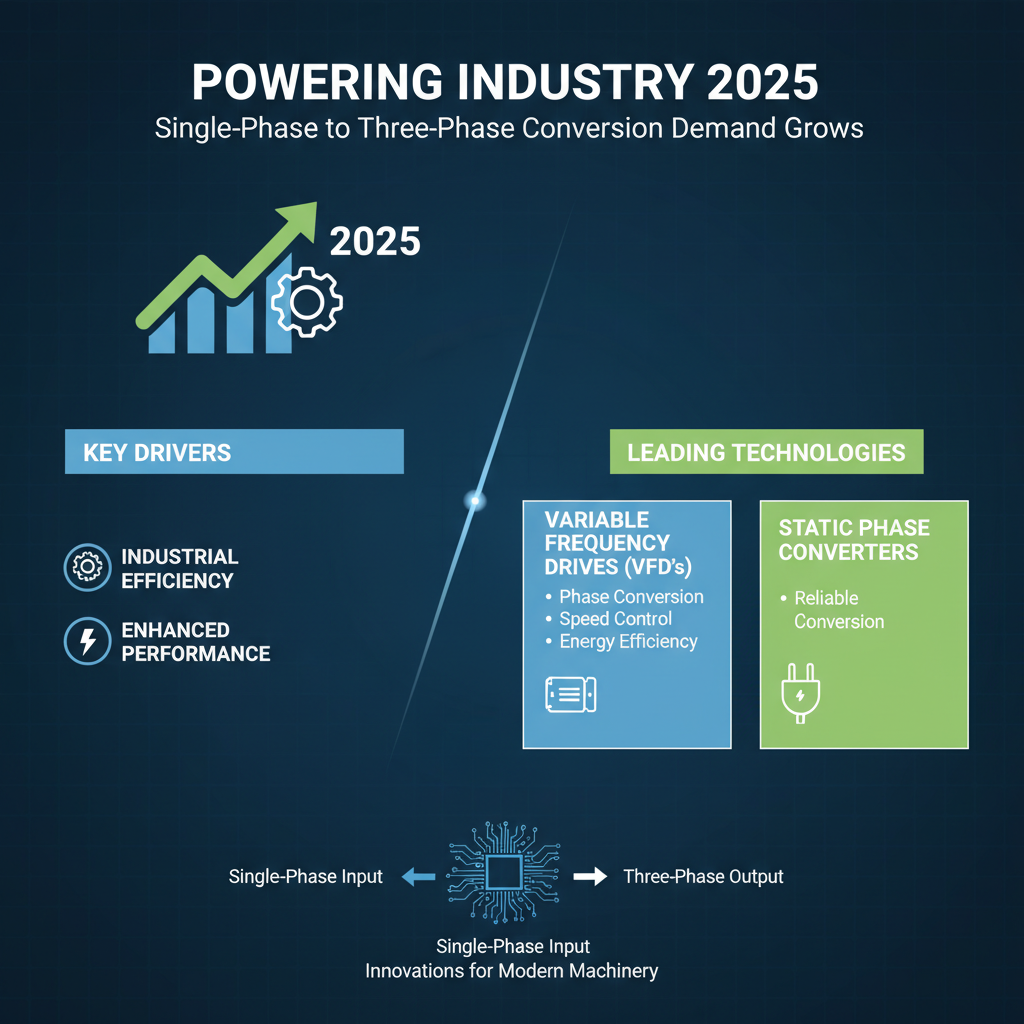
As we look towards 2025, the demand for converting single-phase power into three-phase power is poised to grow significantly, particularly in industrial applications where efficiency and performance are paramount. Various technologies have emerged to facilitate this conversion, each with its own set of advantages tailored to specific operational needs. Innovations such as variable frequency drives (VFDs) and static phase converters are becoming increasingly popular. VFDs, in particular, offer not only phase conversion but also speed control and energy efficiency, making them an attractive option for modern industrial machinery.
Another noteworthy advancement in conversion technology is the use of digital signal processors (DSPs) that can enhance the functionality of converters by optimizing the control algorithms for better performance and reliability. Additionally, transformer-based solutions continue to be a staple, providing robust phase conversion with minimal disruption to the electrical supply. As manufacturers strive to meet the evolving requirements of their processes, understanding these technologies will be essential for selecting the right single to three-phase converter solutions that align with future operational goals.
Key Features of Modern Single to Three Phase Converters
In the evolving landscape of industrial power solutions, single to three phase converters have become essential for enhancing operational efficiency. Key features of modern converters include advanced harmonic filtering, which minimizes the distortion in power quality, resulting in improved performance of connected equipment. According to a recent report by Market Research Future, the global market for phase converters is projected to grow at a CAGR of over 5% from 2023 to 2028, driven by increasing demand in manufacturing and automation sectors.
Another significant aspect is the integration of smart technology in these converters. Many modern units are now equipped with IoT capabilities, allowing for real-time monitoring and control. This feature enables companies to optimize their energy usage and reduce downtime. A study by Transparency Market Research highlights that the adoption of IoT-enabled phase converters is expected to rise significantly, as organizations seek to enhance their operational intelligence. These technological advancements are not only facilitating smoother transitions from single to three phase systems but also promoting sustainability through energy-efficient designs, making them a valuable investment for businesses looking to future-proof their operations.
Factors to Consider When Choosing a Converter Solution
When selecting a single to three phase converter solution, several critical factors must be taken into account to ensure optimal performance and efficiency. First and foremost, it is essential to assess the power requirements of your equipment. This involves understanding not only the wattage but also the starting and running torque needs of the motors you will be using. High-demand applications may necessitate investing in a more robust converter to handle the increased load without compromising performance or causing damage.
Another vital consideration is the type of converter technology. Various solutions, such as rotary phase converters, static phase converters, and digital phase converters, each come with their advantages and disadvantages. Rotary converters, for example, are favored for their ability to provide a genuine three-phase output, making them suitable for sensitive machinery. In contrast, static converters can be a cost-effective choice for less demanding applications. Additionally, examining the efficiency and reliability of the converter, as well as its compatibility with existing electrical systems, will help ensure a successful transition from single-phase to three-phase power.Choosing the right solution can significantly impact operational efficiency and equipment longevity.
Top Single to Three Phase Converter Solutions for 2025 You Need to Know
| Model |
Power Rating (kW) |
Efficiency (%) |
Input Voltage (V) |
Output Voltage (V) |
Weight (kg) |
| Model A |
5 |
95 |
220 |
380 |
10 |
| Model B |
10 |
92 |
240 |
400 |
15 |
| Model C |
15 |
90 |
230 |
415 |
20 |
| Model D |
20 |
88 |
240 |
480 |
25 |
| Model E |
30 |
85 |
220 |
480 |
30 |
Top Market Players in Single to Three Phase Conversion Devices
In 2025, the demand for single to three phase converters is projected to see significant growth, driven by advances in industrial automation and renewable energy integration. According to a recent market research report by MarketsandMarkets, the converter market is expected to reach USD 1.2 billion by 2025, with a compound annual growth rate (CAGR) of 6.3% from 2020 to 2025. Key players like Siemens, Schneider Electric, and ABB are at the forefront, providing cutting-edge technology solutions tailored to various industrial applications.
These market leaders leverage innovative designs and robust performance to ensure efficient power conversion. Siemens, for instance, offers a range of miniaturized and high-efficiency converters that are perfect for modern manufacturing settings. Meanwhile, Schneider Electric focuses on energy management and sustainability, making their converters popular among eco-conscious companies. Additionally, ABB has positioned itself with advanced digital solutions that provide real-time monitoring and management of power systems.
Tips: When selecting a converter, consider the specific power requirements of your application to ensure optimal performance. Additionally, keep an eye on emerging technologies such as soft starters and variable frequency drives, which can enhance the efficiency of your power conversion systems. Always check for compliance with industry standards to ensure safety and reliability.
Future Trends in Single to Three Phase Conversion Solutions
The shift from single-phase to three-phase power systems is increasingly pivotal as industries seek efficiency and scalability. By 2030, the global power distribution unit market is projected to grow significantly, from $3.74 billion in 2023 to $9.84 billion, reflecting a compound annual growth rate of 14.8%. This growth is driven by advancements in technology, particularly the rise of 800V direct current systems. These innovations are increasingly being recognized for their potential to optimize energy distribution and improve overall operational efficiency in power generation.
As companies like Nvidia showcase their commitment to cutting-edge technologies at global forums, it sets the stage for widespread adoption of three-phase conversion solutions. This trend underscores the importance of investing in robust power systems that can handle greater loads and enhance energy efficiency.
**Tip:** When considering single to three-phase converters, focus on compatibility with existing systems and anticipated growth in power needs.
Future trends indicate that automation and data-driven solutions will further influence the efficiency of these conversion systems, driving demand for innovative products.
**Tip:** Evaluate vendors based on their technological advancements to ensure your power solutions remain competitive and scalable.
Top Single to Three Phase Converter Solutions for 2025
This chart illustrates the growth trends in various single to three phase converter technologies expected in 2025. The data reflects projected market share for different solutions, highlighting their increasing adoption in various applications.