
7 Best U Channel Steel Suppliers for Global Buyers

Global buyers rarely purchase U Channel Steel on price alone. They examine dimensions, steel grade, surface condition, certification, and delivery reliability. These details matter when channels support warehouse frames, solar structures, bridges, or industrial platforms.

The World Steel Association reported approximately 1,888.2 million tonnes of crude steel production in 2023. This figure reflects a vast, competitive supply environment, but it does not guarantee consistent channel quality. The OECD’s steel market assessments also highlight continuing concerns about capacity pressure, trade shifts, and demand uncertainty. Buyers therefore need more than a polished supplier website. They need verifiable mill certificates, batch traceability, accurate weight records, and clear inspection procedures.

Small differences become visible on site.

A warped flange can slow welding. A thin web can increase reinforcement costs. Incorrect coating thickness may shorten service life in humid or coastal locations. This guide reviews seven U Channel Steel suppliers for global buyers, focusing on manufacturing capability, product standards, export experience, customization, and after-sales communication. References to ASTM, EN, and ISO practices are included where relevant, because compliance requirements differ between markets. ISO 9001 certification supports process control, but it cannot replace independent inspection or sample testing.

No ranking is perfect. A supplier with lower prices may offer weaker logistics support. Another may provide excellent documentation but longer lead times. Buyers should compare quotations against actual specifications, not marketing language. The following supplier overview aims to provide a practical starting point, while encouraging readers to verify current certificates, production capacity, and contract terms before placing an order.
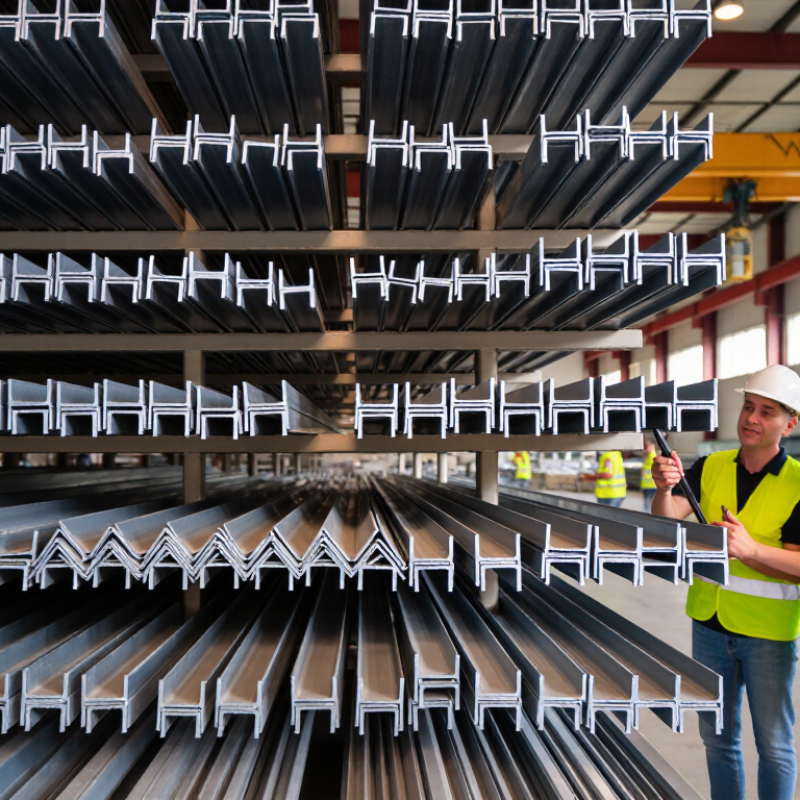
7 Best U Channel Steel Suppliers for Global Buyers

What U Channel Steel Is and How It Is Used

What U Channel Steel Is and How It Is Used

U channel steel is a long, cold-formed or hot-rolled section with two flanges and one web. Its open profile resembles the letter U. The shape offers practical edge support while keeping material use moderate. Engineers often select it for frames, brackets, rails, machinery bases, and building supports.

Its performance depends on depth, thickness, steel grade, and load direction. A deeper channel can resist bending more effectively, but connections may become harder to fabricate. The World Steel Association reported global crude steel production of about 1.88 billion tonnes in 2024. That scale supports broad availability, yet it does not guarantee identical quality between mills. Inspection remains essential. Relevant checks include dimensional tolerance, yield strength, weldability, surface condition, and mill certificates. AISC guidance also stresses correct section properties when engineers calculate capacity. In practice, one common mistake is choosing by weight alone.

Tips: Confirm the channel’s height, flange width, thickness, and length before ordering. Ask for the applicable standard and test documents. For outdoor structures, review corrosion protection and drainage details. Avoid assuming a thicker section always performs better. Poor alignment or weak connections can reduce the benefit of strong steel. Samples or independent inspection may be worthwhile for large export orders. The details are easy to overlook.

Key Standards for Comparing Global U Channel Steel Suppliers

Key Standards for Comparing Global U Channel Steel Suppliers

Global buyers should compare U channel steel suppliers through measurable standards, not catalog photos. World Steel Association data reports about 1.88 billion tonnes of crude steel production in 2024. This huge scale creates price choices, but also quality variation. Ask for heat numbers, chemical analysis, tensile results, and traceable mill test certificates. A supplier that cannot connect documents to each bundle deserves caution.

Dimensions require equal attention. Check section height, flange width, web thickness, straightness, and mass per metre against the agreed standard, such as EN 10279 or ASTM A6. Request recent inspection records, not generic certificates. OECD steel market analysis also highlights continuing trade and capacity pressures, so delivery promises should include production time, port handling, and export documentation. Cheap material can become expensive after delays, re-testing, or rejected cargo.

Experience matters at the loading stage. Inspect bundle labels, protective wrapping, lifting points, and corrosion control before shipment. ISO 9001 certification can indicate controlled processes, but it does not prove every channel meets the purchase specification. That distinction is often missed. No checklist is perfect. Buyers should test a small shipment first, compare independent inspection results, and record recurring defects. Supplier rankings should weigh conformity history, communication speed, production capacity, and claims handling—not price alone.

Seven Leading U Channel Steel Suppliers for International Buyers

Seven Leading U Channel Steel Suppliers for International Buyers

Global buyers can find dependable U channel steel through seven supplier types: integrated steel mills, regional stockists, export distributors, structural steel fabricators, galvanized steel specialists, project procurement firms, and verified online marketplaces. Each serves a different purchasing need. Mills often provide stable production and detailed mill certificates. Stockists may offer faster shipment from nearby warehouses. Fabricators can cut channels to project drawings, but custom work may increase lead time.

A professional buyer should compare more than the quoted price. Request chemical composition, yield strength, tensile strength, dimensional tolerances, and surface condition. Common specifications may include ASTM, EN, or JIS standards, depending on the destination. Check whether the supplier can provide traceable test reports from an accredited laboratory. Packaging also matters. Bundled channels need secure steel straps, moisture protection, and clear identification during ocean transport.

Ask about minimum order quantity, production capacity, inspection procedures, payment terms, and delivery under the selected Incoterm. A reliable supplier answers with measurable details, not vague promises. I have found that a polished website proves very little. Even experienced buyers can overlook rust protection or port handling charges. One practical mistake is comparing mill prices without including inland freight, inspection fees, and unloading equipment. Before signing, request a sample drawing or small trial order. It may feel slower, but it exposes problems early.

7 Best U Channel Steel Suppliers for Global Buyers

Seven Leading U Channel Steel Suppliers for International Buyers

This benchmark compares the minimum specified yield strength of seven widely used structural steel grades for U-channel applications. Buyers can use these internationally recognized grade references to evaluate supplier quotations, confirm technical compatibility, and select suitable material for load-bearing projects.

Reference values are based on commonly specified requirements in ASTM, EN, JIS, and GB/T structural steel standards. Actual values may vary according to product thickness and applicable standard editions.

How to Evaluate Quality, Pricing, and Production Capacity

When comparing U channel steel suppliers, quality should be measured, not assumed. Request mill test certificates showing yield strength, tensile strength, chemical composition, and heat numbers. Check these details against the required ASTM, EN, or JIS specification. Independent inspection can verify thickness, straightness, surface defects, and bundle weight before shipment. Small deviations may create serious fitting problems on site.

Pricing needs a wider view. Compare the same steel grade, section size, length, coating, packaging, and delivery term. A low quotation may exclude testing, export packing, or port handling. The World Steel Association reported global crude steel production of about 1.89 billion tonnes in 2023. This scale supports competitive sourcing, but it also makes traceability more important. Ask for recent transaction references and a clear price-validity period. Prices can change quickly.

Production capacity requires evidence. Review monthly output, rolling-mill equipment, shift patterns, and confirmed lead times. The OECD Steel Outlook 2023 highlighted global steel overcapacity above 500 million tonnes, showing that capacity alone does not prove reliability. A supplier may own large facilities but still miss small export orders. Request production photos, inspection records, and a sample delivery schedule. Factory visits help, although they cannot replace independent verification. No scorecard is perfect. Allow points for communication quality, corrective action, and honest disclosure of limitations.

Ordering, Shipping, and Compliance Considerations for Global Purchases

Choosing a U channel steel supplier requires more than comparing quoted prices. A 2024 WTO report projected global merchandise trade volume growth of 2.6%, increasing pressure on ports and freight capacity. Request a firm production schedule, packed weight, bundle dimensions, and loading photos before payment. Small details matter. Confirm the Incoterm, destination port, insurance responsibility, and demurrage exposure in writing.

Shipping conditions can change quickly. UNCTAD’s Review of Maritime Transport 2024 reported that maritime trade grew by 2.4% in 2023, while disruptions continued to affect routes and freight planning. Ask suppliers to use corrosion-resistant wrapping, secure steel bundles with certified straps, and separate each size clearly. Check whether wooden pallets or spacers meet ISPM 15 requirements in the destination country. A container plan should prevent shifting, edge damage, and water accumulation during a long voyage.

Compliance needs evidence, not promises. Require a mill test certificate showing chemical composition, yield strength, tensile strength, and dimensional tolerances. Match those values with the destination standard, such as ASTM, EN, or another accepted specification. Verify the HS code with a customs broker, because classification errors can delay clearance. An independent pre-shipment inspection is useful, although it cannot replace laboratory testing. No checklist is flawless. Recheck certificates, markings, and bundle counts against the purchase contract before release. Sources: WTO, Global Trade Outlook and Statistics 2024; UNCTAD, Review of Maritime Transport 2024.

7 Best U Channel Steel Suppliers for Global Buyers - Ordering, Shipping, and Compliance Considerations for Global Purchases

Rank Anonymous Supplier Profile Typical U Channel Product Scope Common Steel Grades Standard Length Options Surface and Processing Options Shipping and Ordering Strength Documents to Request Key Compliance Check
1 Large Export-Oriented Mill
Best for recurring container or bulk orders
Hot-rolled U channels, structural channels, equal and unequal channel sections EN 10025 S235JR / S355JR; ASTM A36 / ASTM A572 Grade 50; JIS G3101 SS400 Commonly 6 m or 12 m; custom cutting may be available Black or mill finish; shot blasting, primer coating, drilling, and cutting subject to quotation Strong production capacity; suitable for FOB, CFR, and CIF purchase contracts Commercial invoice, packing list, bill of lading, mill test certificate, certificate of origin, and inspection report Confirm chemical composition, mechanical properties, section tolerances, and the applicable national standard
2 Galvanized Steel Specialist
Best for outdoor and corrosion-exposed projects
Hot-dip galvanized U channels, pre-galvanized sections, and corrosion-resistant structural profiles Low-carbon structural steel; grades selected according to the required ASTM, EN, or JIS specification Usually 6 m or 12 m; cut lengths require dimensional confirmation Hot-dip galvanizing; coating mass or thickness must be stated in the purchase order Suitable for marine, agricultural, infrastructure, and exterior fabrication applications Galvanizing certificate, coating-thickness test, material certificate, packing list, and export documents For ISO 1461 projects, verify coating requirements, sampling method, surface condition, and repair procedure
3 Small-Batch Custom Fabricator
Best for prototypes, repairs, and low-volume orders
U channels with custom drilling, slotting, mitre cutting, welding, and assembly preparation S235JR, S355JR, A36, A572 Grade 50, or an approved equivalent Standard mill lengths plus project-specific cut lengths Untreated, painted, primed, galvanized, drilled, or cut-to-size Flexible minimum order quantities; higher unit cost may apply to customized pieces Approved drawings, dimensional inspection report, material certificate, welding records where applicable Approve drawings before production and confirm tolerances, hole positions, weld procedures, and packaging protection
4 Standards-Focused Structural Supplier
Best for regulated construction projects
Structural channels manufactured to recognized dimensional and material standards EN 10025 structural grades; ASTM structural grades; other grades subject to engineering approval Typically 6 m and 12 m; tolerance class must be specified Mill finish, shot-blasted, primed, painted, or galvanized depending on the project specification Strong traceability and inspection support; suitable for engineer-approved procurement Material test certificate, inspection certificate, dimensional report, declaration of performance where applicable Check whether CE marking or EN 1090-1 requirements apply to the finished structural component in the destination market
5 Fast-Delivery Stockholder
Best for urgent replacement and maintenance demand
Standard-size U channels held in inventory for quick dispatch Common commercial and structural grades; exact grade availability must be confirmed before payment Primarily stock lengths; cutting service may be available Mill finish, painted, or galvanized stock depending on inventory Shorter lead time; air freight is generally uneconomical for steel, so consolidated sea or road freight is preferred Stock confirmation, material certificate, commercial invoice, packing list, and transport document Verify heat number, actual stock condition, dimensions, rust protection, and whether certificates match the supplied batch
6 Project-Managed Export Supplier
Best for multi-item international packages
U channels combined with plates, angles, beams, fasteners, and fabricated steel components Grade selection based on the buyer’s bill of materials and approved technical specification 6 m, 12 m, and engineered cut lengths where production capability permits Cutting, drilling, painting, galvanizing, bundling, and seaworthy export packing Single-point coordination for mixed cargo, container loading, consolidation, and delivery scheduling Full document set, packing photographs, loading report, certificates of origin, and third-party inspection records if required Define responsibility under the selected Incoterm and confirm import duties, customs classification, and consignee requirements
7 Third-Party-Inspection-Ready Supplier
Best for high-value or risk-sensitive purchases
U channels with pre-shipment inspection, heat traceability, and buyer-approved quality plans Specified EN, ASTM, JIS, or equivalent grades subject to contract approval 6 m or 12 m standard lengths; tolerances and permissible deviations documented in the contract Mill finish, coated, galvanized, or project-specific treatment with inspection hold points Supports independent inspection, pre-shipment release, photographic evidence, and documented nonconformance handling Inspection and test plan, material certificates, heat list, dimensional report, nonconformance report, and release certificate Agree inspection scope, sampling rate, acceptance criteria, and corrective-action process before production begins

Procurement note: Product availability, prices, minimum order quantities, lead times, certifications, and import requirements vary by supplier and destination country. Confirm all technical, commercial, shipping, and compliance details in the signed quotation and purchase contract.

Article Source: