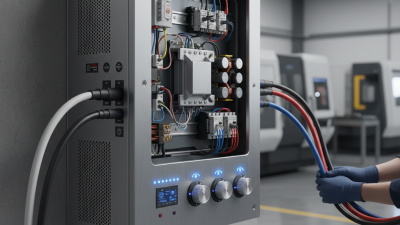
Why Choose a Solid State Phase Converter?

Choosing a solid state phase converter can make three-phase equipment practical in facilities with single-phase utility power. In workshops, farms, and small manufacturing spaces, this solution may support machinery without requiring a costly utility upgrade. A typical installation might power a ten-horsepower lathe, air compressor, or milling machine. The converter creates the additional phase electronically, then supplies a usable output for compatible motors.

The decision requires more than checking horsepower. Motor starting current, duty cycle, voltage, and load balance all matter. A qualified electrician should inspect the service panel, wiring, grounding, and disconnect protection. Manufacturer specifications also deserve careful attention. Some solid state phase converter models work best with motors under steady loads. Others may perform poorly with welders, compressors, or equipment that starts repeatedly. That difference matters.

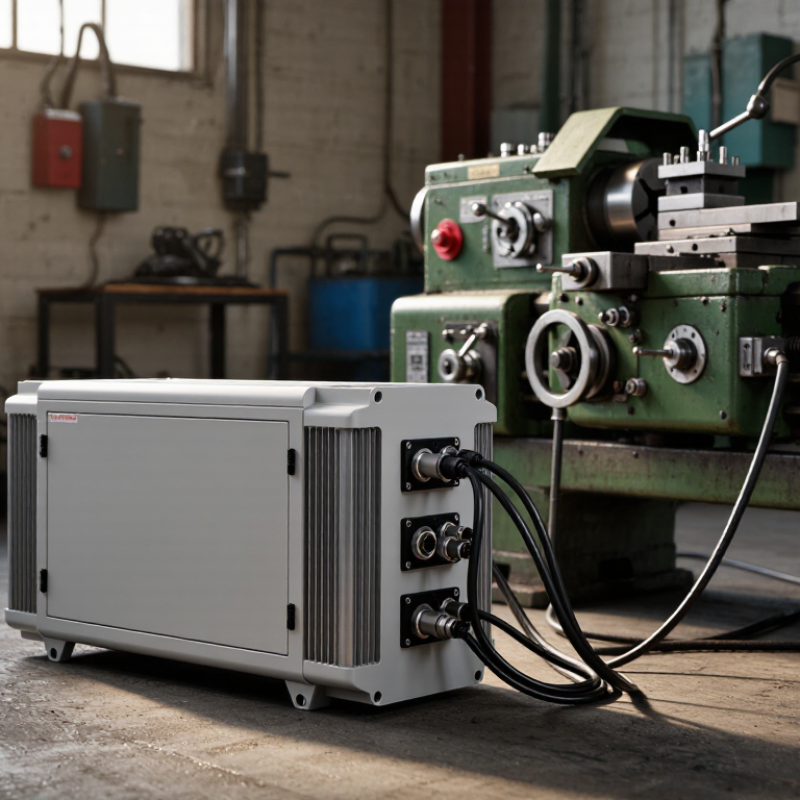
The choice is not always obvious. A rotary converter or variable frequency drive may suit certain machines better. Still, a solid state phase converter can offer compact installation, quiet operation, and limited maintenance because it has fewer moving parts. In practical use, the enclosure may sit beside a dusty machine, where low noise and a small footprint become valuable. However, efficiency, output quality, and starting performance should be verified before purchase. No converter solves every power problem. Careful measurement is essential. Reviewing motor nameplates, consulting a qualified professional, and comparing documented test results can prevent expensive surprises. The best decision combines technical evidence with the real operating conditions of the equipment.
Why Choose a Solid State Phase Converter?

What Is a Solid State Phase Converter?

What Is a Solid State Phase Converter?

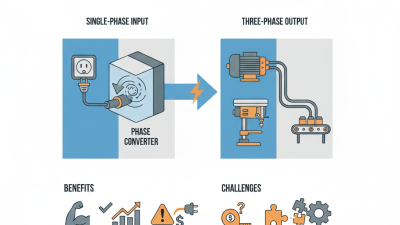
A solid state phase converter changes single-phase electricity into usable three-phase power through electronic switching. Inside, a rectifier converts incoming AC to DC. An inverter then creates a controlled third phase. There are no rotating parts, belts, or mechanical contacts. That makes the unit compact and quiet. It can support three-phase motors, pumps, compressors, and machine tools where utility service is limited.

The U.S. Department of Energy reports that motor-driven equipment accounts for about 69% of industrial electricity use. Efficient power conversion therefore deserves careful attention. A solid state converter can regulate voltage and frequency more precisely than basic mechanical alternatives. However, performance depends on motor starting current, load balance, wiring length, and converter capacity. A unit that works smoothly with a small lathe may struggle with a loaded compressor. That detail is often underestimated.

Look for documented output ratings, overload limits, harmonic performance, and protection functions. IEC 60034-30-1 provides a recognized framework for motor efficiency classes, although it does not certify the converter itself. Real installations still need measured voltage and current readings. In my experience, nameplate horsepower alone is not enough. It is a useful starting point, not a final answer.

How Does a Solid State Phase Converter Work?

A solid state phase converter changes single-phase electricity into a controlled three-phase supply using power electronics. It does not simply split one waveform into three. The incoming AC is first rectified into DC, then stored briefly in a DC link. An inverter switches semiconductor devices at high speed, creating three output waveforms with controlled timing and voltage. Sensors monitor current, temperature, and phase balance. A digital controller adjusts switching pulses within milliseconds.

The process is compact and quiet.

This matters because motor-driven equipment consumes about 53% of global electricity, according to the International Energy Agency’s Energy Efficiency 2023 report. In industrial facilities, poor phase balance can increase motor heating and reduce efficiency. A properly selected converter can support pumps, compressors, and machine tools where utility three-phase service is unavailable. However, it cannot create unlimited electrical capacity. Input wiring, protection, motor starting current, and continuous load ratings still require careful calculation. IEC 60034-1 and NEMA MG 1 provide useful motor performance and voltage-balance guidance. In practice, field measurements often reveal problems that catalog data misses. I would not assume every converter suits every motor. Harmonic distortion, sensitive controls, and heavily loaded starts may require filtering or a larger unit.

A solid state phase converter uses power electronics to create a controlled third-phase output from a single-phase electrical supply. The table below summarizes its operating principle, typical characteristics, and practical advantages. Actual performance depends on the converter design, supply voltage, motor type, load profile, and installation conditions.

Why Choose a Solid State Phase Converter? — How Does a Solid State Phase Converter Work?
Data Dimension Typical Solid State Phase Converter Information Practical Significance
Primary Function Converts single-phase electrical power into a usable three-phase output for compatible three-phase equipment. Allows selected three-phase machinery to operate where a utility three-phase service is unavailable or impractical.
Basic Operating Method Power semiconductor switches rapidly control voltage and current. A control circuit synthesizes the missing phase and regulates the output waveform. Electronic switching provides faster and more precise control than a simple passive phase-shifting method.
Main Internal Stages Common stages include input protection, rectification or power conversion, a DC-link section, an inverter bridge, sensing circuits, and a control processor. These stages allow the unit to monitor operating conditions and adjust the generated output in real time.
Output Frequency Usually fixed at the local system frequency, such as 50 Hz or 60 Hz, unless the equipment is specifically designed with variable-frequency capability. The output frequency should match the requirements of the connected motor or machine controller.
Output Voltage Designed for a specified three-phase voltage class, such as approximately 208 V, 230 V, 400 V, or 480 V systems. The converter must be selected to match the motor nameplate voltage and the available single-phase supply.
Phase Sequence Typically configurable or fixed according to the installation design, with the phase order verified during commissioning. Correct phase sequence determines the rotation direction of three-phase motors.
Voltage Balance Well-designed electronic converters can maintain a relatively balanced three-phase output under their specified load range; exact balance varies by model and load. Balanced voltage helps reduce negative-sequence current, excess motor heating, vibration, and premature insulation stress.
Motor Starting Starting performance depends on the converter’s current rating, overload capability, motor inertia, and starting method. High-inertia loads may require additional starting capacity. Checking locked-rotor current and acceleration requirements is essential before selecting a converter.
Efficiency Power-electronic conversion is generally efficient, but losses occur in semiconductor switches, magnetic components, filters, and cooling systems. Lower conversion losses can reduce operating cost and enclosure heat, while efficiency changes with load level.
Power Factor Input power factor varies with the converter topology and may be improved with active correction or suitable filtering. Power factor affects the input current, utility loading, and upstream protective-device sizing.
Harmonic Current Rectifier-based designs can produce input harmonics. Filters, multi-pulse arrangements, or active front-end designs can reduce them. Harmonic evaluation is important in facilities with sensitive controls, generators, or strict power-quality limits.
Noise and Vibration No rotating conversion motor is required, so mechanical noise and vibration are generally lower than with rotary converters. This can simplify installation in workshops, production areas, and locations where acoustic disturbance is a concern.
Maintenance Requirements Routine maintenance is usually limited to inspection, ventilation cleaning, terminal checks, and cooling-fan service where applicable. The absence of bearings, belts, and a continuously running rotary machine can reduce mechanical maintenance.
Physical Installation Often supplied in a compact enclosure and mounted near the electrical distribution point or the connected equipment, subject to clearance and cooling requirements. Compact installation can save floor space, but airflow, ambient temperature, and service access must be maintained.
Protection Features Typical protections include overcurrent, short circuit, overtemperature, input undervoltage, output faults, phase errors, and loss-of-load monitoring. Protection functions help prevent damage to the converter and provide safer fault handling, but they do not replace correctly sized external protection.
Load Compatibility Often suitable for compatible induction motors, machine tools, pumps, fans, compressors, and other three-phase loads within the converter’s rating. Electronic controls, regenerative loads, welders, and highly nonlinear loads may require a dedicated compatibility review.
Sizing Method Selection should consider motor horsepower or kilowatts, full-load current, starting current, duty cycle, simultaneous loads, ambient temperature, and required overload duration. Sizing only by horsepower can be insufficient, especially for multiple motors or high-inertia applications.
Advantages Over a Rotary Converter Typically offers fewer moving parts, lower mechanical noise, reduced maintenance, compact packaging, and electronic monitoring. These characteristics can be valuable where space, service access, and operational continuity are important.
Important Limitations It may have limits related to motor starting, waveform quality, harmonic current, heat dissipation, environmental conditions, and compatibility with sensitive loads. A complete electrical assessment should be performed before installation, especially for demanding or mixed-load applications.
Best Selection Criteria Match input voltage, output voltage, frequency, continuous current, overload rating, enclosure rating, cooling method, protection functions, and installation environment. Correct technical matching improves reliability, motor performance, energy use, and service life.

Key Benefits Compared with Other Phase Conversion Methods

Why Choose a Solid State Phase Converter?

Key Benefits Compared with Other Phase Conversion Methods

A solid state phase converter uses electronic switching to create three-phase power from a single-phase supply. Unlike rotary converters, it has no motor, belt, or rotating shaft. This design reduces mechanical wear and often lowers maintenance needs. It also operates quietly, which suits workshops near offices or residential areas.

Compared with static converters, solid state models can provide more consistent voltage and better motor performance. A properly sized unit can support pumps, compressors, saws, and machine tools with fewer starting difficulties. Its compact enclosure saves floor space. Digital monitoring may also show voltage imbalance, overload conditions, or fault codes before damage occurs. That practical feedback helps technicians diagnose problems faster.

The benefits are not universal. Solid state equipment costs more initially and may require careful installation. Harmonics, heat, and sensitive control systems still need evaluation. An undersized converter can trip during motor startup, even when its running load appears acceptable. More electronics is not automatically better. Load measurements, starting current, duty cycle, and ambient temperature should guide selection. Small details matter. In real installations, cable length and poor ventilation can affect reliability more than expected. A qualified electrician should verify grounding, protection devices, and local electrical requirements before energizing the system.

Factors to Consider When Choosing a Solid State Phase Converter

Why Choose a Solid State Phase Converter?

Choosing a solid state phase converter requires more than matching voltage and horsepower. Start with the equipment’s actual load profile. A machine with a large startup surge may need a converter rated above its running load. Check locked-rotor current, duty cycle, motor size, and future expansion plans. Small errors here become hot cables, nuisance trips, or uneven motor performance. Field measurements are often more useful than a catalog table.

Power quality deserves close attention. The International Energy Agency has estimated that motor systems consume about 46% of global electricity, making efficient operation a serious industrial concern. A suitable converter should maintain stable voltage under changing loads and limit unwanted harmonics. IEEE 519-2022 commonly uses 5% voltage total harmonic distortion as a planning limit at the point of common coupling. However, that limit does not guarantee perfect performance inside every facility. Test the real installation.

Environment also matters. Dust, moisture, heat, and restricted airflow can shorten electronic service life. Select the correct enclosure rating, cooling method, protection functions, and maintenance access. Confirm phase balance with a power-quality analyzer after installation. Do not rely only on indicator lights. I have seen converters pass a basic startup test yet struggle when several motors accelerated together. That weakness is easy to miss. Review the converter’s fault history, service documentation, and measured efficiency. A slightly larger unit may cost more initially, but undersizing can create expensive downtime and second-guessing.

Common Applications and System Compatibility Requirements

Why Choose a Solid State Phase Converter?

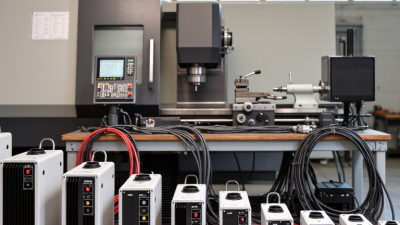
A solid state phase converter can supply three-phase power where only single-phase service is available. This makes it useful in machine shops, farms, workshops, and small production areas. Typical loads include lathes, milling machines, pumps, compressors, and ventilation equipment. I have seen installations work smoothly when the converter, motor, and supply were evaluated together. The converter is not a universal fix.

System compatibility requires careful checking. Confirm the input voltage, frequency, available amperage, and service capacity before selecting equipment. Then compare the motor’s rated voltage, horsepower, starting current, and full-load current. Control circuits may need separate attention. Some machines contain sensitive drives, transformers, or electronic controls that respond poorly to voltage imbalance. A qualified electrician should measure phase-to-phase voltage during startup and normal operation. Numbers matter.

Installation conditions also influence reliability. Leave enough ventilation space around the converter, especially near dusty machinery or warm electrical rooms. Check grounding, overcurrent protection, disconnect requirements, and enclosure ratings against applicable electrical standards. Short cable runs can reduce voltage drop, but distance still matters. In my experience, users sometimes size only for running horsepower and overlook starting demand. That mistake can cause nuisance trips or weak motor acceleration. It is worth reviewing the machine manual and consulting the converter manufacturer’s technical data. Compatibility may appear obvious, yet a real load test can reveal problems that calculations miss.

Why Choose a Solid State Phase Converter?

Solid state phase converters are commonly considered for pumps, compressors, machine tools, HVAC equipment, and other three-phase motor loads. The chart shows common North American nominal three-phase line-to-line voltages used when checking system compatibility. Confirm the motor nameplate voltage, frequency, phase sequence, starting current, and converter output specifications before installation.