Choosing the right electronic converter in 2026 requires more than comparing prices or output ratings. Global buyers must examine voltage ranges, frequency compatibility, efficiency, thermal performance, isolation, and regional plug requirements. A converter that works reliably in a cool laboratory may fail inside a hot control cabinet or a crowded industrial enclosure.
Ned Mohan, a widely recognized power-electronics educator and author, describes the field this way: “Power electronics is the technology associated with the conversion, control, and conditioning of electric power.” That principle still guides practical purchasing decisions. AC-DC supplies, DC-DC modules, DC-AC inverters, frequency converters, and bidirectional converters solve different power problems. Their names can appear similar. Their internal designs are not.
Small details often decide long-term value. Buyers should check derating curves, standby consumption, surge protection, cooling methods, connector quality, and electromagnetic compatibility data. They should also request current datasheets, test reports, warranty terms, and traceable manufacturer information. Certifications matter, but they do not replace engineering judgment. A certified product can still be poorly matched to a machine.
Real installations are less tidy than product pages suggest. Cable losses increase. Fans collect dust. Loads change suddenly. Some buyers focus too heavily on peak efficiency, while ignoring serviceability and replacement availability. That is a mistake worth admitting. This guide compares the best electronic converter types for global buyers in 2026, with attention to application fit, dependable performance, transparent specifications, and responsible sourcing. The final choice should reflect the entire operating environment, not one impressive number.
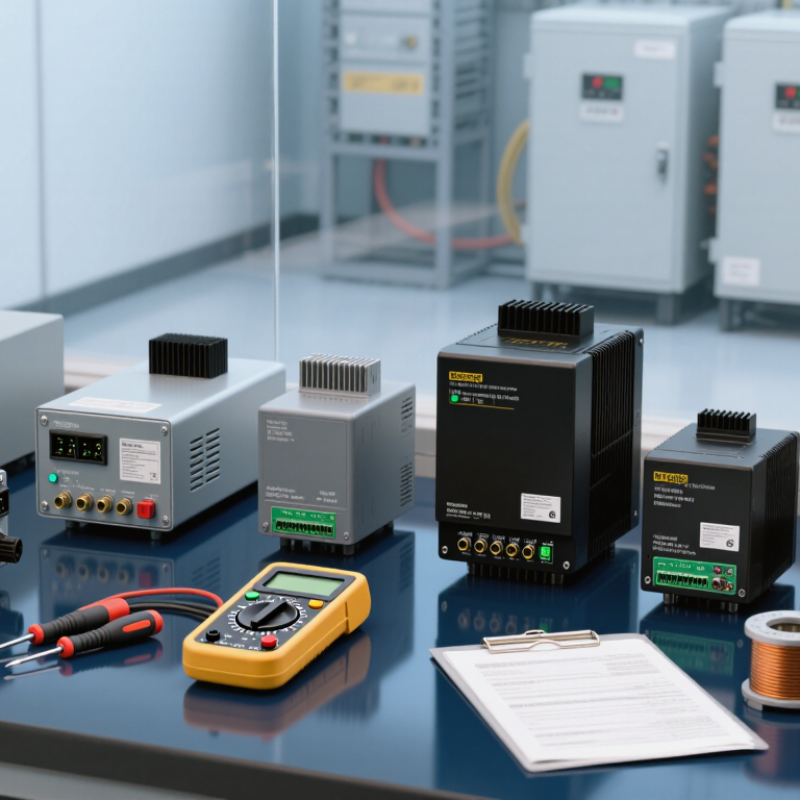
Electronic converters change electrical power into a form that equipment can use. Their purpose depends on the input, output, and operating environment. An AC-to-DC converter supplies steady direct current to devices such as routers and control panels. A DC-to-DC converter adjusts voltage between battery packs and electronic components. Inverters convert direct current into alternating current, often for backup power or solar installations. Some systems also change AC frequency for specialized machinery.
The right type depends on more than plug shape. Check the equipment’s rated voltage, frequency, power demand, and connector requirements before choosing a converter. A label showing 100–240 V input may support a wide range of mains voltages, but it does not guarantee compatibility with every local outlet or load. Read the specifications carefully. Heat matters, too. A compact converter tucked behind a desk may run hotter when covered or used near other equipment. For industrial or medical settings, qualified professionals should verify isolation, protection features, and applicable local standards. Small details count. I have seen buyers focus on wattage and overlook startup surges; that can lead to unreliable operation, even when the printed ratings appear suitable.
AC-DC converters turn wall power into direct current for devices such as routers, monitors, and battery chargers. Check the input voltage range, output voltage, current rating, and connector before choosing one. A small label can prevent an expensive mismatch. Efficiency matters, but so does heat: a converter tucked behind furniture may run warmer than expected. Give it room to breathe.
DC-AC converters, often called inverters, supply alternating current from a DC source such as a vehicle battery or solar storage system. Match the output voltage and frequency to the equipment, and allow extra capacity for motors or other loads with brief startup surges. Pure sine-wave output suits many sensitive appliances, though it can cost more. The right choice depends on the load, not just the headline wattage.
DC-DC converters change one DC voltage to another, common in vehicles, control panels, and portable electronics. Some provide isolation; others do not, so check the design requirements and safety documentation. AC-AC converters adjust alternating-current voltage or frequency for compatible equipment. They are useful when a load needs a different supply, but they do not automatically make every device suitable for every grid. Read the nameplate. Then verify the operating conditions. I would not treat converter selection as a quick catalog comparison; installation details can change the result.
| Converter Type | Power Conversion | Typical Input and Output | Common Applications | Key Selection Considerations | Practical Limitation |
|---|---|---|---|---|---|
| AC-DC Rectifier or AC-DC power supply |
Converts alternating current (AC) into direct current (DC). Many designs use rectification followed by filtering and voltage regulation. | AC mains, commonly 100–240 V AC in universal-input products, to a specified DC output such as 5 V, 12 V, 24 V, or 48 V. Ratings depend on the design. | Consumer electronics, industrial control equipment, LED systems, communications equipment, and battery chargers. | Check input-voltage range, output voltage and current, isolation requirements, ripple, efficiency, power factor, safety approvals, and cooling. | Output quality and power factor vary by circuit design. A basic rectifier may produce substantial ripple and may not provide regulated or isolated output. |
| DC-AC Inverter |
Converts direct current (DC) into alternating current (AC), often using high-frequency switching and filtering to create the required waveform. | A DC source, such as a battery or DC bus, to an AC output at the voltage and frequency required by the load. Specifications vary by region and application. | Uninterruptible power systems, solar power systems, vehicle power systems, and variable-frequency motor drives. | Check DC input range, continuous and surge power, output waveform, output frequency, overload behavior, and compatibility with the load. | Some loads need a low-distortion sine-wave output. Motor starting currents and other short-duration surges can exceed the inverter’s continuous rating. |
| DC-DC DC converter |
Changes one DC voltage level to another. Common circuit types include buck (step-down), boost (step-up), and buck-boost (step-up or step-down). | One DC voltage to a higher, lower, or regulated DC voltage; for example, a nominal 12 V source to a regulated 5 V output. | Embedded electronics, battery-powered devices, automotive electronics, telecom systems, and intermediate power-distribution rails. | Check input and output ranges, current rating, isolation, switching noise, transient response, thermal performance, and whether the output must be regulated. | Switching noise can affect sensitive circuits, while linear designs can dissipate considerable heat when the input-to-output voltage difference is large. |
| AC-AC AC voltage or frequency converter |
Changes AC voltage, frequency, or both. Implementations include transformers, AC voltage controllers, and rectifier-inverter systems. | AC input to AC output. The output may have a different voltage, frequency, or phase arrangement, depending on converter architecture. | Voltage adaptation, motor speed control, laboratory power systems, and equipment requiring a different AC frequency or voltage. | Check input and output voltage, frequency, phase count, waveform, isolation, load type, and whether voltage or frequency must be adjustable. | A transformer changes voltage but not frequency. Changing frequency generally requires an electronic conversion system, which can add complexity and waveform considerations. |
Buyer note: Converter performance depends on its circuit, rating, operating conditions, and application. Confirm the product’s datasheet, applicable safety and EMC requirements, and compatibility with the intended source and load before selection.
A converter’s wattage label is only a starting point. Check its continuous rating, not just the short peak figure, and compare that number with the appliance’s running draw. Motors, pumps, and compressors may briefly demand several times more power when starting. A small desk fan is different from a refrigerator. Leave some headroom; the exact amount depends on the load and the converter’s specifications. Ratings can be confusing.
Waveform matters too. Pure sine output is generally the safer choice for sensitive electronics, variable-speed tools, and equipment with certain motors. Modified sine models may suit simpler resistive loads, such as some basic heating elements, but can cause extra noise or heat in other devices. Check the appliance manual rather than guessing from its plug. I would not assume every charger behaves the same.
Protection features deserve equal attention. Look for clearly stated overload, over-temperature, short-circuit, and low-voltage safeguards. A cooling fan should have room to breathe, and the unit should sit on a stable, dry surface. For international travel, verify input and output voltage, frequency, plug compatibility, and grounding requirements. One detail is easy to miss: a converter changes voltage, but it may not change frequency. If the specifications are vague, pause and ask the seller for the rated continuous output and waveform details.
Understanding converter outputs: Pure sine-wave inverters produce an AC waveform close to utility power; square-wave output is a simplified waveform. Modified sine-wave output uses stepped voltage levels, so its shape varies by design and is not represented as a single trace here. These curves are normalized illustrations, not product test results. Check each unit’s rated voltage, frequency, continuous and surge power, waveform quality, and documented protections—such as overcurrent, overtemperature, and input undervoltage—before choosing a converter.
For global buyers, converter selection should begin with the destination’s voltage and frequency—not the plug shape. IEC 60038 specifies standard supply voltages, while the IEC World Plugs and Sockets database lists country-level voltage and frequency information. These references show why one “universal” converter can be a poor assumption. North American supplies commonly use 120 V at 60 Hz; much of Europe uses 230 V at 50 Hz. Check the exact destination, since national standards do not capture every local exception.
Match the converter type to the appliance label. A step-down transformer suits a 230 V supply powering a 120 V appliance; a step-up unit serves the reverse case. For phones, laptops, and other devices marked “100–240 V, 50/60 Hz,” a correctly rated plug adapter may be enough. Small detail, big difference. Frequency matters too: some motor-driven or timing-sensitive devices may not operate correctly when designed for 60 Hz but supplied at 50 Hz. Confirm the manual before buying.
For electronic equipment, an AC-to-DC power supply must accept the local input voltage and frequency, then provide the required output voltage, current, and polarity. Compare its nameplate with the converter’s continuous rating; startup demand can exceed normal running power. IEC data is a strong starting point, not a substitute for checking the building supply or device documentation. I would leave a margin rather than buy to the exact wattage—ratings and real use do not always line up neatly.
Global buyers should match an electronic converter to both the destination market and the actual workload. A travel adapter may handle plug shapes, but it may not change voltage. A step-down converter suits 230-volt appliances used on 120-volt systems. An inverter supports devices needing converted battery power. Read the label. Confirm voltage, frequency, wattage, and continuous-load capacity before ordering.
Safety certification deserves close inspection, not just a printed symbol. Buyers should request test reports covering electrical safety, electromagnetic compatibility, insulation, overheating, and fire resistance. Requirements may differ across regions, so a certificate accepted in one market may not satisfy another authority. Products for medical, laboratory, or industrial use often need reinforced isolation, grounding protection, stable output, and documented traceability. Check the exact model number. Similar housings can hide different internal designs.
In practical testing, converters often perform well during short demonstrations but heat noticeably after several hours. Heat matters. Buyers should examine ventilation, thermal shutoff, fuse access, enclosure strength, and cable quality. For humid workshops or dusty sites, an appropriate ingress rating may prevent early failure. Do not rely on maximum wattage alone; motors, compressors, and heating elements can create starting surges. One imperfect assumption is common: choosing the cheapest compliant-looking unit. A careful review of independent test evidence, production records, warranty terms, and replacement parts gives a more reliable purchasing decision.